
A safari is one of the easiest trips to pack for, once you understand the logic. You need layers rather than one heavy coat, neutral colours rather than bright prints, and a small day pack you can live out of between camps. Everything else is detail.
The mistake almost everyone makes is packing for the heat they expect and forgetting how cold a dawn game drive can be. The second mistake is packing too much: laundry is available at most lodges and camps, and on a fly-in safari your bag has a strict weight limit.
This list walks through every category, ends with a printable checklist you can copy, and explains the luggage limits that matter if you plan to fly between parks.
How to Think About Packing
Safari days are built around early starts. You leave camp in the cool of the morning, return for a hot lunch, rest through the middle of the day and head out again in the late afternoon. Your clothing needs to cope with a cold dawn, a hot midday and an insect-heavy dusk — often in a single day.
- Layer, do not bulk — a base layer, a mid layer and a light shell cover every temperature you will meet.
- Think in three days of clothing — laundry is quick and cheap at most camps, so you rarely need more.
- Keep it soft — soft bags squash into safari vehicles and light aircraft; hard cases do not.
- Pack a day pack separately — that is the bag you carry on every game drive.
Clothing: Layers, Colour and Comfort
Neutral colours — khaki, olive, beige, stone and brown — are the traditional choice for a reason. They hide dust, they blend into the bush and they do not alarm wildlife. Lightweight long sleeves and trousers are your best protection against sun and insects.
- Base layers — two or three lightweight, quick-dry long-sleeve shirts.
- Mid layer — a fleece or light down jacket for cold dawn drives.
- Shell — a packable windproof and waterproof jacket.
- Trousers — two pairs of lightweight, quick-dry trousers, plus one warmer pair for the highlands.
- Warmer layers — a hat and gloves for Ngorongoro and the highlands, where dawn can be genuinely cold.
- Evening wear — one relaxed outfit for dinner and a swimsuit for lodge pools.
Skip blue and black for game drives
Tsetse flies are strongly attracted to dark blue and black clothing. Stick to neutral tones on game drives, and avoid camouflage altogether — it is restricted for civilians in Tanzania.
Footwear
You will spend long hours sitting in a vehicle and shorter spells walking around camp, so comfort matters far more than technical specification.
- Closed walking shoes or trainers — broken in before you travel, for camp paths and short walks.
- Light sandals — for the evenings and around the pool.
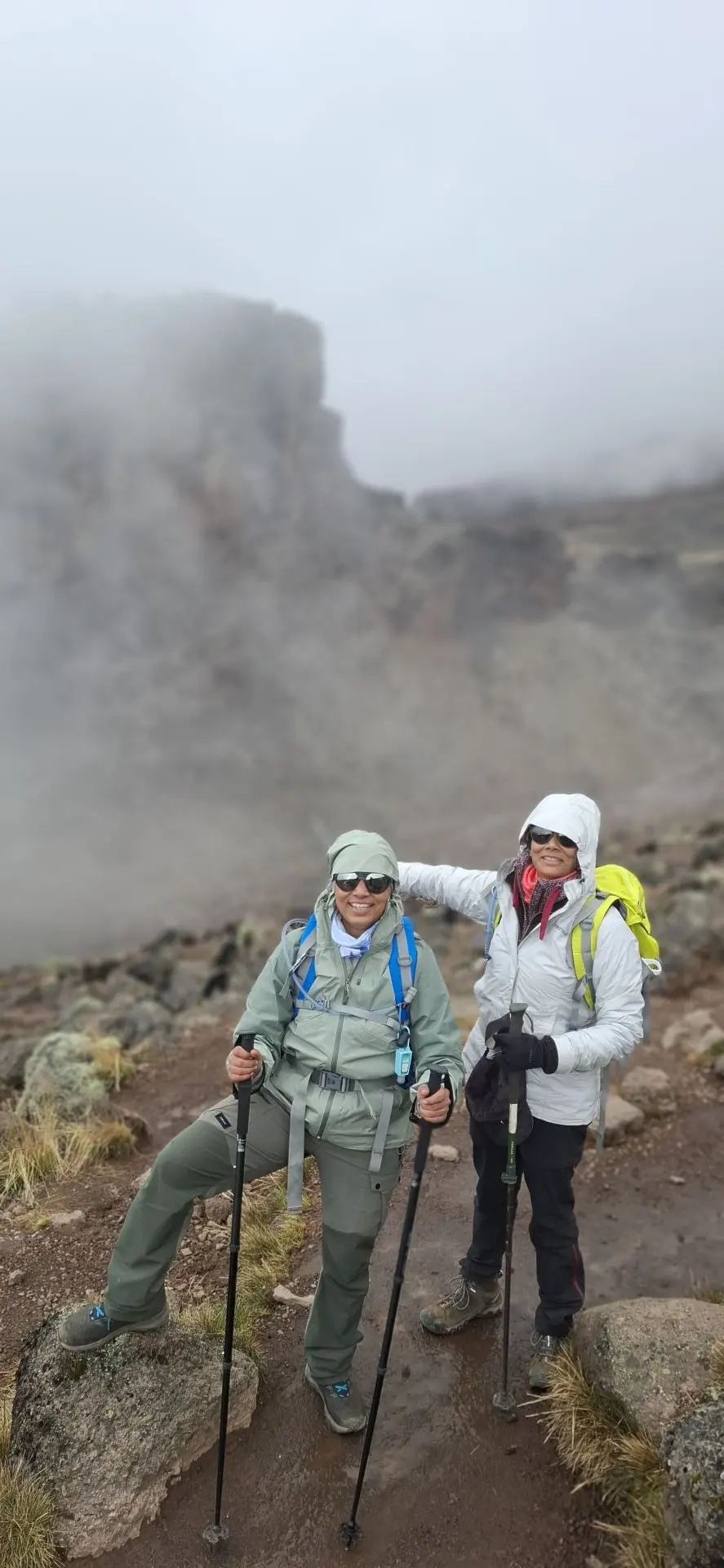
- Walking boots — only if you have booked a walking safari or a mountain add-on.
- Socks — a few pairs, plus a warm pair for cold mornings.
Sun and Insect Protection
The equatorial sun is strong all year, and even on cloudy days it will burn. Insects are most active at dusk and after rain. A small, well-chosen kit deals with both.
- High-factor, broad-spectrum sunscreen and an SPF lip balm.
- A wide-brimmed sun hat and good-quality sunglasses with UV protection.
- Insect repellent containing DEET or picaridin, plus a small after-bite treatment.
- Long sleeves and trousers for the evening, when mosquitoes appear.
- A light scarf or buff against dust on the roads.
Most camps provide the essentials
Nearly every lodge and camp provides mosquito nets, and many supply repellent and drinking water in the room. Check your itinerary, then pack only what you genuinely need.
Camera and Electronics
You do not need professional equipment to enjoy a safari, but a little preparation pays off. The single most useful accessory is a pair of binoculars.
- Camera and lenses — a zoom reaching 200 – 400 mm suits most wildlife, with a wider lens for landscapes.
- Spare batteries and memory cards — charging is limited at some camps, so bring spare power.
- Binoculars — 8x42 or 10x42 is the sweet spot for wildlife.
- Dust protection — a microfibre cloth, a blower and a dry bag for the camera.
- Power bank and adaptor — Tanzania uses UK-style three-pin plugs at 230 V.
A bean bag beats a tripod
Safari vehicles usually have a bean bag you can rest a lens on through the pop-up roof. It is steadier than handheld, faster than a tripod and takes up no luggage weight.
Documents and Money
Keep the paperwork simple and carry a paper copy of everything important, in case your phone dies or you lose signal.
- Passport — valid for at least six months beyond your travel dates.
- Visa — most visitors arrange an e-visa online before arrival.
- Travel insurance — covering medical care and, if relevant, evacuation.
- Yellow fever certificate — required if you are arriving from a country where yellow fever is present.
- Itinerary and contacts — printed copies, plus copies stored separately.
The Tanzanian shilling is the local currency, but US dollars are widely accepted for tourist services. Bring recent, unmarked notes and plenty of small denominations for tips, and remember that remote camps and ATMs are few and far between. Cards are accepted at larger lodges, often with a surcharge.
Health and Medication
Bring your own medication in its original packaging, and pack a small first-aid pouch for the things that are easy to treat on the road.
- Prescription medication — enough for the whole trip, in your hand luggage.
- Antimalarials — as prescribed by your doctor before you travel.
- Everyday remedies — painkillers, rehydration salts, plasters, antiseptic and an anti-diarrhoeal.
- Comfort items — antihistamine, motion-sickness tablets, hand sanitiser and wet wipes.
- Backups — spare glasses or contact lenses, and a written record of your prescriptions.
See a travel clinic early
Book a travel-health appointment four to six weeks before departure. Some vaccinations need time to take effect, and antimalarials are usually started before you arrive.
The Day-Pack Checklist
Your day pack travels with you on every game drive and should be light enough to carry all day. Pack it the night before so nothing is forgotten at dawn.
- Water — one to two litres per person for a full drive.
- Sunscreen, lip balm, sun hat and sunglasses.
- Binoculars and camera with a spare battery and card.
- Insect repellent and a light rain jacket.
- Tissues, hand sanitiser and any personal medication.
- A field guide to birds and mammals, and a few snacks.
What Not to Bring
Leaving things at home makes the trip easier. These are the items travellers most often regret packing.
- Camouflage clothing — restricted for civilians in Tanzania.
- Bright blue and black clothing — they attract tsetse flies.
- Hard-shell suitcases — impractical on fly-in safaris and in safari vehicles.
- A drone — flying one in a national park requires a permit and is often prohibited.
- Single-use plastic bags — these are banned in Tanzania.
- Excess clothing and valuables — laundry is available and jewellery is best left in the safe.
The plastic bag ban is enforced
Tanzania bans single-use plastic carrier bags, including at airports. Pack a reusable tote instead and expect bags to be checked on arrival.
Luggage Limits for Fly-In Safaris
If any part of your trip uses light aircraft between parks, luggage is strictly limited. The standard allowance on the northern circuit is 15 kg (33 lb) per person including hand luggage, carried in a soft-sided bag. Some routes allow slightly more, so confirm the limit for your specific itinerary.
- Pack into a soft duffel rather than a hard case.
- Keep the total, including hand luggage, within the stated limit.
- Wear your heaviest shoes and jacket on travel days.
- Store surplus luggage at your hotel in Arusha or Moshi.

The Printable Checklist
Copy the two tables below into your notes and tick items off as you pack.
| Category | Essentials |
|---|---|
| Clothing | Long-sleeve shirts, warm fleece, waterproof shell, trousers, hat, swimwear |
| Footwear | Broken-in walking shoes, sandals, socks |
| Sun and insect | Sunscreen, lip balm, hat, sunglasses, repellent |
| Camera and electronics | Camera and zoom lens, binoculars, spare batteries, memory cards, adaptor, power bank |
| Documents | Passport, visa, insurance, yellow fever certificate, itinerary, cash and cards |
| Health | Prescriptions, antimalarials, painkillers, rehydration salts, plasters, sanitiser |
| Item | Why |
|---|---|
| Water bottle | One to two litres per person for a full game drive |
| Sunscreen and hat | The equatorial sun is strong even under cloud |
| Binoculars | Wildlife is often far off the road |
| Camera and spare battery | The best sightings rarely announce themselves |
| Insect repellent | Mosquitoes are most active at dusk |
| Light rain jacket | Afternoon showers arrive quickly in the green season |
| Tissues and sanitiser | Facilities are basic between camps |
| Snacks | Drives can run longer than planned |
A Final Word on Weight
If you can carry your day pack comfortably and lift your main bag with one hand, you have packed about right. Most travellers return from safari wishing they had brought less, not more.
Frequently asked questions
What should I wear on a game drive?
Neutral, comfortable layers are the key. Start the morning in a long-sleeve shirt with a fleece and a windproof jacket, then shed layers as the day warms and stow them in your day pack. Wear lightweight long trousers rather than shorts — they protect against sun, scratches and insects — and avoid dark blue, black and camouflage, which attract tsetse flies or are restricted. Comfortable, broken-in closed shoes or trainers are best for stepping in and out of the vehicle, and a wide-brimmed hat plus sunglasses will keep the low sun out of your eyes. In the cool highlands around Ngorongoro, add a warm hat and gloves for the dawn drive; you will be glad of them.
Do I need to bring binoculars on safari?
Yes, if you can — they are the single most useful piece of kit you will bring. Much of the best wildlife is far from the road, and binoculars turn a distant shape into a leopard draped along a branch or a cheetah scanning the plains. A pair shared between two people is workable, but in practice everyone tends to want their own, and passing them back and forth means missing the moment. Look for 8x42 or 10x42 models: bright, light and easy to hold steady. Pack them in your day pack, keep the strap around your neck and a lens cloth handy, because dust on the glass quickly spoils the view in the dry season.
Can I wear camouflage clothing in Tanzania?
No. Camouflage clothing is restricted for civilians in Tanzania and can cause real problems at borders, airports and checkpoints, where it may be confiscated. The same caution applies to dark blue and black on game drives, because tsetse flies are strongly attracted to those colours and their bite is memorable. Stick to neutral safari tones — khaki, olive, beige, stone and brown — which hide dust, blend into the bush and do not alarm wildlife. A light, neutral palette also mixes and matches easily, so you can pack fewer pieces and still look presentable at dinner. Save the camouflage for birdwatching at home and keep your safari wardrobe simple and understated.
How much luggage can I take on a fly-in safari?
The standard allowance on light aircraft is 15 kg (33 lb) per person, including hand luggage, carried in a soft-sided bag rather than a hard case. Some routes and aircraft allow slightly more, so always confirm the exact limit for your specific itinerary before you fly. Weigh your bag at home, then again before the flight, and wear your heaviest shoes and jacket on travel days to keep the carried weight down. Anything surplus can be stored safely at your hotel in Arusha or Moshi at no great expense. Packing cubes and a soft duffel make it far easier to squeeze within the limit, and laundry at camp means you rarely need more than a few days of clothing.
Do safari lodges have laundry?
Most lodges and camps offer a same-day or next-day laundry service for a modest fee, and some include it in the rate. It is the easiest way to travel light, so pack for three or four days and wash as you go. Hand washing in a basin is also straightforward in the warm, dry climate, and quick-dry fabrics will be ready by morning. Do check the list before handing anything over, because some camps will not wash delicate items and colours can fade. Laundry turnaround can be slower during busy periods, so keep one clean outfit in reserve. For fly-in safaris in particular, doing laundry along the way is the simplest way to stay within the 15 kg limit.
What plug adaptor do I need in Tanzania?
Tanzania uses UK-style three-pin plugs (Type G) at 230 volts, so travellers from Europe, North America and much of Asia will need an adaptor. Bring a universal adaptor with surge protection, plus a small power bank for the long game drives when you cannot charge. Charging points can be limited or shared at some camps, and power cuts do occasionally happen, so charge cameras and phones whenever the opportunity arises and carry a spare battery. A multi-port USB charger lets you top up several devices from one socket. If you use a CPAP machine or other medical device, tell us in advance so we can confirm the power arrangements at each camp on your itinerary.
Is it safe to drink the tap water?
Tap water is not recommended for drinking. Bottled or filtered water is provided at camps and lodges, and we supply drinking water in the vehicle on every game drive, so you will never go thirsty. A reusable bottle is a good companion — refill it from the larger dispenser in your room or at the bar rather than buying small plastic bottles, which also helps us keep safari waste down. Brushing your teeth with tap water is generally fine, but if you have a sensitive stomach, use bottled water for that too. Ice in drinks at reputable camps is usually made from filtered water, though you can always ask. If you are particularly cautious, bring purification tablets or a filter bottle.
How much cash should I bring?
Bring enough for tips, drinks and souvenirs — a few hundred US dollars in recent, unmarked notes is usually ample for a week. Tips for your guide and camp staff are customarily given in cash, and small denominations are far more useful than large ones. The Tanzanian shilling is the local currency, but US dollars are widely accepted for tourist services, so carry a mix and keep the notes clean and untorn. Larger lodges accept cards, often with a surcharge, but remote camps and village stops may not. ATMs are scarce and unreliable outside the main towns, so change money in Arusha or Moshi and keep a little cash in a separate place as a backup.
Related safaris & guides


Ready to start planning?
Tell us your dates, group size and travel style. We will design a private Tanzania safari around you and send a full quote — free, with no obligation.