
Kilimanjaro Facts and Figures
Uhuru Peak stands at 5,895 m, or 19,341 ft. That is Africa’s highest point and the tallest summit on earth you can reach without ropes or a belay team, roughly double the height of Mont Blanc. The mountain rises 4,600 m straight out of the surrounding plain and sits only about 100 km from the equator, which is why it holds snow at the top year round. It is a dormant stratovolcano, last active somewhere between 150,000 and 250,000 years ago, and roughly 50,000 people attempt it every year.
The numbers that decide your climb are time, cost and success rate. Most climbers spend five to nine days on the mountain across seven established routes, and success rates range from about 65% to 90% depending almost entirely on which route you pick and how slowly you climb it. Guided packages typically run $1,800 to $2,880 per person on our published group sizes, excluding flights. On summit night the temperature at the crater rim drops to somewhere between -7°C and -29°C, which is why the summit push starts in the dark.


Mount Kilimanjaro Routes
Seven official routes climb Kilimanjaro, and choosing one is the single biggest decision of your trip. The route sets the scenery, the camps, how many people you share the trail with, and — above all — your odds of actually summiting. Roughly 50,000 climbers a year reach for Uhuru Peak, but success hinges less on fitness than on giving your body enough days to acclimatise, which is exactly what a longer route buys you.
Below, the seven routes as we guide them from Moshi, plus the Mweka descent we use to come back down. Each card shows the route at a glance – image, price and a link to the full guide.
Lemosho Route
Description
From $2,220
Rainforest, heath and a high success rate on a quiet, scenic western approach. Our pick for most first-time climbers.
Northern Circuit
Description
From $2,550
The remote arc around the north face with an extra day of quiet, high walking. The mountain’s highest success rate.

Machame Route
Description
From $1,850
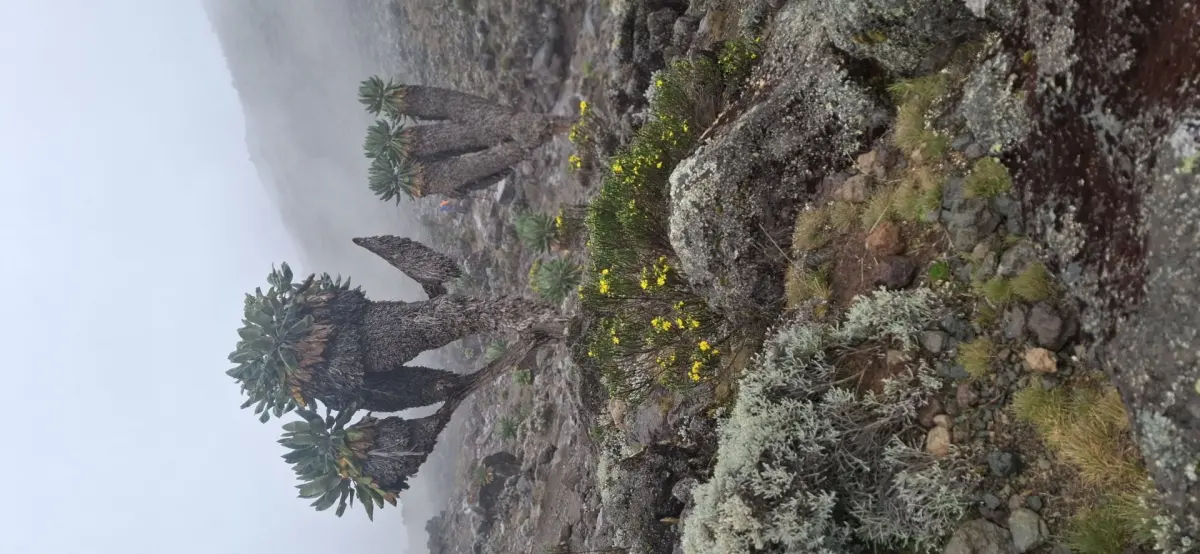
The classic “Whiskey” route: rainforest, moorland and the dramatic Barranco Wall. Popular, scenic and a real test.
Rongai Route
Description
From $2,200
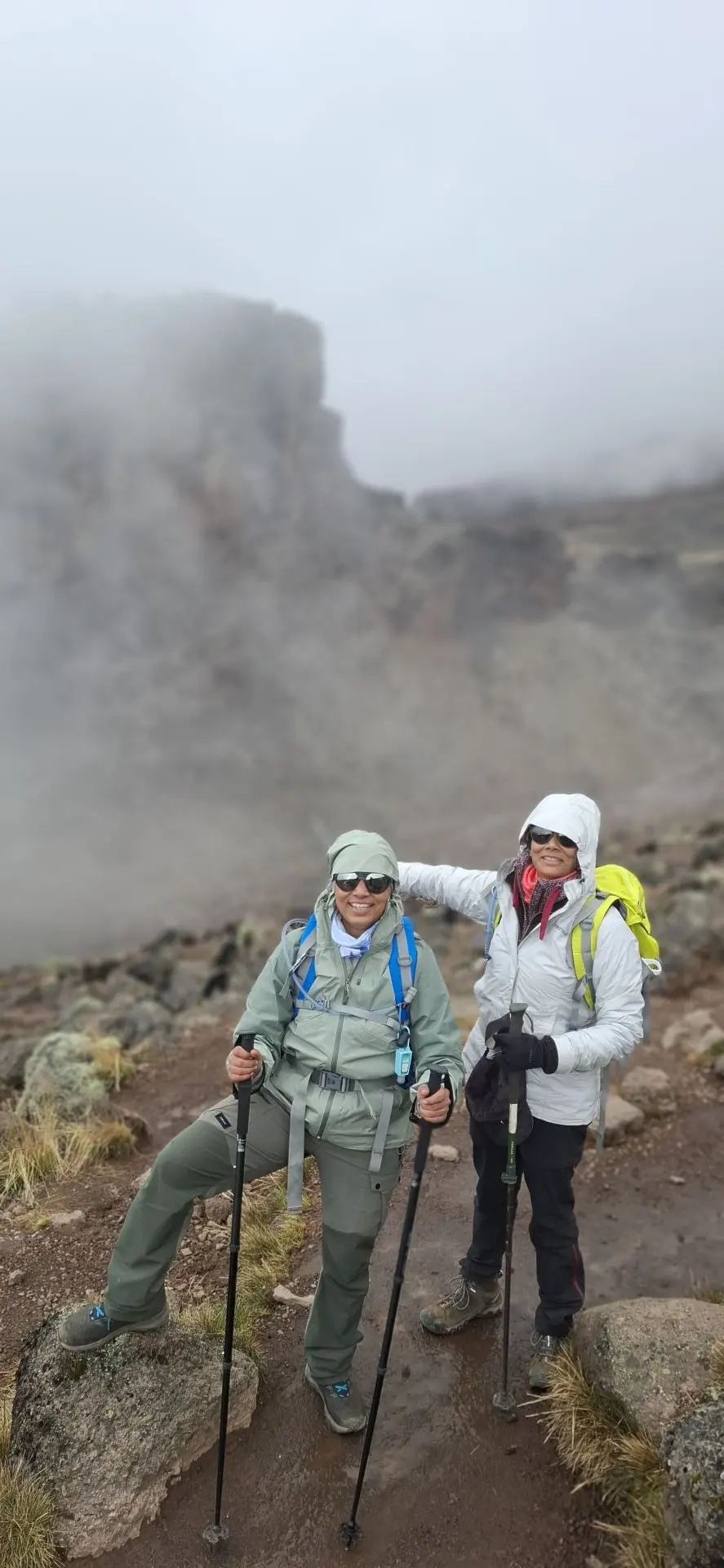
The dry northern approach with gentle gradients. The strongest pick for the rainy season.
Marangu Route
Description
From $1,870
The only route with huts all the way up. The shortest schedule on the mountain, but the least time to acclimatise costs summit success.
Umbwe Route
Description
From $1,800
The steepest, most direct line up the mountain. Reserve it for experienced altitude trekkers.

Shira Route
Description
Quoted on request
Shares Lemosho’s western approach but starts higher and shorter. Quiet, scenic, usually merged with Lemosho.
Mweka Route
Description
Included in every climb
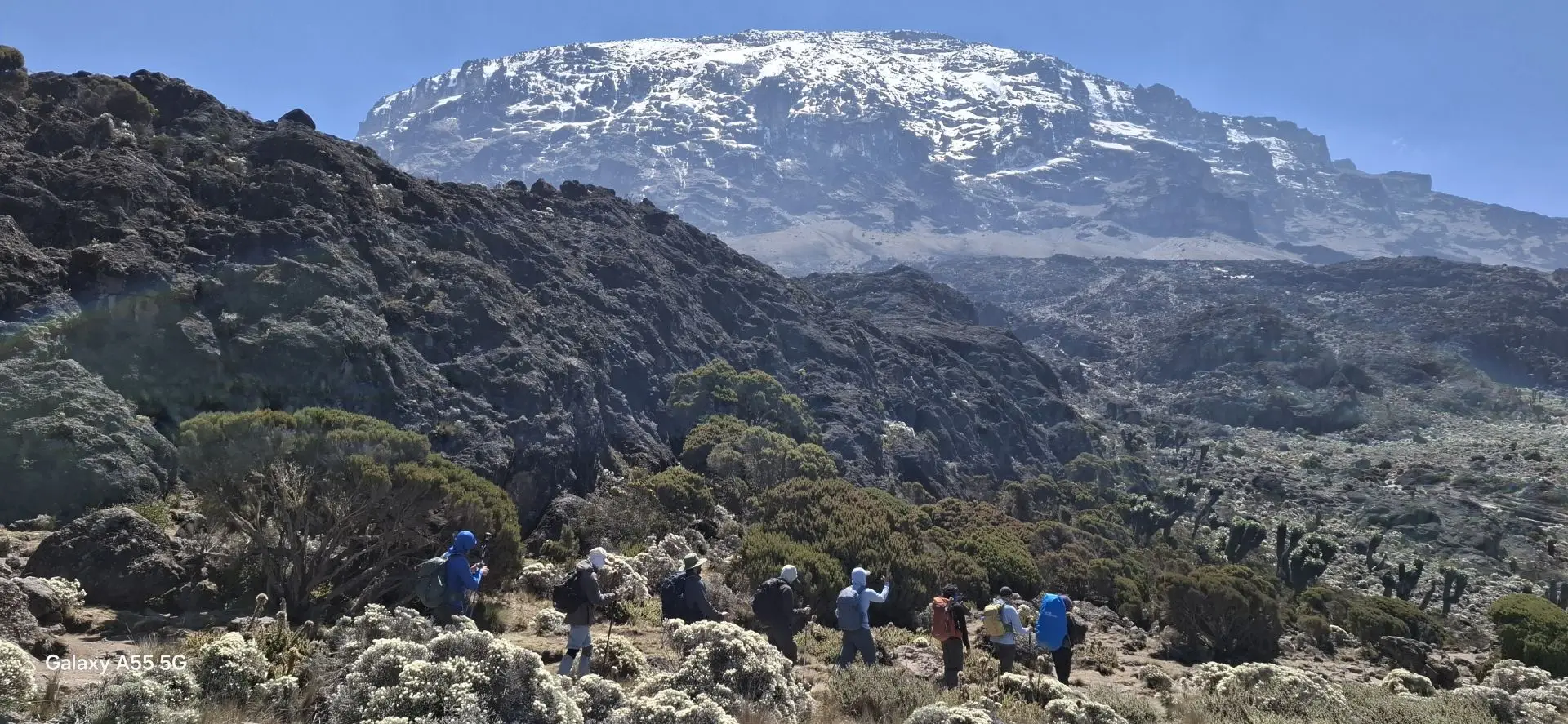
The standard descent after a summit – a gentle, forested trail that is easy on tired legs.
Mount Kilimanjaro Group Departures
Up to ten climbers start together on every fixed departure, sharing the guide, the crew and the camp. Join one and you pay a shared-group rate instead of a private-climb premium, which makes a departure the most sociable and often the most economical way onto the mountain.
Pick a year and a month below to see the groups running then. Past months and departed groups are shown greyed and can no longer be joined - dates simply scroll forward with the calendar.
Arrival 02 Nov 2026
Departure 09 Nov 2026
From $1,850 per person
DepartedArrival 09 Nov 2026
Departure 17 Nov 2026
From $2,220 per person
DepartedArrival 16 Nov 2026
Departure 23 Nov 2026
From $2,200 per person
Join group tourArrival 23 Nov 2026
Departure 29 Nov 2026
From $1,870 per person
Join group tourArrival 28 Nov 2026
Departure 05 Dec 2026
From $1,850 per person
Join group tourHow Hard Is It to Climb Mount Kilimanjaro?
Altitude Is the Biggest Challenge
Kilimanjaro is a non-technical hike, not a technical climb. For most people, the hardest part is altitude, not the terrain. At 5,895m (19,341ft), Uhuru Peak has far less oxygen than sea level, and the effects become noticeable above 3,000m. Symptoms can range from mild headaches and shortness of breath to nausea, loss of appetite, or fatigue, and they can affect even very fit climbers. The key is to climb slowly—this is exactly why the Swahili phrase "pole pole" (slowly, slowly) is used every day on the mountain. Hydration, rest, and proper acclimatisation are vital, and by choosing a longer route with more acclimatisation days, your body has time to adjust. This makes all the difference between struggling and reaching the summit successfully. Above 5,000m, your body works harder with every step, so patience is far more important than pace.
You Don't Need to Be an Elite Athlete
You don't need to be a marathon runner, rock climber, or have any mountaineering experience to summit Kilimanjaro. What matters most is reasonable fitness, consistency, and patience over several days on the trail. Most days you'll walk 5–7 hours at an easy pace, and the slow tempo is very manageable for people who prepare with hill walks, stair climbing, or cardio in the months before. Age isn't a barrier either—climbers in their 60s and 70s reach the summit every year. The real challenge is endurance at altitude rather than raw strength or speed, and with steady training and the right mindset, it's achievable for most people. Focus on building leg endurance and practising walking uphill for longer periods—it's far more useful than sprint training. Preparing your body for several consecutive days of hiking is much more important than being in peak athletic shape.
Route Choice Makes a Big Difference
Your route is the single biggest factor that affects how hard Kilimanjaro feels. Longer routes like Lemosho and Northern Circuit give your body more time to acclimatise, spreading the climb over 7–9 days and significantly improving summit success rates. Shorter routes like Marangu and Umbwe are more direct, but they leave far less time to adjust to altitude, so they feel much harder for most people. Terrain, crowd levels, daily distances, altitude gains, and overnight comfort all vary by route. Choosing the right route for your timeline and priorities is often more important than fitness alone, and it's one of the best decisions you can make for your climb. More acclimatisation days almost always mean a more comfortable and successful experience, especially if it's your first time at high altitude.
Summit Night Is the Toughest Part
For almost every climber, summit night is the hardest part of the whole journey. You'll usually set off around midnight, tired after several days on the mountain, into freezing temperatures (-10°C to -15°C) and total darkness. The trail is steep scree for much of the way, and with less oxygen at this altitude, every step feels slow and heavy. Fatigue, cold, and altitude can all build up at once, and it takes real mental determination to keep moving at pole pole pace. Taking your time, staying warm, drinking water, and following your guides will get you through. Reaching Uhuru Peak as the sun rises over the African plains makes all of that effort more than worth it. Many climbers say this is the hardest thing they've ever done, but also the most rewarding experience of their lives.
Weather & Preparation Can Make or Break It
Kilimanjaro has five climate zones—from tropical rainforest to arctic conditions at the summit—so weather can change very quickly from hour to hour. Being properly layered, keeping dry, drinking plenty of water, eating well, and getting enough rest all help your body cope with the demands of altitude. Your guides play a vital role here: they'll monitor conditions, set a safe pace, and watch closely for any signs of altitude sickness throughout the climb. Training ahead of time, packing the right gear, choosing the right route, and having a patient mindset are just as important as fitness. With the right preparation, Kilimanjaro is challenging, but very achievable for most people. Small things like hydration, nutrition, and keeping warm often matter more than you think on summit night, and they can make the difference between struggling and summiting.
How Much Does It Cost to Climb Mount Kilimanjaro?
Kilimanjaro climbs run from about $1,800 to $2,880 per person. That spread is not arbitrary: it comes down to route length, group size, season and what the operator includes from the first line of the quote to the last. Two climbers walking the same trail in the same month can pay very different totals, and the difference is almost always one of those four things rather than the quality of the climb itself.
Below, we break the cost apart: what moves the price, how a shared group compares with a private climb, exactly what a real quote should cover, and where a budget climb and a premium one genuinely differ. Use it to read any operator's quote properly before you pay anything.
Compare every route, its days and from-price in one list – then save the full price sheet as a PDF.
What's Included and What's Not
A genuine all-inclusive quote states everything in writing before you pay a cent. Ask for the itemised version and check the exclusions line by line — a low headline price most often omits the park and rescue fees, the crew tip, gear hire, or the transfer to the trailhead. These are the costs that surprise people, and they are far better quoted up front than discovered in Moshi on the night before you climb.
What's included
- Park entry fee, camping fee, climbing permit & rescue cover
- Licensed guide, cook and full porter crew, with fair wages
- All camp equipment: mess tent, dining tent and toilet tent
- Sleeping tent with mattress and pillow for every climber
- Three hot meals a day plus snacks on the mountain
- Tea, coffee and hot chocolate with every meal
- Filtered or bottled drinking water throughout
- Your main bag carried by porters (within the weight limit)
- Oxygen cylinder, pulse oximeter checks and a mountain first-aid kit
- Daily health and altitude monitoring by your guide
- One lodge night in Moshi before the climb and one after
- Airport transfers to and from Kilimanjaro International Airport
- Transfers Moshi – trailhead – Moshi, plus the pre-climb briefing
- Official Kilimanjaro summit certificate
What's usually not
- International flights to Tanzania
- Tanzania visa fees, paid on arrival
- Crew and porter tips (budget $250–350 pp total)
- Travel and high-altitude evacuation insurance
- Your personal medication and a travel medical kit
- Summit gear hire: down jacket, sleeping bag and boots
- Personal trekking kit you are expected to bring yourself
- Soft drinks, alcohol and snacks outside meal times
- Camp hot showers and phone charging, where offered
- A summit porter to carry your daypack
- Laundry and personal spending in Moshi
- Extra lodge nights before or after the climb
- Medical repatriation beyond the park rescue service
Frequently Asked Questions
How hard is it to climb Mount Kilimanjaro?
Kilimanjaro is a non-technical trek: there is no rope work, no climbing skill and no mountaineering experience required. The real challenge is altitude, not the terrain. The standard routes are well-trodden hiking trails, and the climb passes through five climate zones – from tropical rainforest at the gate to arctic conditions on the crater rim – as you gain roughly 4,600 m of height.
Most days you walk five to seven hours at a deliberately slow “pole pole” pace that keeps the effort within reach of regular hill walkers. The difficulty rises sharply above 3,000 m, where the air thins and your body works harder for the same steps, and again above 5,000 m, where even very fit climbers slow down. Cold, wind and broken sleep on summit night add to the load.
The people who struggle are rarely the least fit ones – they are the ones who rush, skip acclimatisation days or push through early altitude symptoms. Choose a longer route, walk slowly and drink steadily and you give yourself the best possible chance. Our Kilimanjaro climbing guide walks through the effort day by day.
- 5,895 m / 19,341 ft Uhuru Peak is Africa’s highest point and the tallest free-standing summit on earth.
- No technical climbing No ropes, harnesses or crampons on the standard routes – it is a long, high-altitude trek.
- 5–7 hours of walking a day Every day is paced slowly – “pole pole” – to help your body acclimatise.
- Five climate zones You climb from rainforest to alpine desert to arctic conditions on the crater rim.
- Altitude is the real test Above 3,000 m the air thins and even very fit climbers slow down sharply.
How much does it cost to climb Kilimanjaro?
An all-inclusive shared-departure climb generally runs from about $1,800 per person on a shorter route, up to $2,880 for a solo climber on the longest published itinerary. Private, tailor-made climbs are quoted separately. Route length, group size, season and what the operator covers drive almost all of that difference.
The biggest single cost is the Kilimanjaro National Park fees – entry, camping and rescue – which alone run to several hundred US dollars per climber and rise with every extra day on the mountain. Crew wages for your guide, cook and porters, camp equipment, lodge nights, meals and trailhead transfers make up most of the rest.
Because there is no single official price, quotes for the same itinerary can differ by thousands. A genuinely all-inclusive quote lists the park and rescue fees, crew, tents, three meals a day, drinking water and hotel nights up front; a suspiciously cheap one usually hides them somewhere. Download our route-by-route price sheet above, or read the full Kilimanjaro cost breakdown.
- From about $1,800 pp Shared departures on a shorter route are the cheapest way onto the mountain.
- Park fees are the biggest cost Entry, camping and rescue fees alone run to several hundred dollars per climber.
- Crew tips: $250–350 pp Budget separately for your guide, cook and porter team – it is rarely in the quote.
- $100 deposit A small deposit secures your dates, with the balance due before you climb.
- Up to $2,880 solo A solo climber on the longest published itinerary sits at the top of the range; tailor-made private climbs are quoted separately.
How long does it take to climb Kilimanjaro?
Climbs run five to nine days on the mountain. The shortest itinerary is five days on the Marangu route, the most popular are six to eight days on Machame and Lemosho, and the Northern Circuit takes nine.
For a first climb we usually recommend seven or eight days, because the extra day or two for acclimatisation is the single biggest factor in reaching Uhuru Peak. Add a day either side for arrival, briefing and the descent, so plan seven to eleven days in Tanzania in total.
Marangu is the quickest option at five days, but that compressed schedule is exactly why it has one of the lowest summit success rates, so we only suggest it when time is genuinely short. On top of the nights on the mountain, allow an arrival day in Moshi for your briefing and equipment check, then a final day to descend and travel home.
Which Kilimanjaro route is best for a first climb?
For a first ascent, the Lemosho route over seven to eight days is the best all-round choice: quiet trails, strong scenery and a high success rate. Machame is the popular “Whiskey” route – a little busier, but scenic and well priced.
Rongai is the driest option and the best pick for the rainy season, Marangu has the shortest schedule and the lowest success rate, the Northern Circuit gives the best acclimatisation, and Umbwe suits experienced trekkers. Compare them side by side in our route guide.
As a rule, the more time you spend above 3,000 m before summit night, the better your odds and the more comfortable the climb. If scenery and quiet trails matter most, choose Lemosho or Machame; if acclimatisation is the priority, choose the Northern Circuit; if it is value you are after, the six-day Machame or five-day Marangu keeps the price down.
What is the best time of year to climb Kilimanjaro?
There are two dry windows: mid-December to March, which is warmer and the busiest, and June to October, which is cooler with the clearest skies. Both give the best conditions underfoot and the best summit views.
The long rains fall from March into May and the short rains arrive in November; the mountain is still climbable then, but expect cloud, mud and lower success rates. See the best time to climb Kilimanjaro month by month.
Weather on Kilimanjaro is unpredictable at any time of year, so pack for rain and cold whatever the season. Temperatures at the summit stay below freezing year round; the seasons really change how much cloud, mud and company you meet on the trail, not how warm it is.
- Dry season: mid-Dec to March Warmer temperatures and the busiest window on the mountain.
- Dry season: June to October Cooler and clear – many climbers rate this the best all-round window.
- Long rains: March to May Wet, cloudy and quiet, with lower success rates and muddy trails.
- Short rains: November A brief wet spell; the mountain is still climbable with the right gear.
- The summit stays freezing It is below 0°C at the top all year, so pack for cold whatever the season.
What is the summit success rate on Kilimanjaro?
Across the mountain the average summit success rate is roughly 65%, but it swings hugely by route and operator. Longer routes such as Lemosho and the Northern Circuit reach 85–90% because they give your body more days to acclimatise, while a rushed five-day climb can fall nearer 60%.
Time on the mountain, a slow pace and a guide who monitors your health matter more than raw fitness. See the success rate by route.
Most failed attempts turn back on summit night, and the causes are nearly always altitude, exhaustion or too few acclimatisation days rather than lack of fitness. A seven- or eight-day itinerary and a genuinely slow pace are the most reliable ways to push your own odds toward the top of that range.
Do I need climbing experience or technical skills?
No. Kilimanjaro needs no technical climbing – no ropes, harnesses or crampons on the standard routes. It is a sustained high-altitude trek, and the only real requirement is being comfortable walking several hours a day, on consecutive days, over uneven ground.
If you can manage long hill walks with a light daypack, you already have the base you need. Our climbing guide covers kit, pace and what each day involves.
The steepest sections – the Barranco Wall and the final scree to Uhuru Peak – are scrambles rather than climbs, where a steady step and a guide’s hand are all you need. If you have walked multi-day trails with a light pack before, you are already within your comfort zone.
How should I train for Kilimanjaro?
Start eight to twelve weeks out and build leg endurance rather than speed: hill walks, stairs and back-to-back weekend hikes with a loaded pack develop the stamina summit night demands. A little cardio for general fitness is enough – you do not need to be an athlete.
You cannot train for altitude itself, so the biggest gains come from choosing a longer route and climbing slowly. Our Kilimanjaro training guide has a week-by-week plan.
Add some single-leg and core strength work to protect your knees and ankles on the long descent, and train in the exact boots and daypack you will take so nothing surprises you on summit night. Taper in the final week so you arrive rested rather than tired.
What is summit night like?
It is the hardest part of the climb. You leave camp around midnight into freezing temperatures, often between -10°C and -15°C, and climb six to seven hours in the dark – much of it up loose scree – to reach Uhuru Peak as the sun rises over the plains.
Small, steady steps, warm layers, water and your guide’s pace get you through. We watch every climber for altitude sickness throughout the climb, with oxygen and a pulse oximeter on hand.
Dress in the same layered system you have tested all week, start hydrated and fed, and let your guide set the pace – the summit rewards the climber who keeps moving slowly, not the one who sprints and burns out. Reaching the crater rim at dawn, with the glaciers on one side and the plains on the other, is the moment that makes the whole climb worth it.
- You start around midnight You leave the high camp at night to reach the crater rim by sunrise.
- -10°C to -15°C Layering correctly matters more here than anywhere else on the climb.
- 6–7 hours in the dark Much of it is up loose scree, so every step is slow and deliberate.
- Summit at sunrise Uhuru Peak at dawn, with the glaciers and the plains spread out below you.
- Your guide sets the pace Slow, steady steps and regular health checks keep you safe all the way up.
How far in advance should I book a Kilimanjaro climb?
Book three to six months ahead for the main dry seasons, and six to twelve months for peak dates or larger groups, because park permits and mountain beds are limited. A $100 deposit secures any departure, and our team then builds the itinerary around your arrival.
You can also join a fixed group departure for the lowest price per person, or request a private climb. Ask us for current availability before you lock in flights.
If your dates are flexible, the shoulder weeks just before or after peak season mean quieter trails and slightly better rates, while the Christmas and New Year period and the July to September window book out first. Send us your rough dates and we will confirm what is still open, including any female-only departures we are running.
Ready to talk it through with a local guide?
Tell us your dates, experience level and budget. We will recommend a route, build the day-by-day plan and send it back free, with no obligation.