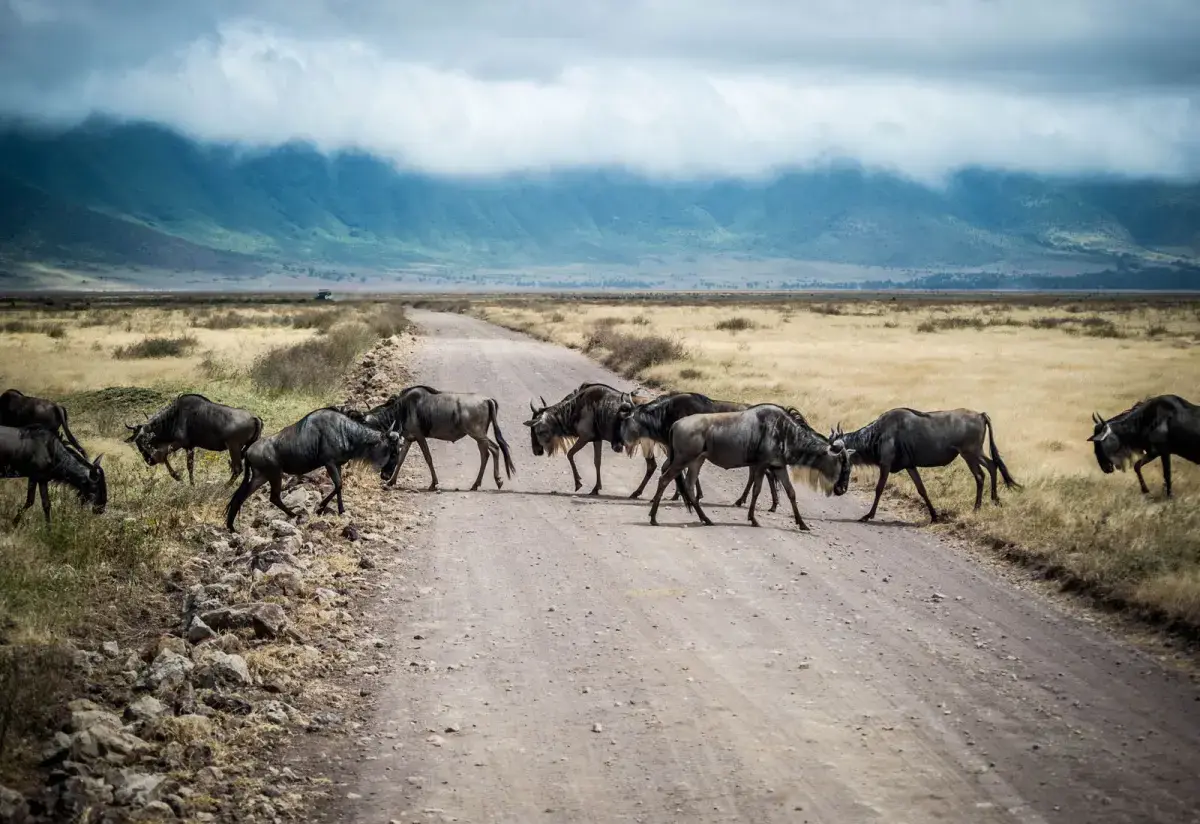
The Great Migration is one of nature’s greatest spectacles — over two million wildebeest, zebra and Thomson’s gazelle moving in a continuous cycle across the Serengeti–Mara ecosystem in search of fresh grazing. Timing is everything, and choosing the right location for your travel dates makes all the difference.
In January to March, the herds gather on the southern Serengeti plains for calving. This is a time of abundance for predators, with lion, cheetah and hyena taking advantage of vulnerable young — offering some of the most dramatic predator-prey action of the year.
From April through June, the herds begin moving north and west, forming long columns across the plains. By July and August, they reach the Grumeti and Mara rivers, where dramatic crossings can take place as crocodiles lie in wait. September and October often see the herds spread across the northern Serengeti and into the Maasai Mara.
Our Great Migration safaris focus on following the herds, not just visiting a single region. We base you in the right area for your dates, with experienced guides who read the movement and position you for the best chances without the crowds. Being mobile and flexible is key to a successful migration trip.
While river crossings grab the headlines, the full migration cycle has something special at every stage — from the tender calving season to the dust and drama of the crossings. We’ll help you pick the stage that best matches your priorities.
What makes this safari special
-
Wildebeest herds
Witness vast columns of wildebeest and zebra stretching to the horizon.
-
River crossings
Grumeti and Mara crossings are among Africa’s most dramatic wildlife events.
-
Intense predator action
Calving season brings peak predator activity on the southern plains.
-
Expert guiding
Our guides track herd movements daily to position you in the right place.
-
Photographic opportunities
Dawn and dusk light, dust clouds and action shots in abundance.
-
Mobile strategy
We adjust locations based on real-time movement for the best chance of sightings.
Safaris timed to the Great Migration
Carefully timed itineraries designed to follow the herds at the right stage of their annual cycle.

5-Day Serengeti Migration Safari
Five migration-driven days: follow the wildebeest herds across the Serengeti, then descend into the Ngorongoro Crater.
7-Day Great Migration Safari
Follow the wildebeest on their endless journey — three full Serengeti days tracking the Great Migration, bookended by Tarangire and Ngorongoro.

10-Day Great Migration Safari
Ten days built around the Great Migration — tracking the wildebeest herds and river crossings across the Serengeti, bookended by Tanzania’s other great parks.
Frequently asked questions
When is the best time to see the Great Migration?
It depends entirely on what you most want to see. January to March is best for the calving season on the southern Serengeti plains, when hundreds of thousands of wildebeest give birth and predators gather — some of the most dramatic action of the year. July to October is best for the river crossings at the Grumeti and Mara rivers, as the herds push north. April to June sees the herds on the move in long columns, a quieter but beautiful stage. Each period offers a genuinely different and equally rewarding experience, and there is no single “best” month. Tell us whether you are drawn to newborn calves and predators or to the drama of the crossings, and we will time your safari accordingly.
Where do the river crossings happen?
The famous Mara River crossings usually occur between July and October in the northern Serengeti and across the border in Kenya’s Maasai Mara, as the herds move north and then back south again. The Grumeti River crossings typically happen earlier, in June and July, as the herds push north through the western Serengeti corridor. The timing shifts a little each year with the rains, so the herds may arrive sooner or later than the calendar suggests. Some years the Mara is crossed in both directions, which can spread the drama over several weeks. Our guides watch the movement closely and position you in the right area, ready for the moment when the herds finally commit to the water.
Can I guarantee seeing a river crossing?
No, and any operator who promises one is being less than honest. River crossings are natural events that depend on rainfall, herd movement, grass and simple timing — none of which can be guaranteed in advance. The herds may gather for days before crossing, or cross at night when nobody can watch, and the exact spot is impossible to predict. What we can do is maximise your chances: base you in the right region for your dates, use guides who read the movement daily, and stay flexible enough to reposition as the herds shift. Even without a crossing, the northern Serengeti in season offers extraordinary wildlife. Nature sets the schedule, and patience is part of the reward.
Is the calving season worth it?
Absolutely. January to March offers some of the best value and most intense wildlife viewing of the year. Over a short window, hundreds of thousands of wildebeest give birth on the southern Serengeti plains, and the concentration of vulnerable newborns draws lions, cheetahs, leopards and hyenas into remarkable predator action. Because this is not the headline crossing season, the plains are quieter, lodges are often better priced, and you can enjoy superb sightings without the crowds. The scenery is green and lush after the short rains, and birdlife is excellent. For photographers and families especially, it is a gentler, more affordable way to witness the migration. We would happily build a calving-season safari around your dates.
How long should I spend on a migration safari?
We usually recommend six to eight days, which gives you the best chance of catching up with the herds and enough flexibility to reposition if they move. The migration is constantly on the move, so a few extra days mean you can follow it rather than hoping it comes to you. Shorter trips of four to five days can work well if they are timed precisely for a specific region — for example, the southern plains in February or the Mara River in August — and if you are comfortable focusing on one area. If your dates are fixed and tight, tell us and we will match them to whichever stage of the migration is most likely to be nearby, so you spend your time watching rather than travelling.
Should I stay in mobile camps?
Mobile camps move with the herds and can be excellent for getting close, often placing you within minutes of the wildebeest columns. They are typically comfortable, well-run tented camps that relocate a few times a year, so they follow the migration’s seasonal pattern rather than staying in one place. Permanent lodges and tented camps in strategic locations also work very well, and they offer more facilities and a lighter footprint. The right choice depends on your dates, budget and appetite for adventure — mobile camps feel more remote and immediate, while permanent camps are more predictable. We will recommend the best balance of comfort, location and flexibility for your particular trip.
Can I combine the Migration with Ngorongoro or Tarangire?
Yes, and many of our itineraries do exactly that. Adding Tarangire, with its elephants and baobabs, and the Ngorongoro Crater, with its dense concentration of wildlife, rounds out the Big Five and adds real variety to a migration trip. This combination works especially well outside the peak crossing window, when you can enjoy the crater and Tarangire at a gentler pace before or after the Serengeti. Because the parks sit on a natural loop, the driving or flying between them is straightforward, and we can sequence them to suit the season. Just bear in mind that combining regions means more time in transit, so we balance the days carefully. Tell us your priorities and we will build the mix.
Is a migration safari suitable for families?
Yes, though it is worth being realistic about the pace. River crossings can involve long days in the vehicle, early starts and a fair amount of waiting, which can be tiring for younger children. For families, the calving season is often the gentler option: the action is spread across the open plains, sightings are frequent and close to camp, and the days feel less rushed. We tailor the pace accordingly, building in breaks, pool time and shorter drives, and we choose family-friendly camps and vehicles. Older children and teenagers usually thrive on the drama of the migration. Tell us your children’s ages and interests and we will match the season and itinerary to suit the whole family.
Related safaris & guides

Ready to start planning?
Tell us your dates, group size and travel style. We will design a private Tanzania safari around you and send a full quote — free, with no obligation.