
Discover Ngorongoro Conservation Area
The Ngorongoro Conservation Area is one of the natural wonders of the world. At its heart lies the Ngorongoro Crater, the largest inactive, intact and unfilled volcanic caldera on Earth — a vast bowl roughly 19 km across whose flat, grassy floor is home to almost every major African mammal, including the critically endangered black rhino.
Unlike a national park, the conservation area is a UNESCO World Heritage Site where people and wildlife share the land. Maasai pastoralists have grazed their cattle on these highland plains for centuries and continue to do so today, living alongside wildebeest, zebra, lions and elephants in a remarkable model of multiple land use.
The crater floor is only part of the story. The wider conservation area takes in the Olduvai Gorge, one of the most important palaeoanthropological sites on Earth, the active volcano Ol Doinyo Lengai, the smaller Empakaai and Olmoti craters, and the wildlife-rich plains of Ndutu that form the southern extension of the Serengeti ecosystem.
Combined with the Serengeti, Tarangire and Lake Manyara, the Ngorongoro is the indispensable highlight of Tanzania’s classic Northern Circuit. Tell our local team your dates and we will build the itinerary that fits.
Why visit Ngorongoro Conservation Area
-
The world’s largest caldera
A pristine volcanic bowl about 19 km wide and 600 m deep, holding a complete ecosystem on its floor.
-
The Big Five
Lion, leopard, elephant, buffalo and black rhino all live within the crater — one of the best places to tick them off.
-
Exceptional predators
One of the densest lion populations in Africa, plus cheetah, hyena and the elusive crater leopard.
-
Flamingos on Lake Magadi
The crater’s pink soda lake draws thousands of flamingos and hosts a huge variety of waterbirds.
-
Maasai culture
Meet Maasai families who live and herd livestock within the conservation area on their own terms.
-
Olduvai Gorge
Walk the “Cradle of Mankind”, where some of the earliest evidence of human ancestors was unearthed.
Inside the Ngorongoro Crater
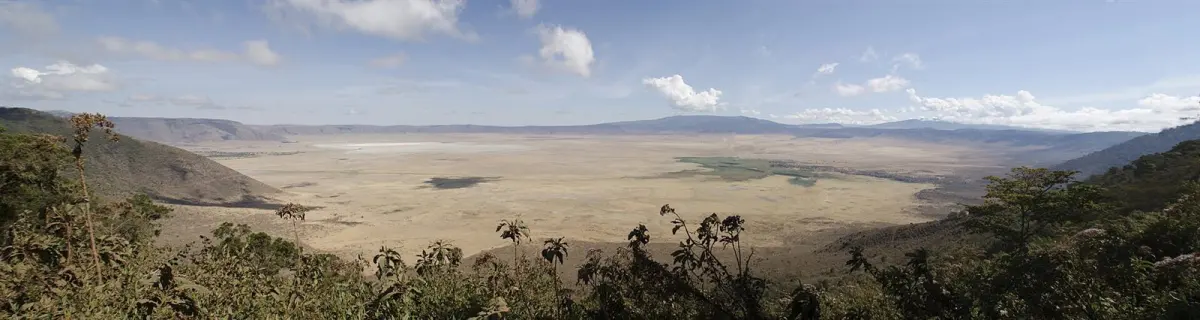
Descending the crater rim on a winding forest road feels like entering another world. The floor spreads out below at around 1,700 m, a mosaic of open grassland, acacia woodland and the reed-fringed soda waters of Lake Magadi, while the surrounding walls rise some 600 m to a cool, misty rim.
Because the crater is enclosed, its wildlife is largely resident — animals rarely leave, so sightings are far more predictable than in the open plains. The famous Lerai Forest, of tall yellow-barked acacia, shelters elephants, baboons and bushbuck, while the Lerai and Ngoitokitok springs keep the area green through the dry season.
A full day on the crater floor is the classic experience, with a picnic stop beside the hippo pool at Ngoitokitok. Game viewing is superb year-round, though crowds are heaviest in the morning, so an early descent is always worthwhile.
The wider conservation area
The Ngorongoro Conservation Area covers 8,292 km² of highland, forest, crater and plain — far more than the famous caldera alone. The best-known extra highlights are the Ndutu plains, the smaller craters and the volcanoes that frame the whole landscape.
- Ndutu & the short-grass plains — the southern Serengeti ecosystem, where wildebeest calve between January and March.
- Olduvai Gorge — the “Cradle of Mankind”, with a museum and views over the fossil beds.
- Empakaai Crater — a beautiful, forested crater with a soda lake, reached on foot with an armed ranger.
- Olmoti Crater — a shallow, grassy crater near the road to Ol Doinyo Lengai, with waterfalls and Maasai grazing land.
- Ol Doinyo Lengai — the “Mountain of God”, the only volcano on Earth that erupts cool, white natrocarbonatite lava.
- Maasai villages — cultural visits and the highland market town of Karatu on the crater’s edge.
Olduvai Gorge & human origins
Just west of the crater, the Olduvai Gorge is one of the most important fossil sites in the world. It was here, in the 1950s and 60s, that Louis and Mary Leakey unearthed the remains of early hominins such as Paranthropus boisei and Homo habilis, along with some of the oldest stone tools ever found.
Dubbed the “Cradle of Mankind”, the gorge exposes layer upon layer of sediment spanning some two million years, recording the evolution of our ancestors alongside extinct animals. A small museum on the rim explains the discoveries, and Maasai guides bring the dizzying timeline to life.
The site is included in the UNESCO listing and forms an essential cultural counterpoint to the wildlife — a reminder that this landscape has been central to the human story for millions of years.
Living with wildlife
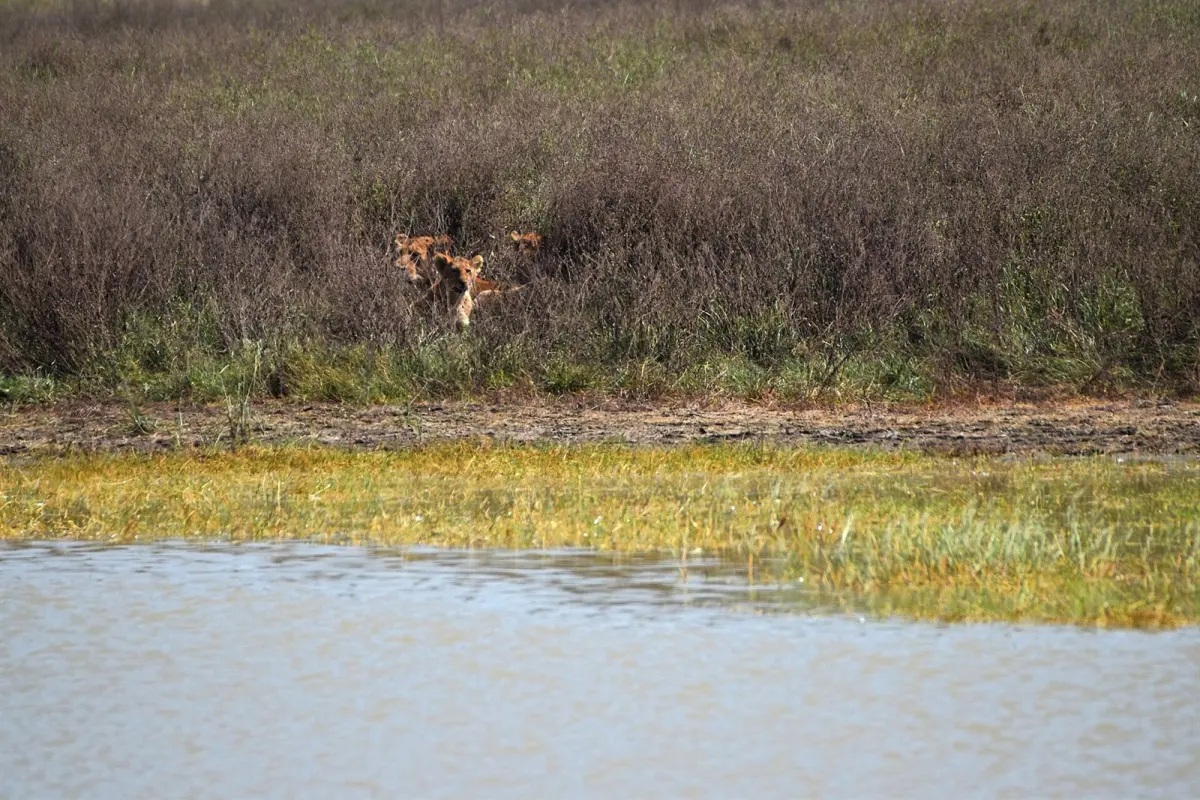
The Ngorongoro Conservation Area was created not only to protect wildlife but also to safeguard the grazing rights of the Maasai, who had been displaced from the Serengeti when it became a national park. Today it is one of the few places where people and big game genuinely share the same land.
You will see Maasai herders moving their cattle across the highland plains, sometimes within sight of lions and elephants — a delicate and sometimes tense coexistence that conservationists study closely. Cultural visits to bomas offer a respectful introduction to Maasai homesteads, beadwork, singing and the famous jumping dance.
Done right, tourism helps local families earn directly from conservation, strengthening the case for protecting both the wildlife and the pastoral way of life that gives this place its extraordinary character.
Fees & practical information
The crater is entered on a timed descent permit, and the conservation area charges fees per person, per 24-hour period, plus vehicle and crater-service fees. Rates are set by the government and reviewed periodically, so we always confirm current amounts when you book.
A few practical points to keep in mind when planning your visit:
- Only 4x4 vehicles with a licensed guide are allowed down into the crater, and viewing time is limited.
- Open daily from around 6:00 am; gates and the crater descent have set hours.
- Most visitors stay on the crater rim or in Karatu, so at least one overnight is usual.
- Picnic lunches on the crater floor are standard — eat in the designated areas and watch for black kites.
- Drones need special authorisation and are not permitted for casual use.
What you might see
Because the crater is enclosed, its animals stay put — making Ngorongoro one of the most reliable places in Africa to see the Big Five.

Black rhino
A key stronghold for this endangered species, best found early on the open grassland of the crater floor.

Lion
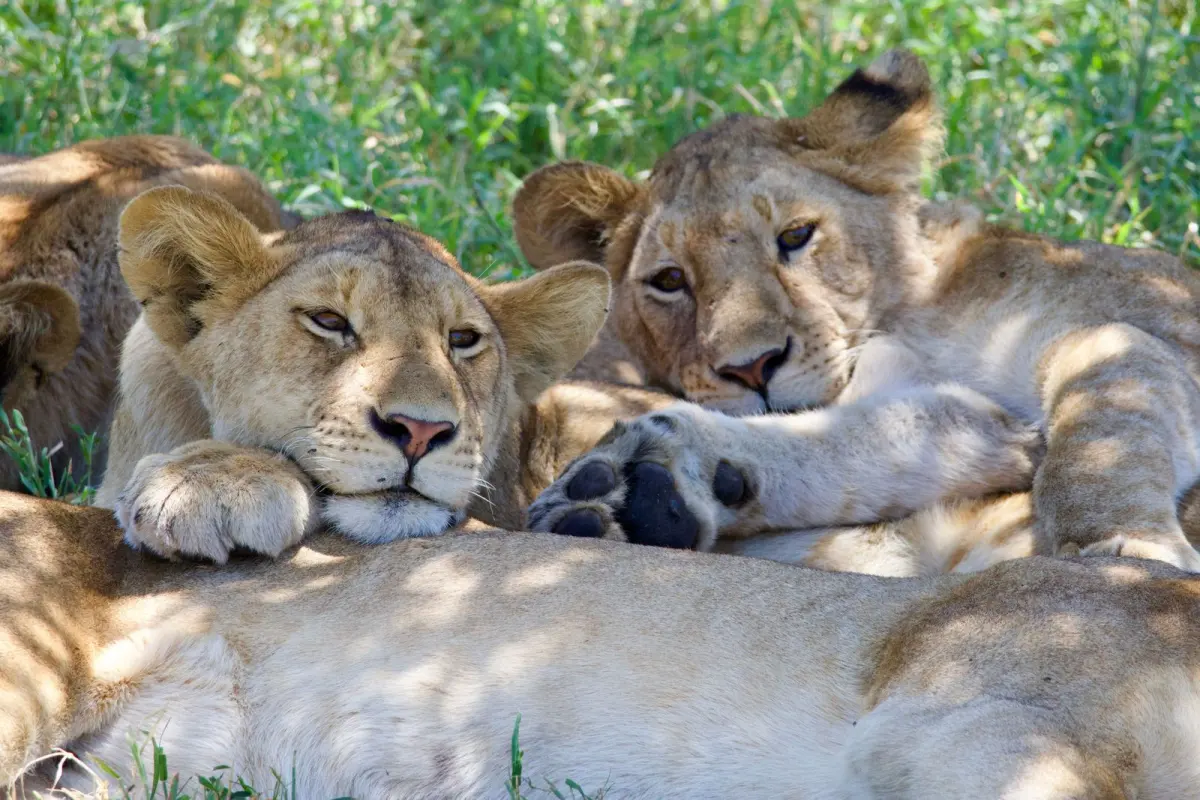
One of the densest lion populations in Africa, with large prides often seen resting beside the roads.

Elephant
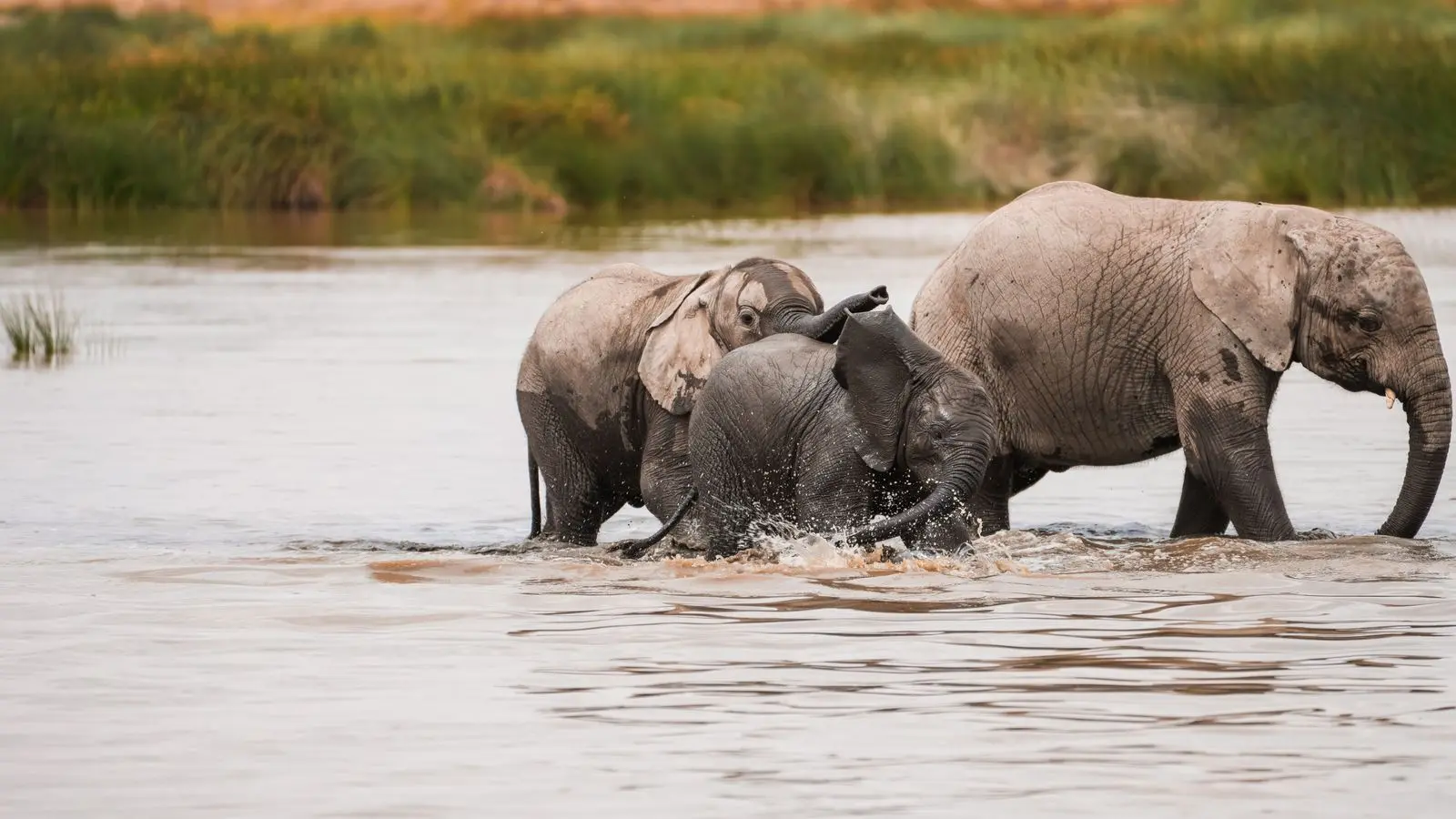
Mostly older bulls with impressive tusks, feeding in the Lerai Forest and along the crater rim.

Buffalo & wildebeest
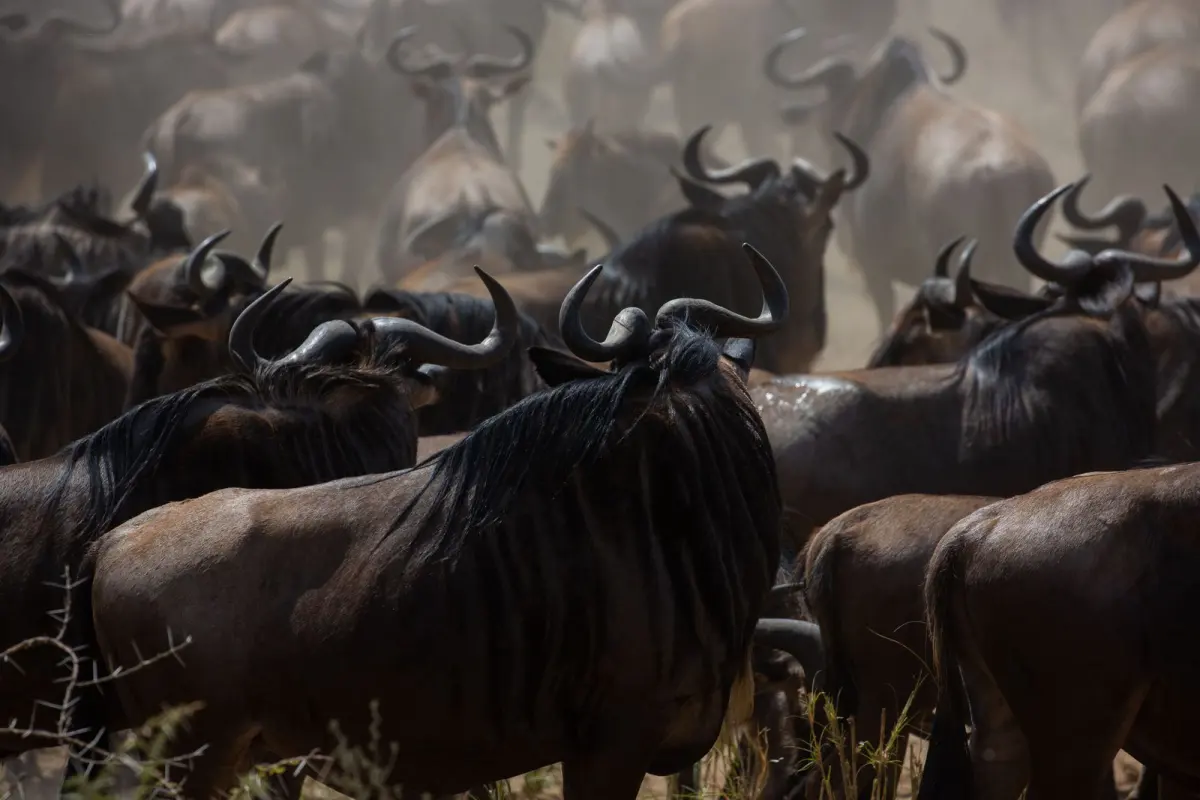
Vast resident herds graze the crater floor year-round alongside zebra and gazelle.
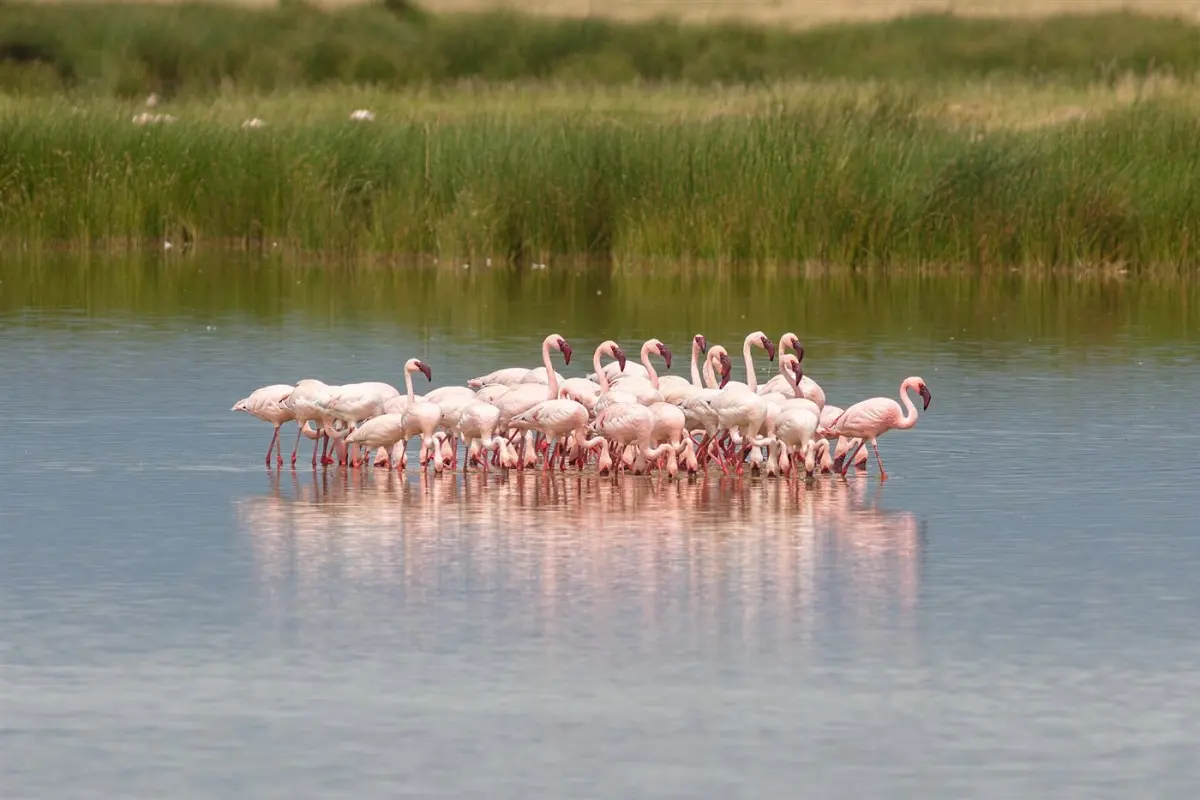
Flamingo & waterbirds
Lake Magadi’s alkaline water attracts flamingos, pelicans, storks and crowned cranes.

Cheetah & hyena
The open plains suit cheetah, while spotted hyenas are among the crater’s most numerous predators.

Hippo
The Ngoitokitok pool holds a resident pod that provides one of the crater’s classic picnic views.
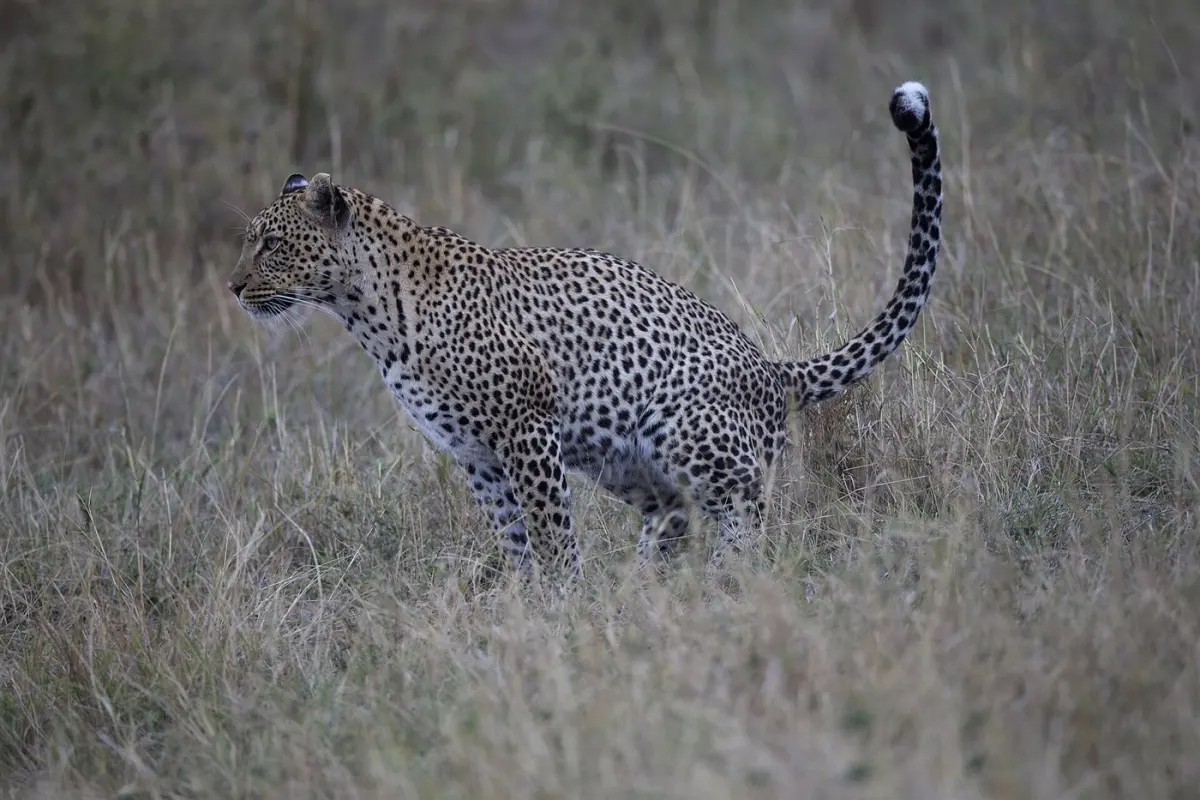
Leopard & serval
Leopards haunt the rim forest, and the elegant serval is an occasional crater-floor reward.
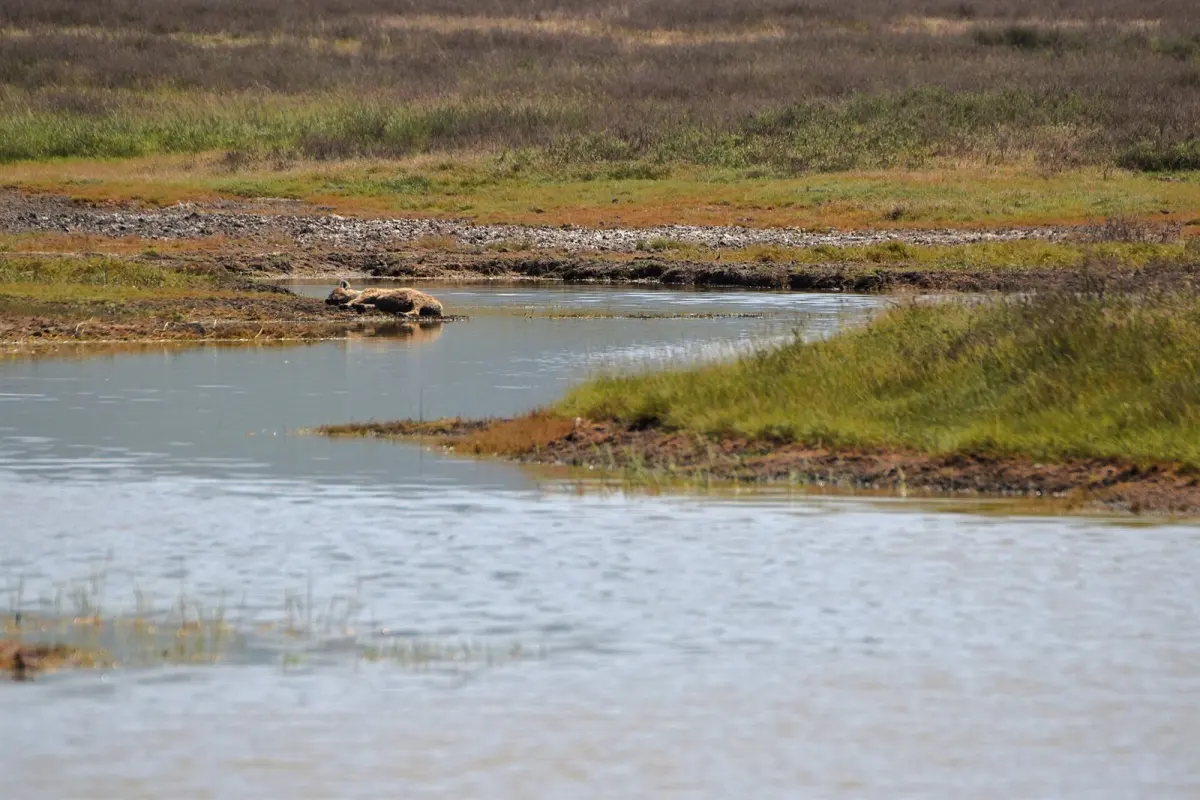
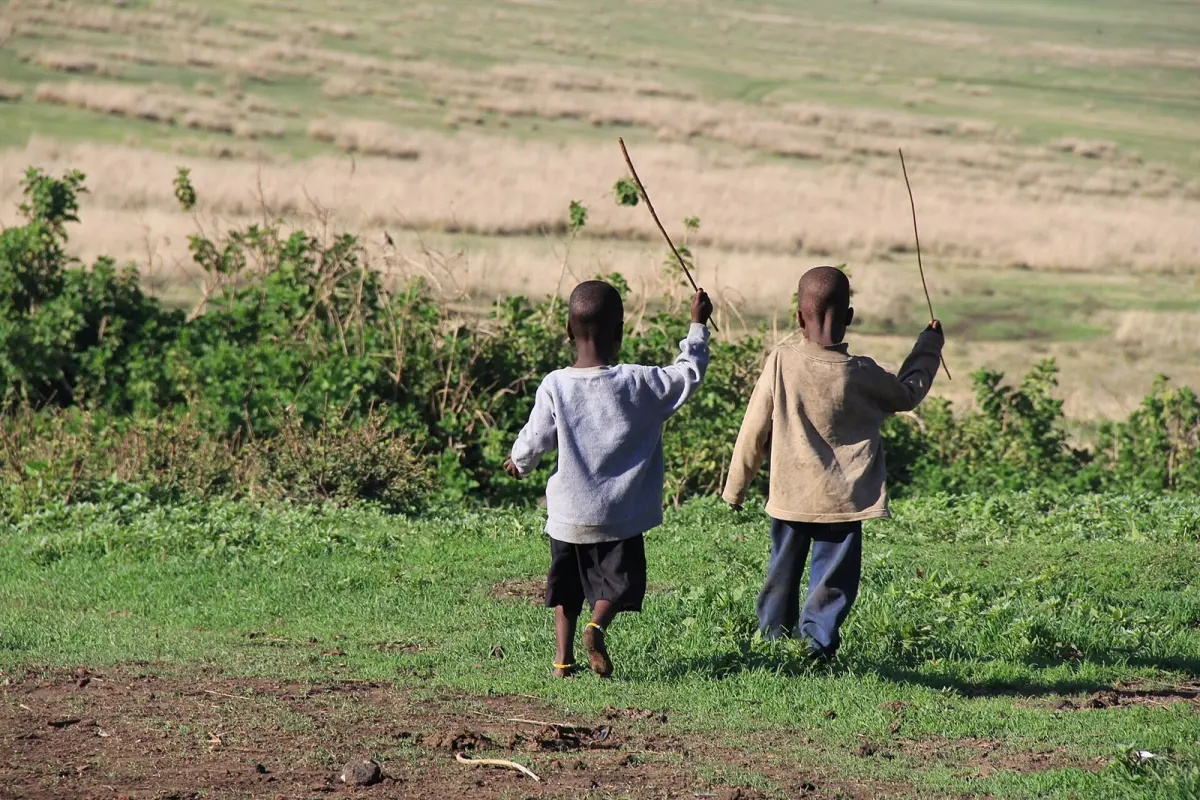
Ngorongoro Conservation Area in pictures




Best time to visit
The Ngorongoro Crater delivers excellent game viewing all year; the dry season is best for photography and for spotting black rhino.
| Season | Weather | Crowds | What to expect |
|---|---|---|---|
| Jan–Mar | Warm days, green grass | Moderate | Great general game viewing; the Ndutu calving is nearby |
| Apr–May | Long rains, cool and misty | Low | Lush scenery, quiet crater and lower rates |
| Jun–Oct | Cool and dry | Very high | Best visibility, short grass and reliable rhino sightings |
| Nov–Dec | Short rains, warmer | Moderate | Green season value and migrating birds return |
Things to do
Crater game drives
Descend into the caldera for a full day among the Big Five, with a picnic beside the hippo pool.
Crater-rim & Empakaai walks
Guided walks with an armed ranger along the rim and down to the Empakaai crater lake.
Maasai cultural visits
Visit a Maasai boma to learn about pastoral life, crafts and traditions on the highlands.
Olduvai Gorge
Explore the fossil beds and museum at the “Cradle of Mankind” on the road to the Serengeti.
Photography
Early-morning light over the crater and dramatic rim panoramas make this a photographer’s favourite.
Birdwatching
Over 500 species recorded, from flamingos on Lake Magadi to raptors along the rim.
Where to stay
Crater-rim lodges
Spectacular high-end lodges perched on the rim with crater views and full service. <!-- TODO: lodge names -->
Karatu lodges & camps
Comfortable lodges and tented camps around Karatu, a short drive from the descent gate. <!-- TODO: lodge names -->
Camping & guesthouses
Public campsites and simple guesthouses for travellers keeping costs down. <!-- TODO: lodge names -->
Getting there & around
Most travellers reach the Ngorongoro Conservation Area by road from Arusha (about 3 hours) or Moshi, usually as part of a northern circuit itinerary linking Tarangire, Lake Manyara and the Serengeti. The crater descent gate is reached from the rim town of Karatu.
It is also possible to fly into the nearby Lake Manyara or Ndutu airstrips on a light aircraft, then drive to the crater. A 4x4 with a licensed guide is required for the crater floor, and descent permits are limited, so we arrange these in advance as part of your package.
- By road from Arusha About 3 hrs to the rim
- Crater descent Permit-controlled, ~6 hr on the floor
- Best explored 1–2 days
- Gate fees Conservation & crater fees apply
Frequently asked questions
What is the difference between the Ngorongoro Crater and the conservation area?
The crater is the famous caldera at the centre, while the Ngorongoro Conservation Area is the much larger (8,292 km²) UNESCO-protected territory around it, which includes Ndutu, Olduvai Gorge, Empakaai and Olmoti craters and the active Ol Doinyo Lengai.
When is the best time to visit the Ngorongoro Crater?
The dry season from June to October gives the greenest, most reliable game viewing, with excellent conditions for spotting black rhino. The calving season around Ndutu (January–March) is superb too, while the green season is quieter and better value.
Will I see the Big Five in the crater?
The crater offers one of the best chances in Africa to see all of the Big Five — lion, leopard, elephant, buffalo and black rhino. Lion and elephant sightings are almost guaranteed, buffalo and rhino are common, while leopard is the hardest to spot.
How long do you spend in the Ngorongoro Crater?
A typical visit is a full day — an early descent, a morning of game viewing, a picnic lunch at the hippo pool and an afternoon drive before climbing back up the rim. Some travellers also add a second day or crater-rim walks.
Is the Ngorongoro Crater crowded?
It can be busy in the high season, especially in the mornings, because it is such a famous destination. Going down as early as possible, or visiting outside the peak months, gives a quieter and more enjoyable experience.
Do people live inside the Ngorongoro Conservation Area?
Yes. The conservation area was created specifically so that Maasai pastoralists could continue to live and graze their livestock there alongside the wildlife — a rare, and carefully managed, example of people and big game sharing the same land.
Nearby destinations


Ready to plan your Ngorongoro Conservation Area trip?
Tell us your dates and travel style. Our local team in Moshi will build a tailor-made itinerary around Ngorongoro Conservation Area — free, with no obligation.