
A Tanzania safari is one of the few travel experiences that genuinely lives up to the photograph. The plains really are that wide, the light really is that gold at the end of the day, and a pride of lions on a rock at dawn is still the best reason most people ever board a long-haul flight. The good news is that a safari is also far simpler to arrange than it looks from the outside.
This guide is the one we wish every first-time visitor would read before they enquire. It explains how a safari actually works, how to choose between the circuits and styles, when to travel, what you are likely to see, how the days are structured, how accommodation is graded, how you get around, what to do about health and visas, and how to book without being oversold. It is written by a team based in Moshi, at the foot of Kilimanjaro, who run these routes every week of the year.
Read it end to end for the full picture, or use the contents list to jump to the part you need. When you are ready, we will turn any of it into a private itinerary built around your own dates — with no obligation and no pressure.
How a Tanzania safari works
Strip away the romance for a moment and a safari is a small, well-organised expedition. You travel in a purpose-built 4x4 with a pop-up roof, driven by a professional guide who is also your naturalist, your mechanic, your translator and often the person who spots the leopard you would have driven straight past. The day is built around wildlife activity, which peaks at first light and again in the last hour before sunset, so the rhythm of a safari is early starts and long, lazy afternoons rather than a packed schedule.
Most of what you pay for is the infrastructure around that: park entry fees, the vehicle and its fuel, a licensed guide, the accommodation, and full-board meals. Tanzania prices safaris per person per day, and the number moves with the season, the standard of lodging and how you travel between parks. Understanding that structure is the key to understanding every quote you will receive.
- The vehicle. A 4x4 Land Cruiser or similar with a pop-up roof for standing and viewing, configured for game drives with cool boxes and a charging point.
- The guide. A licensed, English-speaking driver-guide who knows the parks, the wildlife and the tracks, and who effectively manages your whole trip.
- The parks. Entry is by permit and fee, paid per person per day, and it is the single largest fixed cost of most itineraries.
- The accommodation. Lodges, permanent tented camps or mobile camps, usually full-board, inside or on the edge of the parks.
- The transfers. Road transfers between parks, airport pick-ups, and internal light-aircraft flights where the distances are long.
A safari is not a checklist
The best trips leave room to sit with a sighting rather than race to the next one. When you are comparing itineraries, look at how many hours of actual game driving each day contains — not just how many parks it lists.
| Game-drive day | Transfer day | |
|---|---|---|
| Mileage | Low, looping within one park | Higher, moving between parks |
| Wildlife | Deep and unhurried | Incidental sightings en route |
| Example | Seronera loop in the Serengeti | Manyara to the central Serengeti |
Choosing a circuit: north, south or west
Tanzania is not one safari destination but three broad regions, each with its own parks, wildlife and feel. Where you go shapes everything else — the cost, the crowds, the driving distances and the animals you are most likely to see. Most visitors start in the north, and for a first safari that is almost always the right call, but it is worth knowing what the alternatives offer.
The northern circuit
The north is the classic Tanzania: the endless plains of the Serengeti, the wildlife-packed Ngorongoro Crater, the elephant herds and baobabs of Tarangire, and the groundwater forest of Lake Manyara. It has the densest concentration of wildlife and the smoothest tourism infrastructure in the country, which makes it busy and relatively expensive, but also comfortable and reliable. If you have one safari in you, this is where to spend it.
The southern circuit
The south is wilder, greener and far quieter. Ruaha and Nyerere (the old Selous) are vast, remote parks where you can drive for hours without passing another vehicle, and where boat safaris and walking safaris add a different dimension to the standard game drive. Access is usually by light aircraft, and the atmosphere is more expedition than resort. The south rewards repeat visitors and travellers who value solitude over ticking off a list.
The western circuit
The far west is the most remote safari experience in Tanzania, centred on chimpanzee tracking in the Mahale Mountains and Gombe Stream, with Katavi for big-game wilderness. It is reached by charter flight, it is costly, and it is unforgettable. The west is for travellers who have already done the classic parks and want something genuinely different.
| Circuit | Headline parks | Feel | Best for |
|---|---|---|---|
| Northern | Serengeti, Ngorongoro, Tarangire, Manyara | Busy but spectacular | First safaris, Big Five, the Great Migration |
| Southern | Ruaha, Nyerere (Selous), Mikumi | Wild and uncrowded | Repeat visitors, walking and boat safaris |
| Western | Mahale, Gombe, Katavi | Remote and exclusive | Chimpanzees, true wilderness |
The Ngorongoro Crater is not a park
The crater sits inside the Ngorongoro Conservation Area, a multiple-use zone where Maasai communities still live and graze cattle alongside the wildlife. That shared landscape is part of why the area feels alive rather than fenced off.
Choosing a safari style
Circuit decides where you go; style decides how you go. The same ten days in the Serengeti can be a shoestring camping adventure, a mid-range lodge trip or a private, all-inclusive luxury safari, and the difference in both cost and feel is enormous. None of these styles is better than another — the right one is simply the one that matches your budget, your group and your idea of a good holiday.
Private safaris
On a private safari you have your own vehicle and guide for the whole trip. You set the pace, decide when to stop and how long to stay with a sighting, and the itinerary bends around you rather than the other way round. It is the most flexible option and the one we recommend for families, photographers and anyone who values privacy. It costs more per person than sharing, but for a small group it is often closer in price than people expect.
Group-joining safaris
Group-joining trips put you in a vehicle with other like-minded travellers on a fixed departure, which spreads the fixed costs and brings the per-person price down. You trade a little flexibility for good value and a social atmosphere. It is an excellent choice for solo travellers and couples on a budget who are happy to share the adventure.
Camping safaris
Camping is the most affordable and, for many people, the most memorable way to safari. You sleep in a tent under a sky thick with stars, often inside the park, with the sounds of the bush for company. Camping ranges from basic public campsites to comfortable permanent tented camps with proper beds and en-suite facilities, so the word covers a wide spectrum.
Luxury and honeymoon safaris
At the top of the range are the private conservancies, tented suites and design lodges with plunge pools, fine dining and personalised service. These trips often include extras such as private guides, balloon safaris and spa treatments. For a honeymoon or a special anniversary, the combination of a remote lodge and the coast is hard to beat.
Family safaris
Tanzania is a wonderful destination for children, provided the trip is built for them. Shorter drives, a vehicle to yourselves, lodges with pools and space to run, and guides who are good with young travellers make all the difference. We generally suggest a minimum age of about five, and we plan family itineraries around the energy levels of the youngest member of the group.
You can mix styles
There is no rule that says a trip must be all one thing. Plenty of guests combine a few nights of comfortable camping with a couple of luxury lodges, or a group departure with a private extension. Tell us what matters and we will blend it.
The best time to go
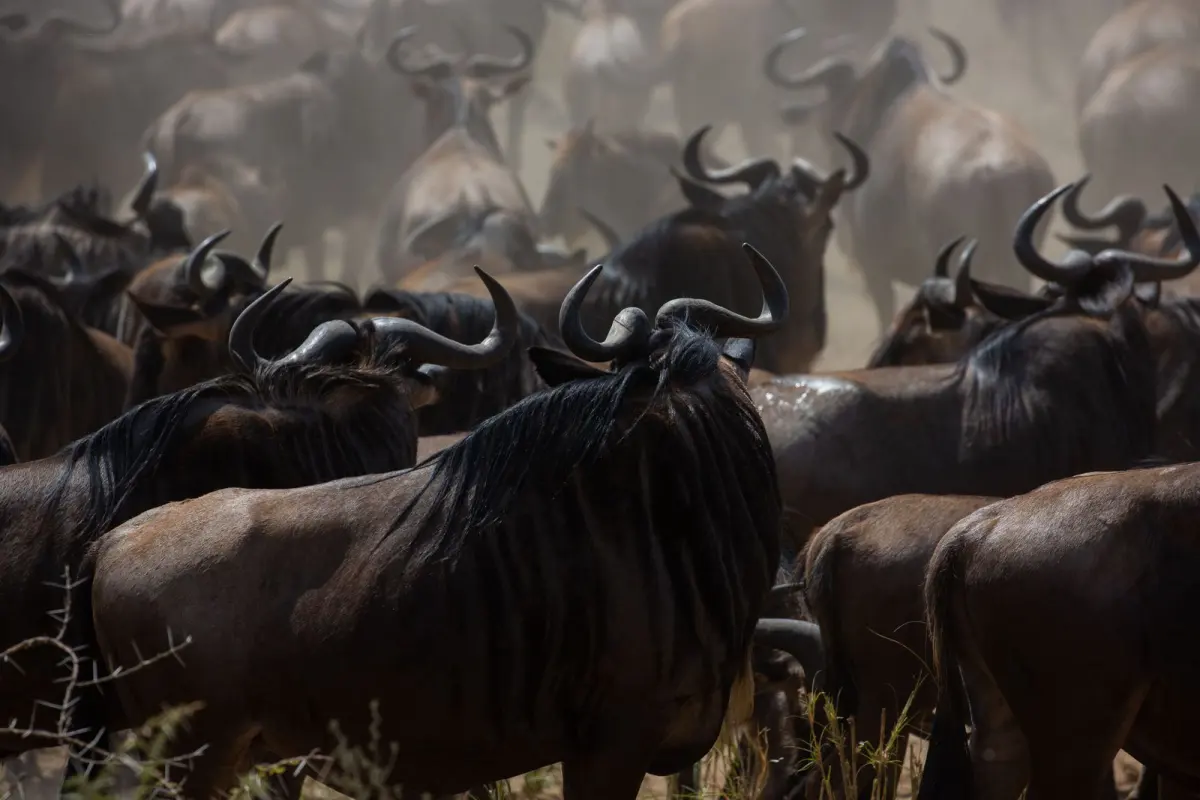
Tanzania sits just south of the equator and is a genuine year-round destination, but the seasons do change what a safari feels like. Broadly, the dry months from June to October offer the most reliable wildlife viewing and pleasant, rain-free weather, while the green season from November to May is quieter, cheaper and beautifully lush. The single most important seasonal event is the Great Migration, the endless circular movement of some two million wildebeest, zebra and gazelle across the Serengeti ecosystem.
It helps to think of the year in three parts. The long dry season, from June to October, concentrates wildlife around water and is the classic safari window. The short dry season, January and February, brings the wildebeest calving on the southern plains and excellent predator viewing. Between them, the long rains from March to May and the short rains in November and December fill the plains with green grass and fill the parks with birds — and empty them of crowds.
| Season | Weather | Crowds | What to expect |
|---|---|---|---|
| Jan – Feb | Warm, mostly dry | Moderate | Calving on the southern Serengeti plains; superb predators |
| Mar – May | Long rains | Low | Lush green scenery, low prices, some tracks impassable |
| Jun – Oct | Dry, cool mornings | High | Best all-round viewing; herds gather at rivers and water |
| Nov – Dec | Short rains | Moderate | Green landscapes, excellent birding, good value |
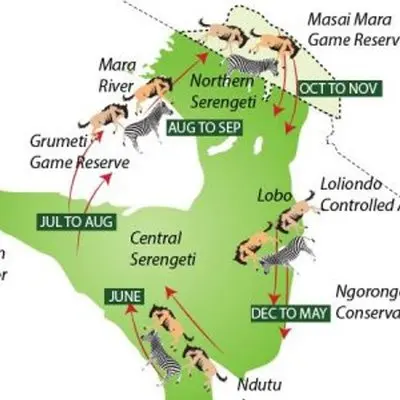
For a deeper month-by-month breakdown, our companion guide to the best time to visit Tanzania safari looks at each season, each park and the movement of the herds in detail.
There is no bad month, only a different month
The green season is often the best value of the year, with dramatic skies, newborn animals and few other vehicles. If your dates are fixed, do not assume they are wrong — tell us when you are travelling and we will build the trip around what is at its best.
The wildlife you will see
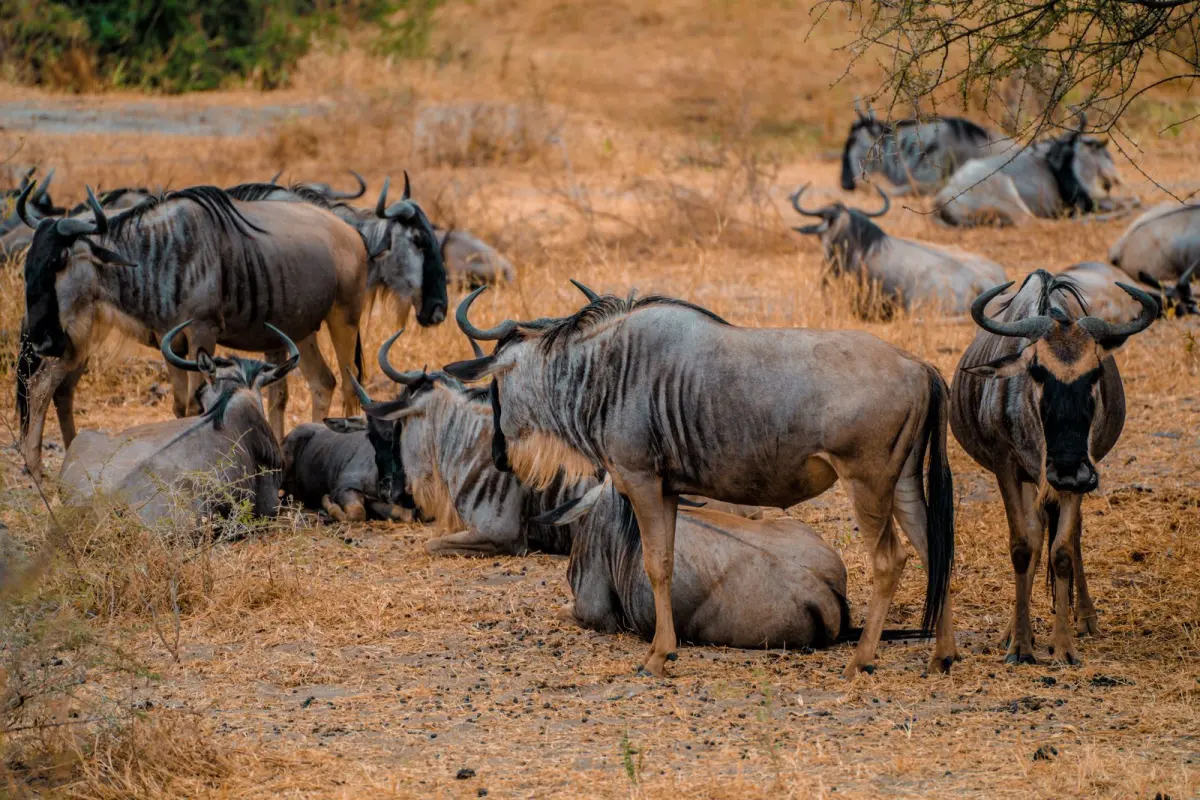
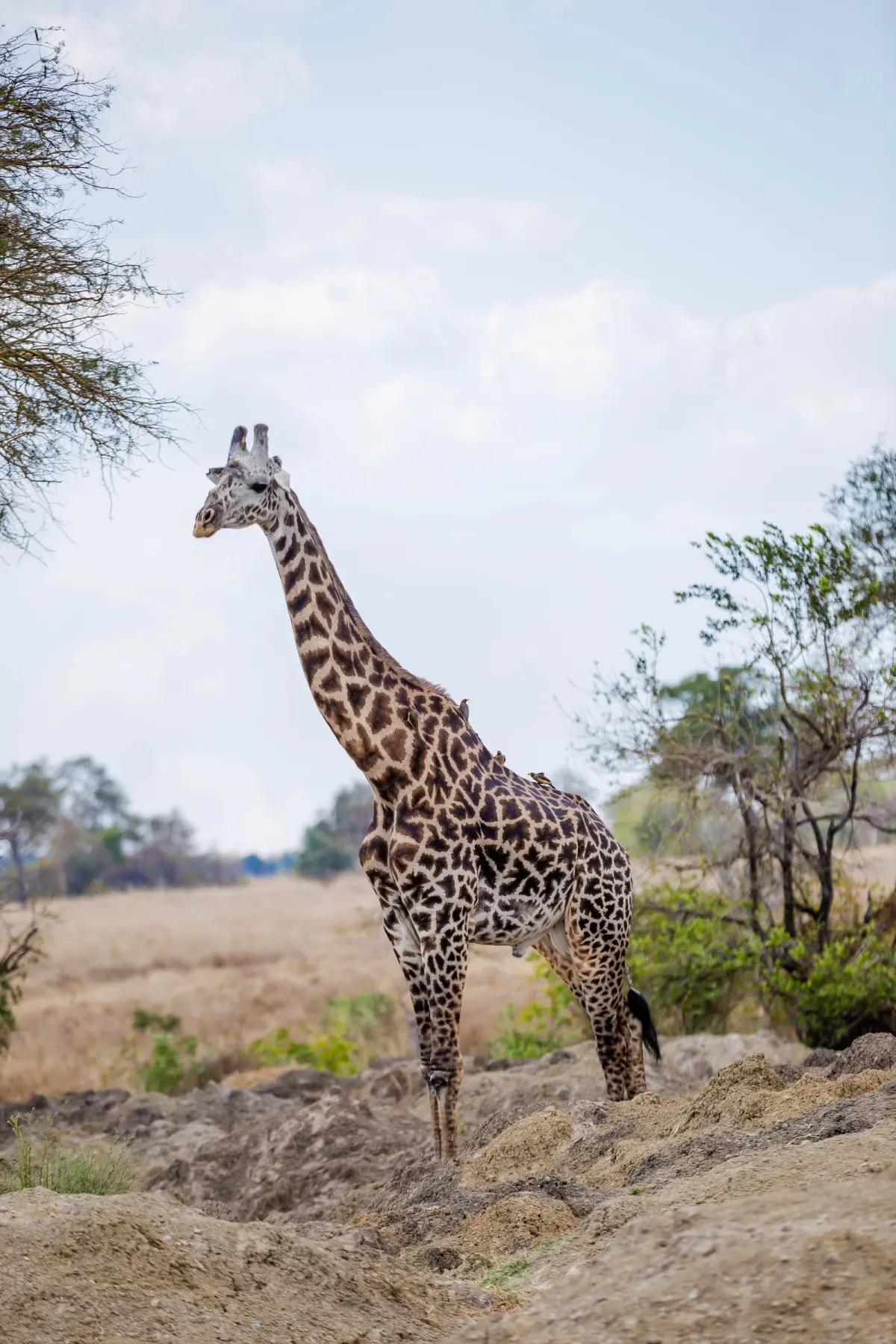
Tanzania holds some of the greatest concentrations of large mammals on Earth, and the northern parks in particular are almost embarrassingly rich. The so-called Big Five — lion, leopard, elephant, buffalo and rhino — are all present, though the leopard is elusive and the black rhino is genuinely rare and effectively confined to the Ngorongoro Crater and a handful of other strongholds. Beyond them are cheetah, giraffe, hippo, zebra, wildebeest, hyena, jackal and dozens of antelope species, from the tiny dik-dik to the magnificent eland.
The birds deserve a mention of their own. Tanzania has over a thousand recorded species, and even a casual visitor will notice the big, obvious ones: the lilac-breasted roller, the fish eagle, hornbills, vultures, storks and, at Lake Manyara and in the crater, huge flocks of flamingos. Birders plan whole trips around the green season, when migratory species arrive and the resident birds are in full breeding plumage.
- The Serengeti is the place for big cats — lion, cheetah and the resident leopard — plus the full sweep of the migration.
- The Ngorongoro Crater is the most reliable place in Tanzania to see black rhino and one of the few where you can tick off the Big Five in a single day.
- Tarangire is famous above all for elephants, often in enormous herds, especially in the dry season.
- Lake Manyara is known for its tree-climbing lions, large troops of baboons, hippos and seasonal flamingos.
- The southern parks add wild dog, sable and roan antelope, and a wildness that the busier north cannot match.

Manage your expectations — gently
Wildlife is wild. No guide can promise a leopard on a given morning. What good guides do promise is time, patience and the knowledge of where to look, which is why two full days in a park beat four rushed half-days.
If seeing the migration is the goal, timing and location matter far more than which park you enter. The herds move constantly, and the stomach-wrenching river crossings are unpredictable. Our guide to a Great Migration safari explains where the herds are, month by month, and how to raise your chances.
How a safari day works
Safari days are built around the animals, not the clock, and the animals are most active when the air is cool. That means the alarm usually goes off well before sunrise. You are out of the gate as the light comes up, coffee and a light breakfast under your belt, ideally with a packed lunch so you can stay out all day rather than return to camp at midday. The middle hours are hot and quiet, which is why many lodges encourage a siesta, before an afternoon drive takes you into the golden hour that photographers live for.
There is no single template — a day in the crater looks different from a day in the Serengeti, and a transfer day is different again — but most full game-drive days follow a recognisable shape.
| Time | What happens |
|---|---|
| Before sunrise | Wake-up call, tea or coffee, light breakfast at the lodge or camp |
| 06:00 – 06:30 | Out of camp as the gates open, into the best light of the day |
| 06:30 – 12:00 | Prime game driving: big cats on the move, active herds, best photography |
| 12:00 – 13:00 | Brunch or packed lunch in the bush or back at camp |
| 13:00 – 15:30 | The hot, quiet hours — rest, read, swim, charge batteries |
| 16:00 – 18:30 | Afternoon game drive into golden hour, often with sundowners |
| 19:00 onwards | Dinner, a drink around the fire and an early night |
Pack a little patience
Binoculars and a good zoom lens reward the patient. So does putting the camera down occasionally — the memory of a lion drinking at dusk is worth more than a slightly sharper frame.
Accommodation explained
Accommodation is where the widest range of both price and quality lives in a Tanzania safari, so it is worth understanding the categories before you compare quotes. The tiers are not strictly about stars and thread counts, they are about location, facilities and, above all, the experience of being in the bush. A simple camp inside the Serengeti can feel far more special than a grand hotel two hours outside it.
Lodges
Lodges are permanent, built structures with rooms, en-suite bathrooms, restaurants and often pools. They range from comfortable mid-range properties to genuinely luxurious design hotels with every facility you could want. Lodges on a crater rim or with a waterhole in front of them are worth seeking out because the wildlife comes to you.
Tented camps
Tented camps bridge the gap between camping and a lodge. Permanent camps have proper beds, en-suite bathrooms and, often, hot water and electricity, all under canvas in some of the most atmospheric locations in the parks. Sleeping with the sounds of the bush just outside is one of the great safari pleasures, and it is a category many repeat visitors prefer to lodges.
Mobile and seasonal camps
Mobile camps are set up to follow the migration, pitched in a new location every few months so guests are always close to the herds. They can be luxurious, but their defining feature is position. This is the way to be in the right place at the right time during the movement seasons.
Camping
At the value end of the market are camping safaris, using either basic public campsites within the parks or slightly more comfortable permanent camps. Facilities are shared and the comfort level varies, but the location and the sense of adventure are hard to beat, and camping makes a genuine safari accessible on a modest budget.
| Style | Facilities | Feel | Relative cost |
|---|---|---|---|
| Luxury lodge | Private decks, pools, fine dining | Indulgent and private | Highest |
| Mid-range lodge | En-suite rooms, restaurant, bar | Comfortable and easy | Moderate to high |
| Tented camp | En-suite canvas rooms, hot water, dining tent | Atmospheric and close to nature | Moderate |
| Mobile camp | Full service, repositioned with the herds | Exclusive and well placed | High |
| Camping safari | Shared facilities, tents you may help with | Adventurous and simple | Lowest |
Location beats luxury
A modest camp inside the park, where you are already in the wildlife when the gate opens, will usually out-do a lavish lodge an hour away. When budgets are limited, spend on location and time in the park, not on thread count.
Getting there and internal flights
Almost every Tanzania safari begins and ends at either Kilimanjaro International Airport, between Moshi and Arusha, or at Arusha Airport for domestic connections. Kilimanjaro International is the natural gateway for the northern parks, as well as for a Kilimanjaro climb, while Dar es Salaam is the hub for the south and the coast. From the international gateways, you either drive to the parks or take a scheduled light aircraft.
Driving is the traditional way to safari and part of the experience, but distances in Tanzania are large and the final approach to some parks is a long day on the road. Flying skips the long transfers, buys back precious hours in the park and gives you aerial views of the plains that are worth the fare on their own. For the southern and western circuits, flying is effectively the only practical option.
- Drive-in, drive-out. The classic approach: you and your guide travel together throughout, with all the flexibility that brings. Best value, more time in the vehicle.
- Fly-in safaris. Fly directly to an airstrip inside or near the park, then safari from there. Best for tight schedules and remote regions.
- Mixed itineraries. Fly the longest leg and drive the shorter ones — often the smartest balance of time, comfort and cost.
- Group transfers. Shared shuttles and light-aircraft links between Arusha, the Serengeti and Zanzibar connect a safari to the beach.
Build in a buffer night
If you are connecting to an international flight, spend your final night in Arusha or Moshi rather than gambling on a bush airstrip and a delayed connection. It is a small cost that protects a very expensive flight home.
Health, visas and safety
A Tanzania safari is a very safe and comfortable holiday, and a little preparation removes almost all of the uncertainty. Most international visitors need a visa, which can be arranged online in advance or on arrival, and your passport should have at least six months of validity and several blank pages. A yellow fever certificate is required if you are arriving from a country with risk of transmission, and some travellers choose to be vaccinated against hepatitis A, typhoid and tetanus as a precaution.
The most commonly discussed health topic is malaria, which is present in lowland and some park areas. Most doctors recommend antimalarial medication for safari travel, alongside diligent use of repellent and mosquito nets at night. This page is not medical advice — please speak to a travel clinic or your doctor well before you fly, ideally six to eight weeks ahead, so any course of vaccinations has time to work.
- Visa. Arrange online before you travel, or on arrival where eligible; check your nationality before you fly.
- Vaccinations. Confirm routine immunisations are current and discuss hepatitis A, typhoid and yellow fever with a clinic.
- Malaria. Antimalarials, repellent, covered arms and legs at dusk, and a mosquito net over the bed.
- Insurance. Comprehensive travel and medical insurance that explicitly covers safari activities and evacuation.
- Sun and hydration. The equatorial sun is fierce even when it is not hot; hats, high-factor sunscreen and constant water.
- Food and water. Drink bottled or treated water, eat freshly cooked food, and keep a small medical kit and any prescriptions with you.
Stay with your guide in the bush
The wilderness is not a zoo. Follow your guide at all times, never walk alone at night between your room and the main area, and keep a respectful distance from wildlife. Respect is what keeps everyone safe and the animals relaxed.
Responsible travel
Tourism is one of the largest sources of foreign income in Tanzania and a vital source of employment in a country where jobs are scarce. Done well, a safari puts money directly into local communities, funds the conservation of the parks and reserves, and gives young people a reason to value the wildlife on their doorstep. Done badly, it does the opposite. As a visitor you have real influence over which you get.
The choices that matter most are simple. Book with a locally based operator that employs and trains Tanzanian guides and pays fair wages. Travel in a small group that treads lightly on the land. Choose accommodation that is locally owned and environmentally minded. Respect the culture you are visiting, ask before photographing people, and support the small businesses and craftspeople you meet along the way.
- Choose local, licensed operators that pay fair wages and train their staff.
- Travel in small groups; fewer vehicles at a sighting means less stress on wildlife.
- Follow park rules: stay on tracks, keep your distance and never feed animals.
- Respect the communities you pass through, and always ask before taking a photograph.
- Refuse single-use plastic where you can; Tanzania has strict anti-plastic rules.
- Support local: buy crafts and services from the villages and cooperatives you visit.
Local guiding matters
A safari guided by someone who grew up beside the park is a different trip. We are based in Moshi and staff locally, because the people who know these landscapes best should be the ones paid to share them.
How to book
Booking a safari should feel like a conversation, not a checkout. The best trips come out of a short exchange of messages in which we learn your dates, your group, your interests and your budget, and then propose an itinerary you can shape until it is right. Nothing should be confirmed until you are genuinely happy with the plan.
Our process is deliberately unhurried. You send an enquiry; we reply with questions and, within a day or two, a full proposal with a day-by-day itinerary and a price. You suggest changes, we revise, and we keep going until it fits. Only then does a deposit secure your dates, with the balance typically due before you travel.
- Tell us the essentials. Your dates, how many of you, roughly how long you have and what kind of trip you are hoping for.
- Receive a proposal. A written itinerary and quote, with the day-by-day plan and what is included laid out clearly.
- Refine it together. Swap parks, add days, adjust the accommodation and the pace until it is right.
- Confirm and deposit. A deposit holds your dates, guide and accommodation; the balance is usually due before arrival.
- Prepare. We send a packing list, a pre-trip briefing and everything you need for a smooth arrival.
- Travel. We meet you at the airport and look after you from the first day to the last.
As for how far ahead to book: for the peak dry season, and especially for the Great Migration and the Ngorongoro Crater, three to six months is sensible, and six to twelve months for the very best lodges or a Christmas trip. Outside the peak, we can often pull a wonderful safari together at short notice through our local network, so it is always worth asking.
Ask for everything in writing
A good quote is itemised. You should be able to see exactly what is included, what is excluded and where your money goes before you pay. If anything is vague, ask — the answer tells you a lot about the operator.
Trips to put this into practice
Ready-made northern circuit itineraries that follow the advice in this guide — all fully tailor-made around your dates.

7-Day Northern Circuit Safari
The classic Tanzania safari — Tarangire’s elephants, Lake Manyara, the mighty Serengeti and the Ngorongoro Crater in seven unforgettable days.
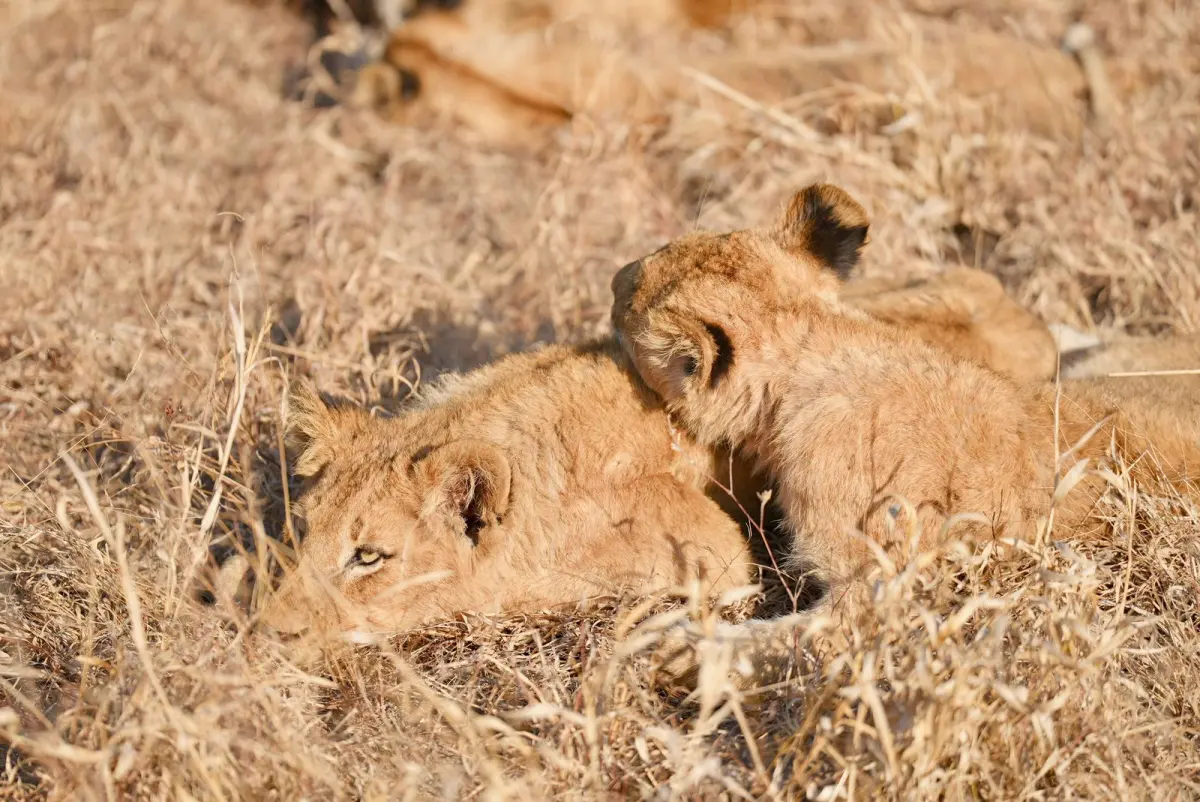
7-Day Great Migration Safari
Follow the wildebeest on their endless journey — three full Serengeti days tracking the Great Migration, bookended by Tarangire and Ngorongoro.

6-Day Northern Tanzania Safari
A complete northern circuit in six days — Tarangire’s elephants, Lake Manyara, the Serengeti plains and the Ngorongoro Crater, privately guided.
Frequently asked questions
How many days do I need for a Tanzania safari?
Three days is the minimum for a taste of the northern circuit, but we usually recommend five to seven days so you can visit several parks without spending all your time driving. Seven days gives you Tarangire, Lake Manyara, two full days in the Serengeti and a descent into the Ngorongoro Crater at a comfortable pace. Ten days or more lets you add the migration, a second Serengeti region or a Zanzibar beach extension without rushing. The key is to count game-drive days rather than parks: two unhurried days in one park almost always beat four rushed half-days across four, and a long transfer day is a day you are not really safariing. Tell us how long you have and we will shape the route to fit.
Which circuit should a first-timer choose?
The northern circuit — the Serengeti, Ngorongoro, Tarangire and Lake Manyara — is the best choice for a first safari. It has the greatest concentration of wildlife, the smoothest logistics and the most comfortable accommodation, which makes it the easiest place to learn how a safari works. It is also where you find the Great Migration and the most reliable chance of black rhino in the crater. The southern and western circuits are wonderful but better suited to repeat visitors who value solitude over variety, and they rely on light-aircraft access that adds cost and planning. For a first trip, the north gives you the most unforgettable safari for the least effort.
Is a private safari worth the extra cost?
For couples, families and photographers, almost always. A private vehicle means you set the pace, decide how long to stay with a sighting and adapt the plan as the day unfolds, with nobody else to compromise with. That flexibility matters most with children, who need shorter drives, and with photographers, who may want to wait an hour for the light. Two people sharing a private vehicle usually pay less of a premium than they expect, because the fixed costs of the vehicle and guide are split between fewer travellers rather than duplicated. For groups of four or more the difference narrows further, which is why many families and friends simply book private as standard.
What is the single best month to go?
If you have one free choice and want reliable viewing, aim for the dry season between late June and early October, when wildlife gathers around water, the grass is short and skies are clear. If you want the migration calving and superb predator action, January and February are exceptional on the southern Serengeti plains. For the dramatic river crossings, July to September is the classic window, though the herds are unpredictable. There is no universally bad month — each season has something the others do not, from green-season birding and newborn animals to the sheer space of the shoulder months. If your dates are fixed, tell us and we will build the trip around what is happening then.
Can I combine a safari with Kilimanjaro or Zanzibar?
Yes, and many guests do. Climbing Kilimanjaro, then safariing, then relaxing on Zanzibar is one of the most complete trips in Africa, balancing effort, adventure and rest. There is no wrong order, but many travellers climb or safari first and finish on the coast, ending on a slow, restful note before flying home. We arrange the whole sequence, including internal flights, airport transfers and the coordination of guides and porters, as a single seamless itinerary so you never have to worry about the connections. Bear in mind that Kilimanjaro climbs are physically demanding and best done before the safari rather than after, and that Zanzibar adds a relaxing finale.
Do I need to be fit to go on safari?
No. A game-drive safari involves very little walking, so almost any level of fitness is fine, and many guests are surprised by how comfortable the days are. The main constraints are the early starts, the heat at midday and the occasional long, bumpy track, so a little patience helps more than fitness. If you have specific mobility needs, tell us in advance and we will choose vehicles, lodges and itineraries that make the trip easy, such as ground-floor rooms, shorter transfers and camps without steep paths. Optional activities such as walking safaris or a Kilimanjaro trek are a different matter and do require a reasonable level of fitness.
How far in advance should I book?
For peak-season travel, especially June to October and over the holidays, book three to six months ahead, and up to a year for the most sought-after lodges or a festive-season trip. The Great Migration camps and the crater rim fill first, so the earlier you commit the better the choice. In the shoulder and green seasons we can often arrange excellent trips at short notice through our local network, so it is worth asking even if your dates are close. As a rule, the more specific your wish list and the higher your accommodation ambitions, the further ahead you should plan — but do not assume a late enquiry is hopeless.
Will I see the Big Five?
Lion, elephant and buffalo are regularly seen on the northern circuit, and leopard is a strong possibility with a good guide and enough time in the Serengeti, especially around the Seronera Valley. Black rhino is genuinely rare and effectively confined to the Ngorongoro Crater, where your chances are good if you descend early. No honest operator can promise all five, because wildlife is wild and sightings are never guaranteed, but on a well-paced northern itinerary most guests do very well and many see four or five. The surest way to improve your odds is simply time — more full game-drive days, patient guides and a willingness to look for animals rather than race between them.
Related safaris & guides

Ready to start planning?
Tell us your dates, group size and travel style. We will design a private Tanzania safari around you and send a full quote — free, with no obligation.