
Kilimanjaro is climbed in five climate zones and packed in layers, from warm rainforest at the gate to -20°C summit ice. This definitive packing list splits your gear into the four bags you will actually carry - daypack, duffel, sleeping kit and last-mile essentials - so nothing essential is left in the hotel.
The Clothing System: Layers, Not Coats
Think of your clothing as three systems: a breathable base that wicks sweat, an insulating mid-layer of fleece and down, and a weatherproof shell that stops wind and rain. On summit night you wear nearly all of it at once, so every layer must zip over the one beneath comfortably.
- Base: 3-4 trekking shirts and merino or synthetic long-sleeve layers.
- Mid: 1-2 fleece or softshell jackets plus a warm down or synthetic mid.
- Shell: a reliable waterproof and windproof jacket (mandatory above 4,000 m).
- Legs: 2 trekking trousers, 1 insulated summit layer, waterproof over-trousers.
| Item | Spec | Essential |
|---|---|---|
| Down jacket | Full-length, warm | Yes |
| Balaclava or neck gaiter | Windproof | Yes |
| Summit gloves | Insulated, waterproof outer | Yes |
| Warm hat & spare pair of gloves | Backup | Recommended |
| Trekking socks | 3-4 pairs, wool | Yes |
The hands and feet rule
Cold hands and feet are the most common summit-night complaints. Pack two glove layers and warm summit socks, and ask your operator if they rent proper summit gear - buying cold weather on the mountain is nearly impossible.
Gear and Equipment
Your daypack carries the day's essentials and is carried by you all day; the duffel holds the bulk of your kit and rides on a porter. A 40L duffel plus a 25-35L daypack is the classic split, and most operators provide tents, sleeping mats and dining shelters.
- Daypack (25-35 L) with rain cover; keep it light - porters carry the duffel.
- Duffel bag (40-70 L), waterproof or with a dry liner.
- Sleeping bag: rated to 0°C / -10°C comfort, not survival.
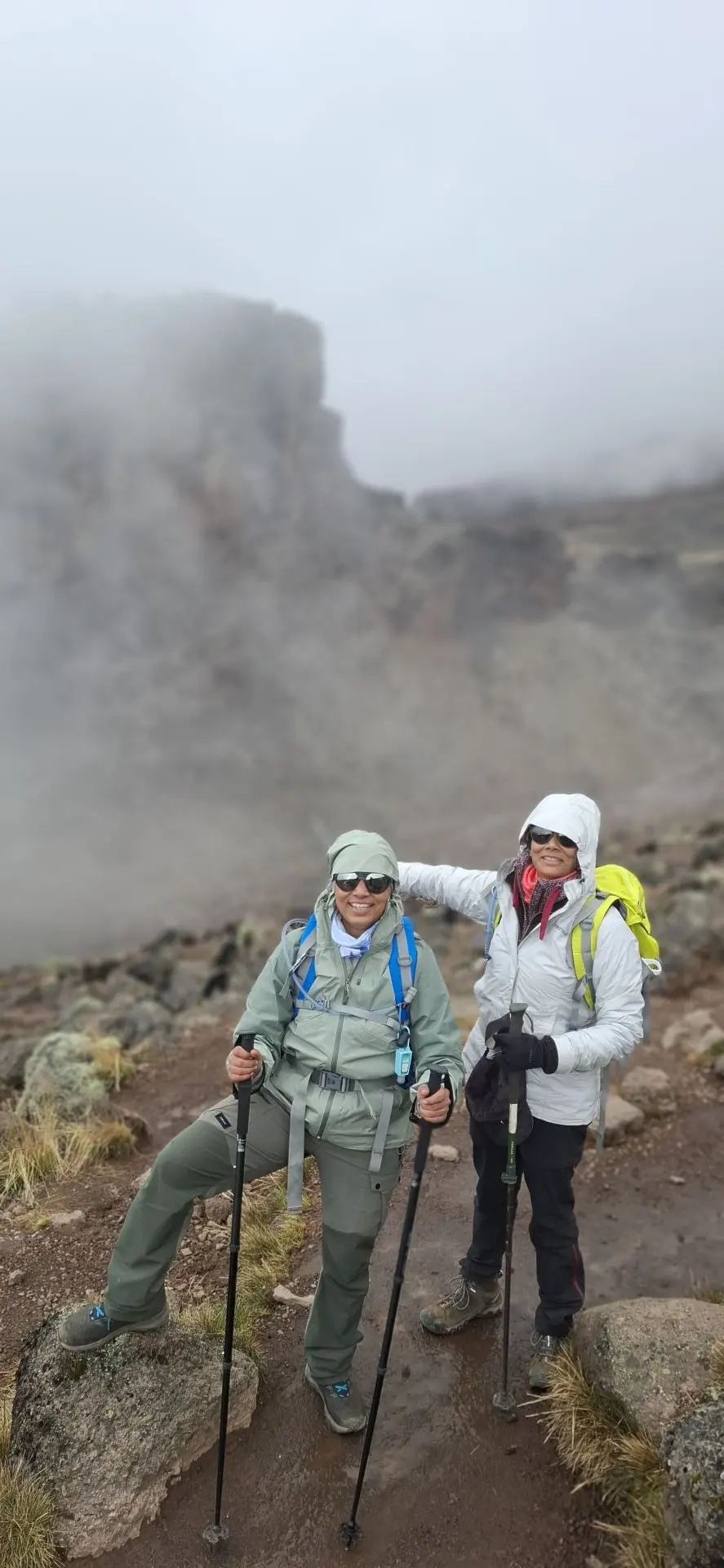
- Trekking poles - genuinely transform the descent and summit switchbacks.
- Headlamp with spare batteries - you will wear it half of summit night.
Hydration and Snacks
Dehydration accelerates altitude sickness, so you must drink 3-4 litres a day - your team can certify and treat water, and many operators supply water treatment. For energy, pack high-calorie snacks you actually enjoy: nuts, energy bars, dried fruit and electrolyte sachets all disappear quickly at altitude.
Sundries Most People Forget
- Sun protection: the sun at 4,700 m is brutal - SPF50+ and lip balm with SPF.
- Small personal first-aid pouch: plasters, blister kits, ibuprofen, chews.
- Wet wipes and hand sanitiser - washing is limited between camps.
- Earplugs (camps are lively), a warm beanie, and a money card for tips.
- A spare phone battery and a download of your route maps before you go.
Pack weight matters for your crew too
Porters carry a worked limit of roughly 15-20 kg per person. Keep your duffel within it by choosing one pair of everything and leaving denim, jewellery and excess predictably at the hotel.
Trekkers fail peaks in gloves and warm socks long before legs fail. Pack for the cold and the summit takes care of itself.
— Our climbing operations lead
Frequently Asked Questions
Do I need a summit down jacket for Kilimanjaro?
Yes - summit night routinely lands around -20 degrees Celsius, and wind chill on the exposed crater rim can push the felt temperature far lower. A proper full-length down jacket keeps your core warm while you walk slowly uphill in the dark, and it is non-negotiable above 4,000 m. If you do not want to buy one, most operators rent summit jackets and 0 degree sleeping bags locally in Moshi or Arusha, which saves money and baggage allowances on the flight. Test the full layering system at home first so every piece zips over the one beneath without binding.
How much luggage can I bring on a Kilimanjaro climb?
Standard practice is one main duffel of roughly 40-70 litres, packed to a porter limit of 15-20 kg, plus a daypack of 25-35 litres that you carry yourself. The duffel should be waterproof or lined with a dry bag, because it rides on a porter for up to eight hours a day in rain, dust and mud. Everything you will not need on the trail, such as formal clothes, swimwear and jewellery, stays safely at your hotel in Moshi. Keep the daypack genuinely light, since you carry it for six or more hours a day and a heavy pack drains exactly the energy your summit night needs.
Are trekking poles worth bringing?
Strongly yes - trekking poles redistribute load off the knees and legs, which matters most on the steep scree of the descent and the endless switchback slopes of summit night. They also give you a far more stable base of support when the altitude makes your balance slightly unsteady. A good folding pair slips discreetly into your duffel, and most guides treat poles as everyday essential kit rather than an optional extra. If you skip them in your luggage, quality poles are easily rented in Moshi or Arusha the day before you depart.
Prefer to leave the planning to us?
Tell us your dates and interests — our local team will craft a free, tailor-made itinerary around this guide.
Plan My SafariKeep Reading

Complete Mount Kilimanjaro Guide
The full story of climbing Africa's roof - routes, days, costs, and reaching the snows of Uhuru Peak.
Read guide
Kilimanjaro Climbing Guide
Your step-by-step planning guide to a successful summit - fitness, routes, gear and what each day feels like.
Read guide
Best Time to Climb Kilimanjaro
Month-by-month weather on the mountain - pick the season with the clearest views and highest summit chances.
Read guide