
Overview of the Marangu route
Marangu is the oldest and best-known route up Kilimanjaro, and the only one where you sleep in huts instead of tents. Climbers have walked it since the 1920s, it starts and finishes at the same gate on the eastern slope, and it is the shortest way to Uhuru Peak – which makes it the climb with the lowest summit rate of the popular routes.
Those two facts are the same fact. The hut-to-hut schedule fits the climb into five or six days, and every day it skips is a day your body would have spent acclimatising. Marangu is the right choice for a specific traveller: someone watching the budget closely, or someone who values a roof and a mattress over summit odds. Taken as a six-day climb rather than five, it becomes a genuinely reasonable option.
Safety first: To maintain our strict safety standards, mountain expeditions are available only to participants aged 12–70 years.
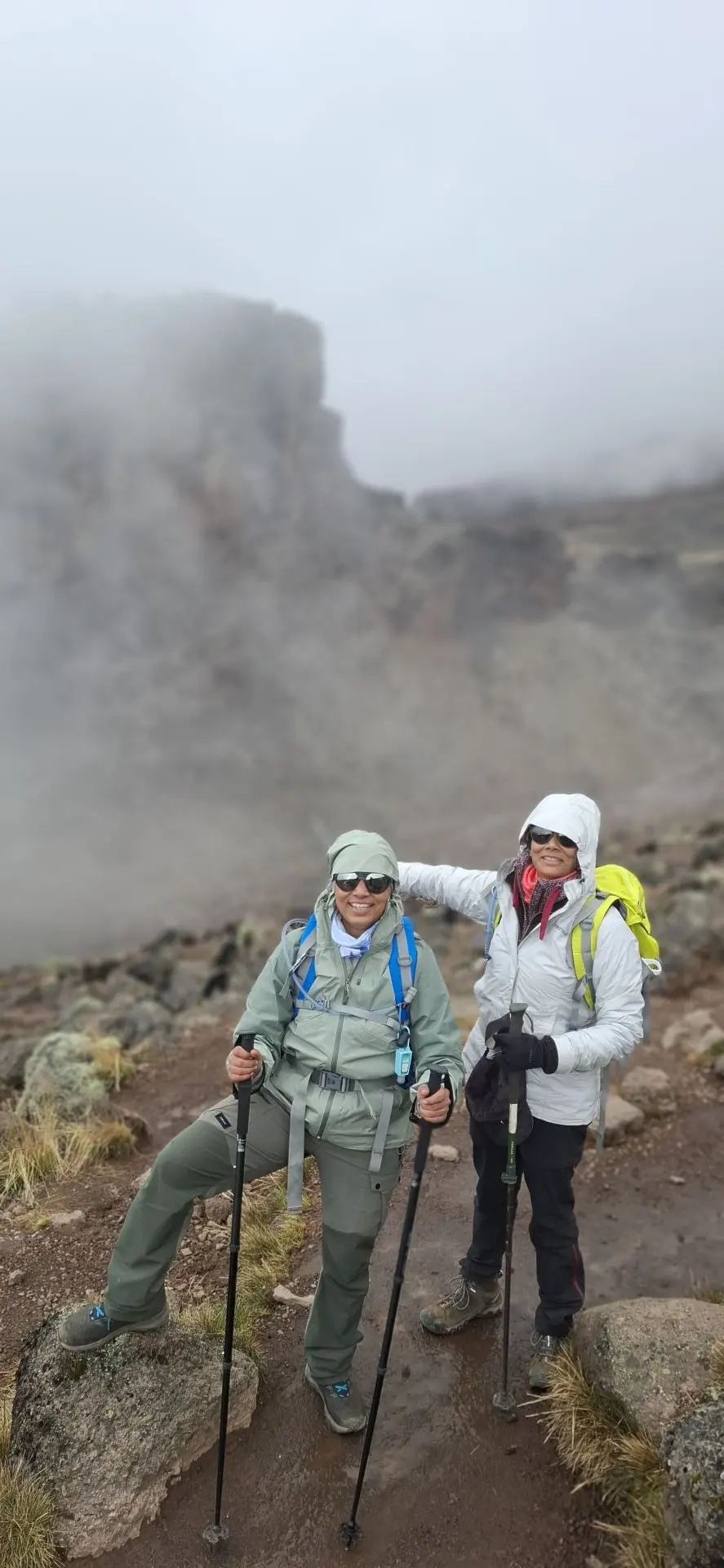

Expert recommendation
Take the 6-day Marangu or choose a different route. The five-day version is the shortest schedule on Kilimanjaro and posts summit rates near 60% – roughly one in three climbers who pay for it do not reach the top. The six-day itinerary adds a full acclimatisation day at Horombo and lifts those odds meaningfully, for a few dollars more in park fees.
When Marangu is the right call
If you have five or six days in Tanzania, a firm budget, and you would rather sleep in a hut than a tent, Marangu is a perfectly good climb – take the 6-day version. If you have a day or two more, the seven-day Lemosho or Machame buys a dramatically better summit rate for a similar price.
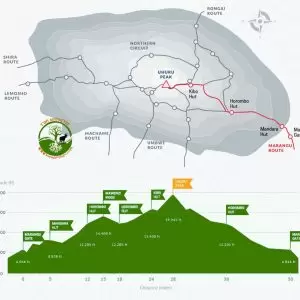
Marangu route on the Kilimanjaro map
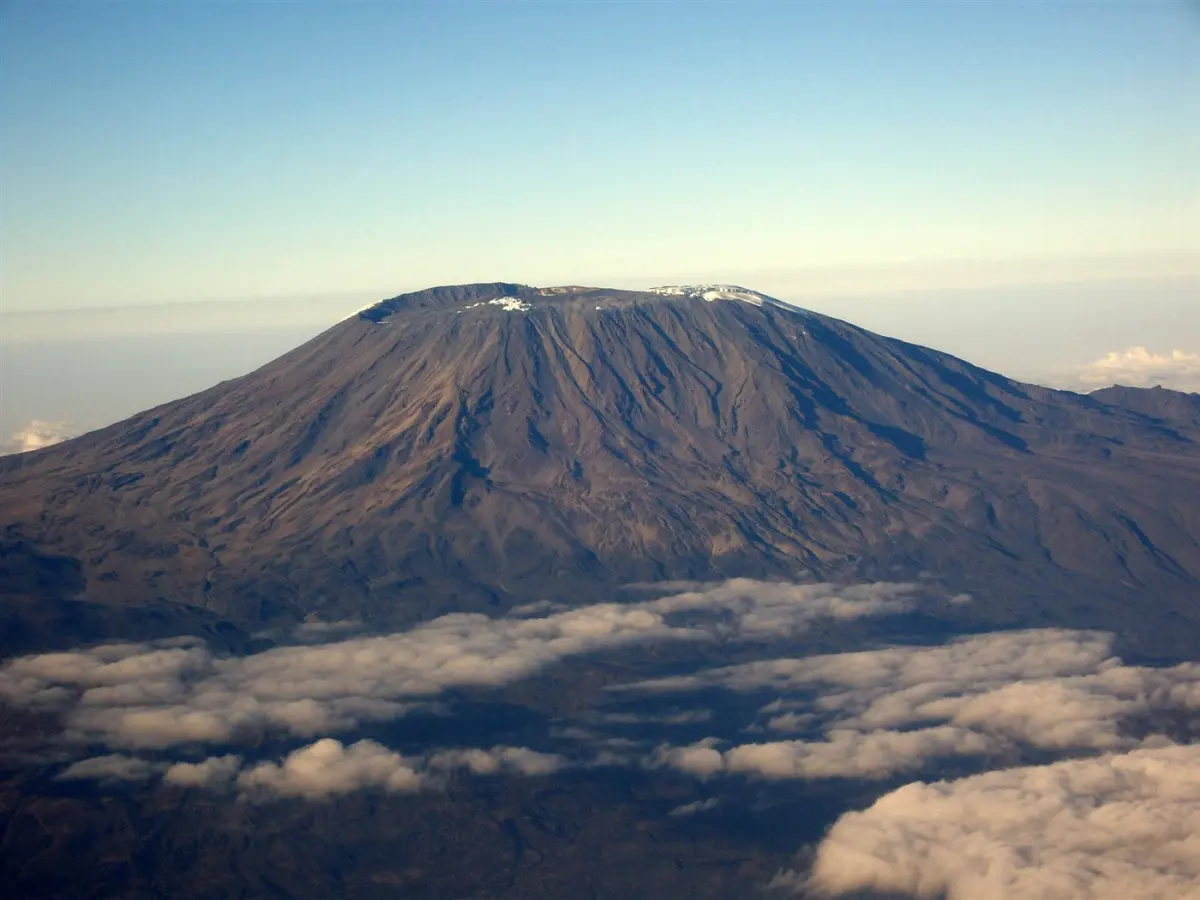
The Marangu route runs up the eastern slope of Kilimanjaro from Marangu Gate and follows the same line back down. It climbs through rainforest to Mandara Hut, across the moorland to Horombo Hut, then up the alpine desert to Kibo Hut at 4,700 m on the saddle between Kibo and Mawenzi. Summit night climbs from Kibo Hut to Uhuru Peak, and the descent retraces the whole route – the only main route where you walk up and down the same trail.
Join our Kilimanjaro Group Climbs
Marangu is our most common group departure, because the hut accommodation and the low price suit solo travellers better than any other route. We run fixed group departures throughout the year on which six to ten climbers start together, at the published per-person price shown on each departure below.
Group Marangu departures typically run monthly, scheduled around the dry windows – June to October and mid-December to March. Female-only departures run in selected months. Pick a year and a month below to see what is running; a $100 deposit holds a place, and if no departure suits your dates we will build the same itinerary as a private climb instead.
Arrival 02 Dec 2028
Departure 08 Dec 2028
From $1,870 per person
Join group tourArrival 06 Dec 2028
Departure 12 Dec 2028
From $1,870 per person
Join group tourArrival 10 Dec 2028
Departure 16 Dec 2028
From $1,870 per person
Join group tourArrival 14 Dec 2028
Departure 20 Dec 2028
From $1,870 per person
Join group tourArrival 18 Dec 2028
Departure 24 Dec 2028
From $1,870 per person
Join group tourArrival 22 Dec 2028
Departure 28 Dec 2028
From $1,870 per person
Join group tourArrival 26 Dec 2028
Departure 01 Jan 2029
From $1,870 per person
Join group tourMarangu Route - Summit Success Rate
Marangu publishes the lowest summit rate of the popular routes – around 60–70%, against 85–90% for the seven- and eight-day tented routes. The cause is always the same: the schedule gains sleeping altitude faster than a body comfortably handles, so more climbers develop altitude symptoms and turn back.
The huts themselves do not cause this – a warm dry bed genuinely helps recovery – but they do make the short itinerary possible, and the short itinerary is what costs. The six-day version, with a full day at Horombo to acclimatise, closes much of that gap and is the shortest Marangu we recommend.
What the number really means
A success rate counts climbers who reach Uhuru Peak. It never counts the wisdom of a guide who turns a group around at 4,700 m – and that decision is still a good climb. See how we measure summit success for the full picture.
Marangu Route Detailed Itinerary
Below is the Marangu route walked both ways – the 5-day climb the route is famous for and the 6-day version we guide. Switch between them with the tabs. The difference is a full day at Horombo to acclimatize, walking up to the Zebra Rocks and back; the 5-day pushes straight on to Kibo. Every night is in a hut, meals are in the shared dining hut, and there is running water and a proper toilet at each camp.
The fast Marangu: two long days from hut to hut, with no acclimatization day above Horombo – the reason this route publishes the lowest summit rates.
-
Moshi to Mandara Hut
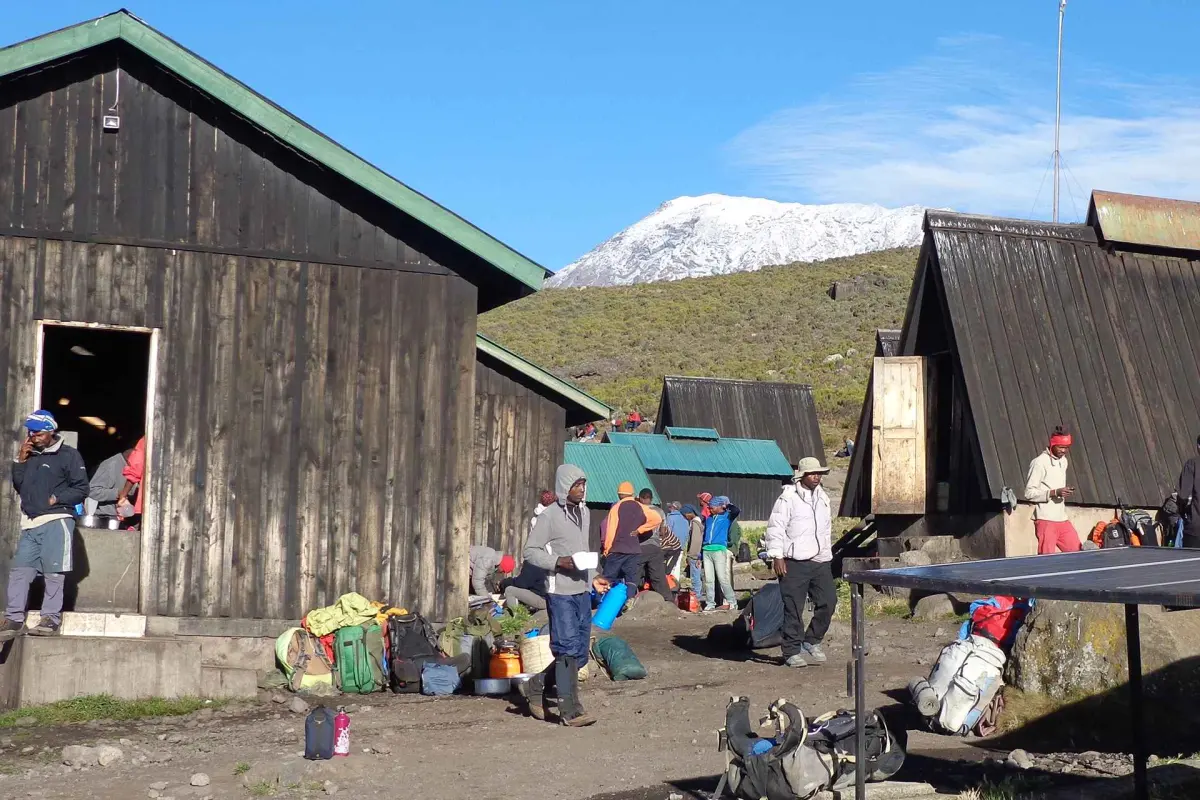
The drive from Moshi reaches Marangu Gate at 1,870 m on the wetter eastern slope of the mountain, where park formalities are completed and the day packs are sorted. The trail climbs steadily through banana farms and into rainforest, over roots and red earth, to Mandara Hut at 2,720 m – a stone block of dormitories with a dining hut, the first of the three huts on the route. Four hours walking, usually in before lunch.
Lunch offered: Hot lunch at Mandara Hut
-
Mandara Hut to Horombo Hut
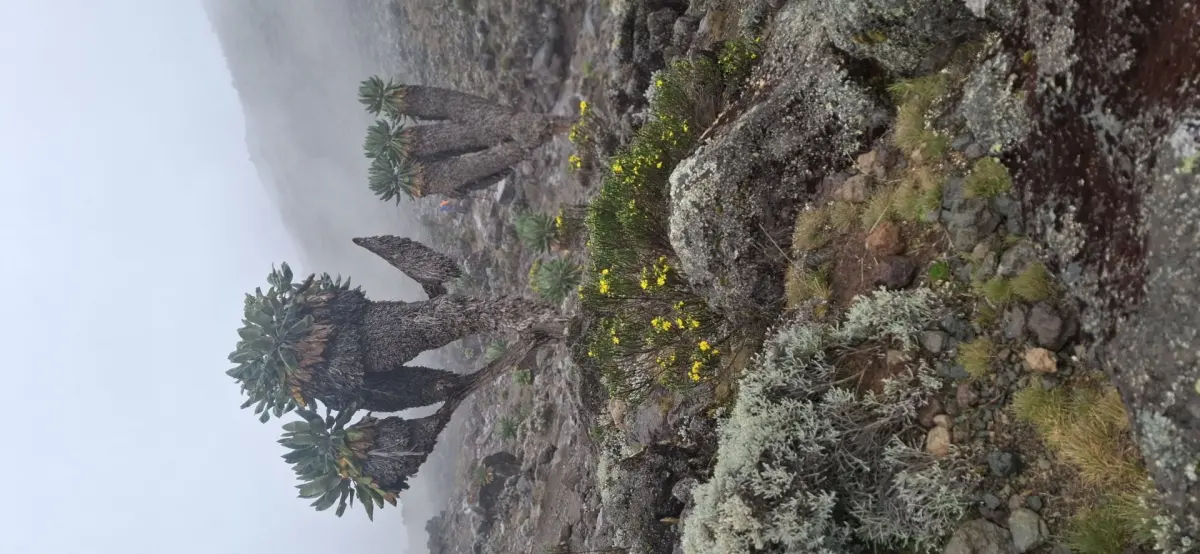
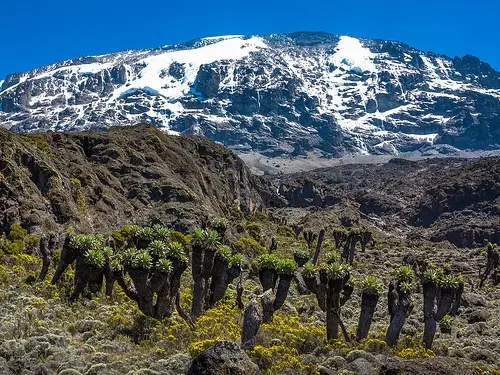
Leaving the forest the trail enters the moorland, where giant groundsels and dendrosenecio stand like a garden gone wild and the horizon opens on clear days to Mawenzi and the plains below. The climb is steady rather than steep over five to six hours to Horombo Hut at 3,720 m – three thatched blocks and the busiest dining hut on the mountain. Kibo is now directly ahead, and closer than it looks.
Lunch offered: Hot lunch at Horombo Hut
-
Horombo Hut to Kibo Hut
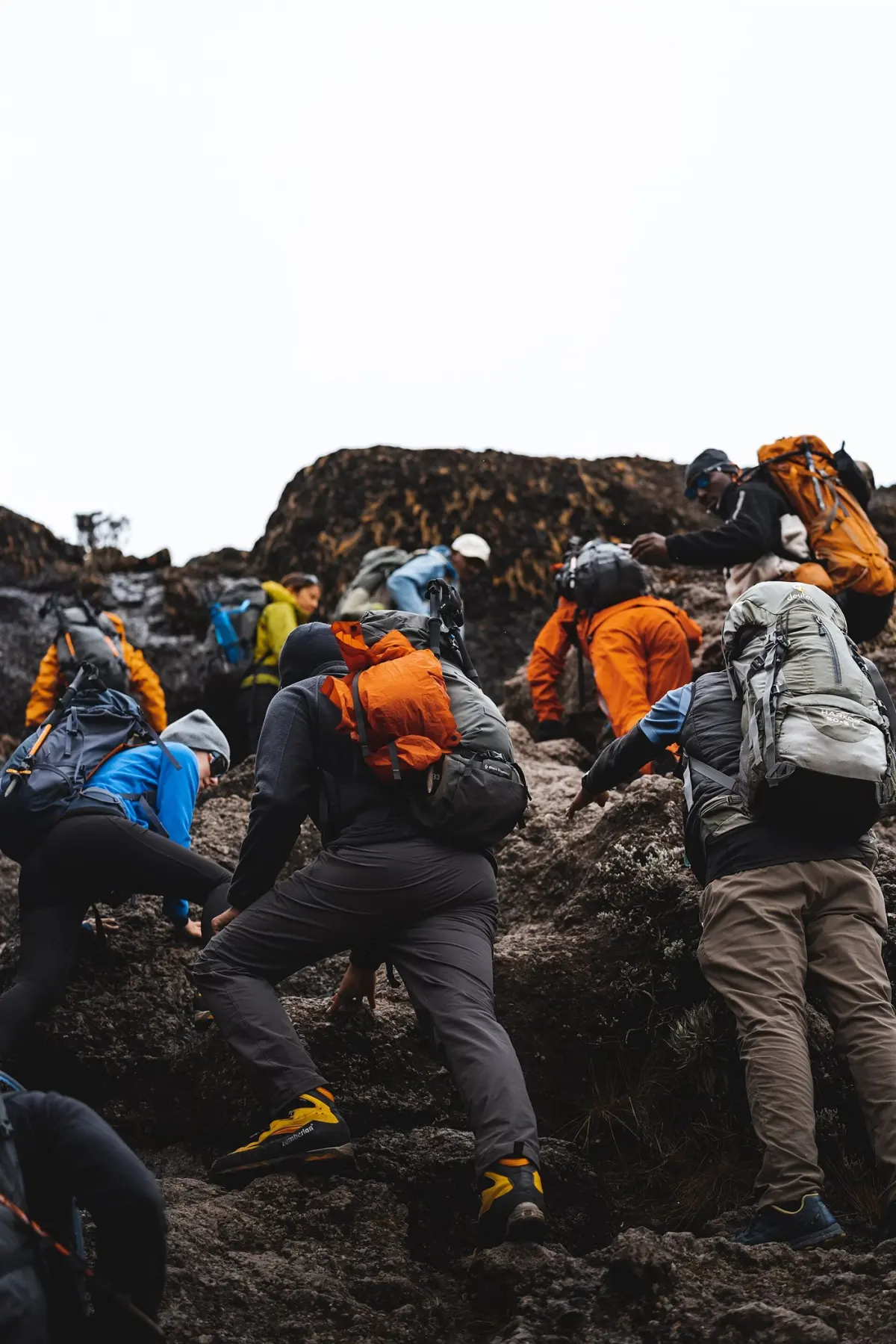
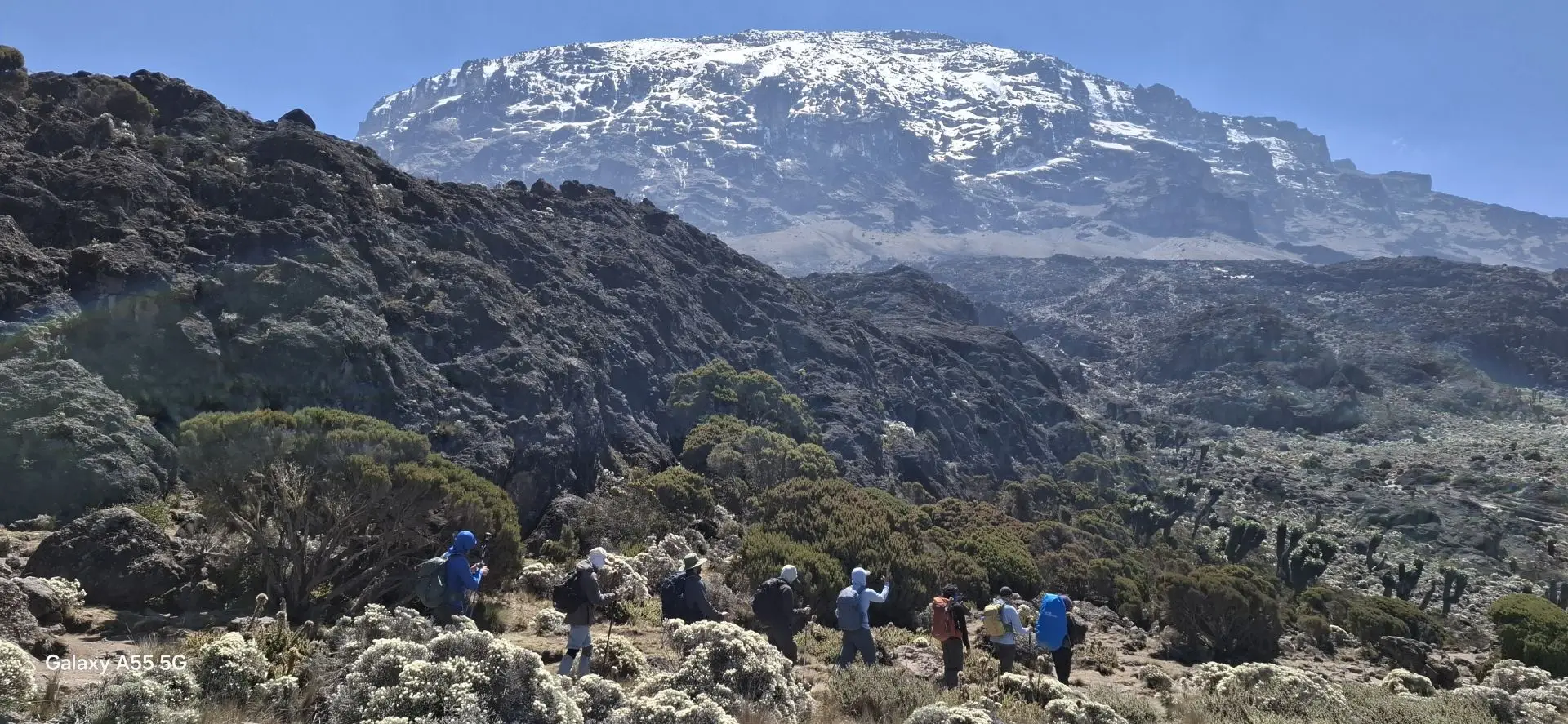
The last stage before the summit: the trail leaves the moorland behind, crosses the saddle between Kibo and Mawenzi – an alien stretch of alpine desert with no vegetation at all – and climbs to Kibo Hut at 4,700 m in five to six hours. The afternoon is rest, soup, an early dinner and bed, because the guide will call the hut shortly before eleven. From here the mountain looks like what it is: a huge, bare volcano.
Lunch offered: Hot lunch at Kibo Hut
-
Summit day: Kibo Hut to Uhuru Peak to Horombo Hut
Kibo Hut empties shortly after midnight, and the line of headtorches goes up the scree in the dark – six to seven hours to Stella Point on the crater rim, then an hour on to Uhuru Peak at 5,895 m as the sun comes up over the plains. Photographs, a short rest and a drink at the sign, then straight back down the same path all the way to Horombo Hut at 3,720 m – no sleeping at Kibo on the way down, and twelve to fourteen hours in all.
Lunch offered: Hot lunch at Horombo Hut after the descent
-
Horombo Hut to Marangu Gate
Because you descend the way you came, the last day walks back through every climate zone in reverse – alpine desert, moorland, then long hours in the rainforest – harder on the knees than it sounds after summit night. The final stretch to Marangu Gate is flat and easy, and there the climb is signed off with certificates before the drive back to Moshi. It is also the one route where a wind or snow closure can force a change of plan on the way down.
Lunch offered: Farewell lunch at Marangu Gate

The version we guide: an extra night at Horombo with an acclimatization walk up to the Zebra Rocks before the push to Kibo.
-
Moshi to Mandara Hut
The drive from Moshi reaches Marangu Gate at 1,870 m on the wetter eastern slope of the mountain, where park formalities are completed and the day packs are sorted. The trail climbs steadily through banana farms and into rainforest, over roots and red earth, to Mandara Hut at 2,720 m – a stone block of dormitories with a dining hut, the first of the three huts on the route. Four hours walking, usually in before lunch.
Lunch offered: Hot lunch at Mandara Hut
-
Mandara Hut to Horombo Hut
Leaving the forest the trail enters the moorland, where giant groundsels and dendrosenecio stand like a garden gone wild and the horizon opens on clear days to Mawenzi and the plains below. The climb is steady rather than steep over five to six hours to Horombo Hut at 3,720 m – three thatched blocks and the busiest dining hut on the mountain. Kibo is now directly ahead, and closer than it looks.
Lunch offered: Hot lunch at Horombo Hut
-
Acclimatization day above Horombo Hut
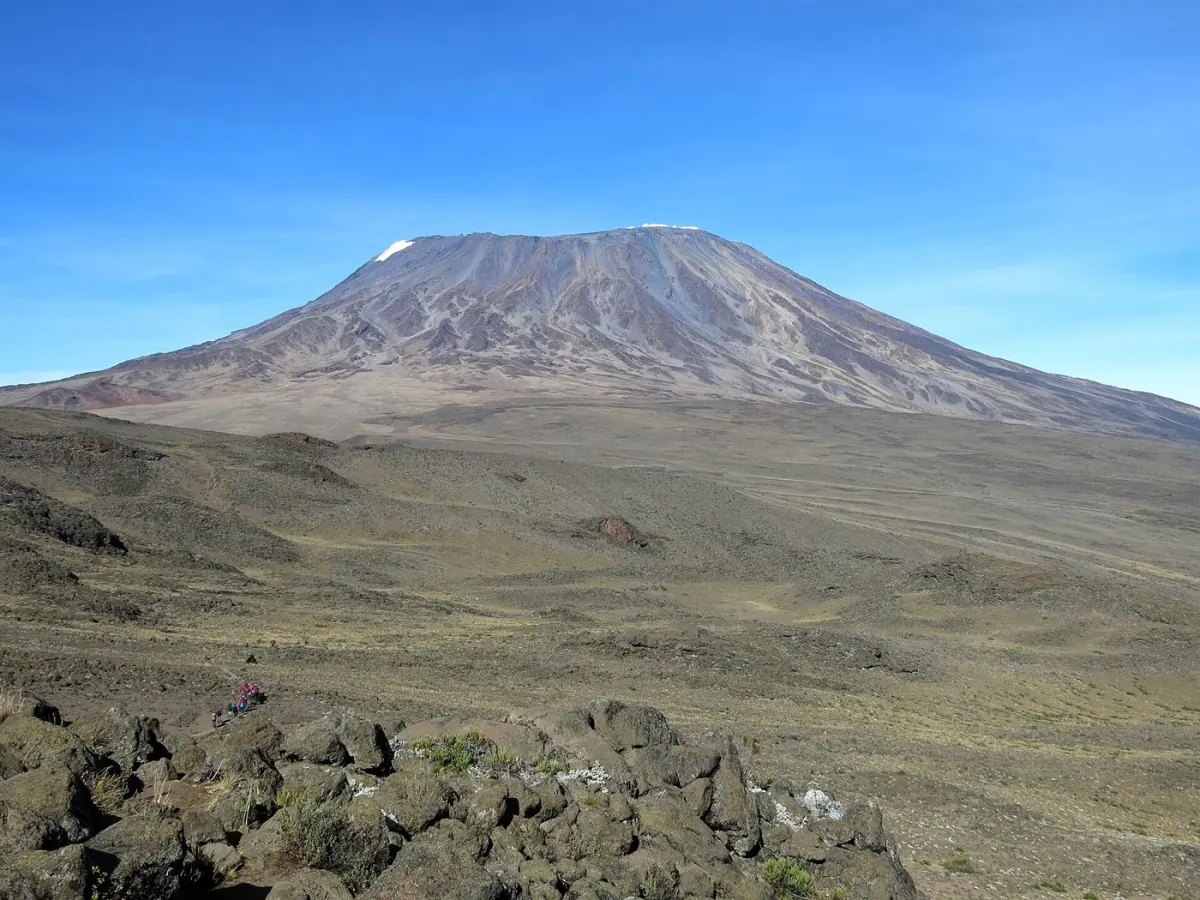
A day in place, and the reason the 6-day Marangu is the shortest one we recommend. After breakfast you walk up toward the Zebra Rocks at around 4,100 m – a strip of striped rock with the best short view back down the valley – and return to the same hut for the night. Climb high, sleep low: that extra night above 3,000 m without moving camp is most of what closes the summit-rate gap to the tented routes.
Lunch offered: Hot lunch at Horombo Hut
-
Horombo Hut to Kibo Hut
The last stage before the summit: the trail leaves the moorland behind, crosses the saddle between Kibo and Mawenzi – an alien stretch of alpine desert with no vegetation at all – and climbs to Kibo Hut at 4,700 m in five to six hours. The afternoon is rest, soup, an early dinner and bed, because the guide will call the hut shortly before eleven. From here the mountain looks like what it is: a huge, bare volcano.
Lunch offered: Hot lunch at Kibo Hut
-
Summit day: Kibo Hut to Uhuru Peak to Horombo Hut
Kibo Hut empties shortly after midnight, and the line of headtorches goes up the scree in the dark – six to seven hours to Stella Point on the crater rim, then an hour on to Uhuru Peak at 5,895 m as the sun comes up over the plains. Photographs, a short rest and a drink at the sign, then straight back down the same path all the way to Horombo Hut at 3,720 m – no sleeping at Kibo on the way down, and twelve to fourteen hours in all.
Lunch offered: Hot lunch at Horombo Hut after the descent
-
Horombo Hut to Marangu Gate
Because you descend the way you came, the last day walks back through every climate zone in reverse – alpine desert, moorland, then long hours in the rainforest – harder on the knees than it sounds after summit night. The final stretch to Marangu Gate is flat and easy, and there the climb is signed off with certificates before the drive back to Moshi. It is also the one route where a wind or snow closure can force a change of plan on the way down.
Lunch offered: Farewell lunch at Marangu Gate
Summit night is the real test
You leave Kibo Hut around midnight and climb six to seven hours in freezing darkness to Uhuru Peak, then walk all the way down to Horombo Hut the same day. Expect -10°C to -15°C and very little sleep beforehand. See our Kilimanjaro packing list before you fly.
Prices for Marangu route
Marangu is one of the shortest schedules on Kilimanjaro, and there are no tents to carry and no camping fees – the huts replace both. Park fees are still charged per climber per day, so the six-day itinerary costs more than the five-day. Everything below is per person in US dollars and includes the two hotel nights in Moshi, all transfers, all meals and the full crew.
Prices per person by itinerary length and group size:
| Itinerary | 1 PAX | 2-4 PAX | 5-9 PAX | 10+ PAX |
|---|---|---|---|---|
| 5-day climb | $1,900 | $1,600 | $1,420 | $1,350 |
| 6-day climb | $2,010 | $1,870 | $1,550 | $1,360 |
What is included in a Marangu climb
- All Kilimanjaro National Park entry, camping and rescue fees
- Licensed English-speaking guide, assistant guides, cook and porters
- All meals, drinking water, tea and coffee on the mountain
- Sleeping tents, dining tent, mattress and camp furniture
- Two hotel nights in Moshi before and after the climb
- Airport and trailhead transfers from Moshi or Arusha
- Emergency oxygen, pulse oximeter and a comprehensive first-aid kit
- Daily health and altitude monitoring by your guide
- Summit certificate and applicable government taxes
What is not included
- International and domestic flights
- Tanzania visa fees
- Travel and high-altitude trekking insurance
- Personal gear rental (sleeping bag, poles, boots, jackets)
- Tips and gratuities for guides, porters and cook
- Alcoholic and soft drinks, and snacks
- Additional hotel nights and personal expenses
Every Marangu Route itinerary and group size in one table – or save the full Kilimanjaro price sheet as a PDF.
What to Expect on Marangu
Huts, water and comfort
Marangu is the only route with dormitory hut accommodation: Mandara, Horombo and Kibo huts, with mess-hut meals. Running water and proper toilets are genuine comforts compared to the tented routes. It’s warmer, drier and sociable – but that also means shared space: earplugs, a sleeping bag liner and a thick sleeping bag go a long way.
A long walk through the forest
Two full days through rainforest make for a humid start. Horombo is more of a small village than a camp – busy with groups, porters and a canteen in season. Above the forest you reach moorland, then alpine desert approaching Kibo. The short itinerary is efficient, but leaves less room for acclimatisation than the longer tented routes.
Same trail up and down
Marangu is the only route where you descend the same trail you climbed – familiar ground on tired legs. It’s easy to navigate and generally drier, but you won’t get new views on the way down. We recommend the 6-day itinerary (with an extra acclimatisation day at Horombo) over the 5-day option for better summit odds.
Summit night and descent
Summit night: midnight from Kibo Hut across the scree to Stella Point (5–6 hours), then Uhuru Peak (5,895 m). After sunrise, return to Horombo Hut for a well-earned rest, then a long forest walk to Marangu Gate the following morning to collect your summit certificate.
Preparation Tips
Marangu is the physically lightest walk up Kilimanjaro, but the short itinerary leaves no room for a slow start – preparation matters more here than on any other route, not less.
- Train for endurance, not speed. Hill walks, stairs and back-to-back weekend hikes with a loaded pack, eight to twelve weeks out – see our Kilimanjaro training guide for a week-by-week plan.
- Break in your boots properly and train in the exact socks and daypack you will climb in.
- Pack from the Kilimanjaro packing list – the hut route needs less camping kit, but summit-night layers are exactly the same.
- Bring earplugs and a sleeping bag liner. The huts are dormitories, and summit night follows a night in a room full of snorers.
- Arrive a day early. The briefing, the equipment check and one night of altitude-free sleep in Moshi are worth more than an extra day at home.
- Take out insurance that explicitly covers trekking to 6,000 m and emergency helicopter evacuation.
Why Choose Topi Adventure
Based at the mountain
We are a Moshi operator. Your guides live at the foot of Kilimanjaro, walk these trails every month and know exactly when to push and when to hold.
Safety without shortcuts
Emergency oxygen, a pulse oximeter and a full first-aid kit on every climb, twice-daily health checks, and guides trained to turn around when the data says so.
Small groups, real pace
We cap our groups and keep the pole-pole pace even when it feels slow – the pace is what summits people.
Honest, all-in pricing
Park fees, crew, meals, hotel nights and transfers in the first line of the quote, not buried in the last. Two hotel nights in Moshi included.
Other routes on Mt. Kilimanjaro
Marangu is one of seven ways up Kilimanjaro, and the huts are not the only decision that matters. These are the other six, each with its own full guide.
Lemosho Route
Rainforest, moorland and a high success rate on a quiet western approach. Our pick for most first-time climbers.

Machame Route
The classic “Whiskey” route: rainforest, moorland and the dramatic Barranco Wall.
Rongai Route
The dry northern approach with gentle gradients – the strongest pick for the rainy season.
Umbwe Route
The steepest, most direct line up the mountain. Reserve it for experienced altitude trekkers.
Shira Route
Shares Lemosho’s western approach but starts higher and shorter. Quiet, scenic and usually merged with Lemosho.

Northern Circuit
The remote arc around the north face with an extra day of quiet, high walking. The mountain’s highest success rate.
Frequently asked questions
Is the Marangu route with huts better?
Huts keep you out of the tents and the weather, and Marangu is the only route of the main seven with dormitory sleeping at every camp. The trade-off is that the climb fits into five or six days, and that shorter schedule produces the lowest summit rate of the popular routes. If a bed matters more to you than summit odds, take the 6-day Marangu; if the summit matters most, the extra days of Lemosho or the Northern Circuit are the smarter investment.
How many days is the Marangu route?
5 or 6 days on the mountain. We guide the 6-day version: the extra day is spent acclimatising at Horombo Hut, and it lifts the summit rate meaningfully. The 5-day itinerary is the shortest climb we offer and the hardest to summit on.
What is the success rate on the Marangu route?
Around 60–70%, the lowest of the popular Kilimanjaro routes, against a mountain-wide average near 65% and 85–90% for the long tented routes. The cause is the short schedule rather than the terrain: it climbs to high altitude in fewer nights than the body comfortably manages.
How hard is the Marangu route?
Physically it is the gentlest of the main routes – well-graded trails, no scrambling and a roof over your head each night. The challenge is altitude and the compressed schedule: summit night is still twelve to fourteen hours, and the descent is a long day on tired knees. Reasonable hill fitness is enough; preparation matters more than on longer routes.
When is the best time to climb Marangu?
The two dry windows – June to October and mid-December to March. Marangu climbs the eastern slope, so the forest section is wet for much of the year, and the open stretch between Kibo and Mawenzi can be closed by wind or snow in the shoulder months. December to February is generally the driest and warmest window on this route.
How much does the Marangu route cost?
From $1,600 per person for the 5-day itinerary and $1,870 for the 6-day. Park fees, crew, meals, hut fees, two hotel nights in Moshi and all transfers are included; international flights, visa, insurance and crew tips are not.
Ready to talk it through with a local guide?
Tell us your dates, experience level and budget. We will recommend a route, build the day-by-day plan and send it back free, with no obligation.