
Overview of the Lemosho route
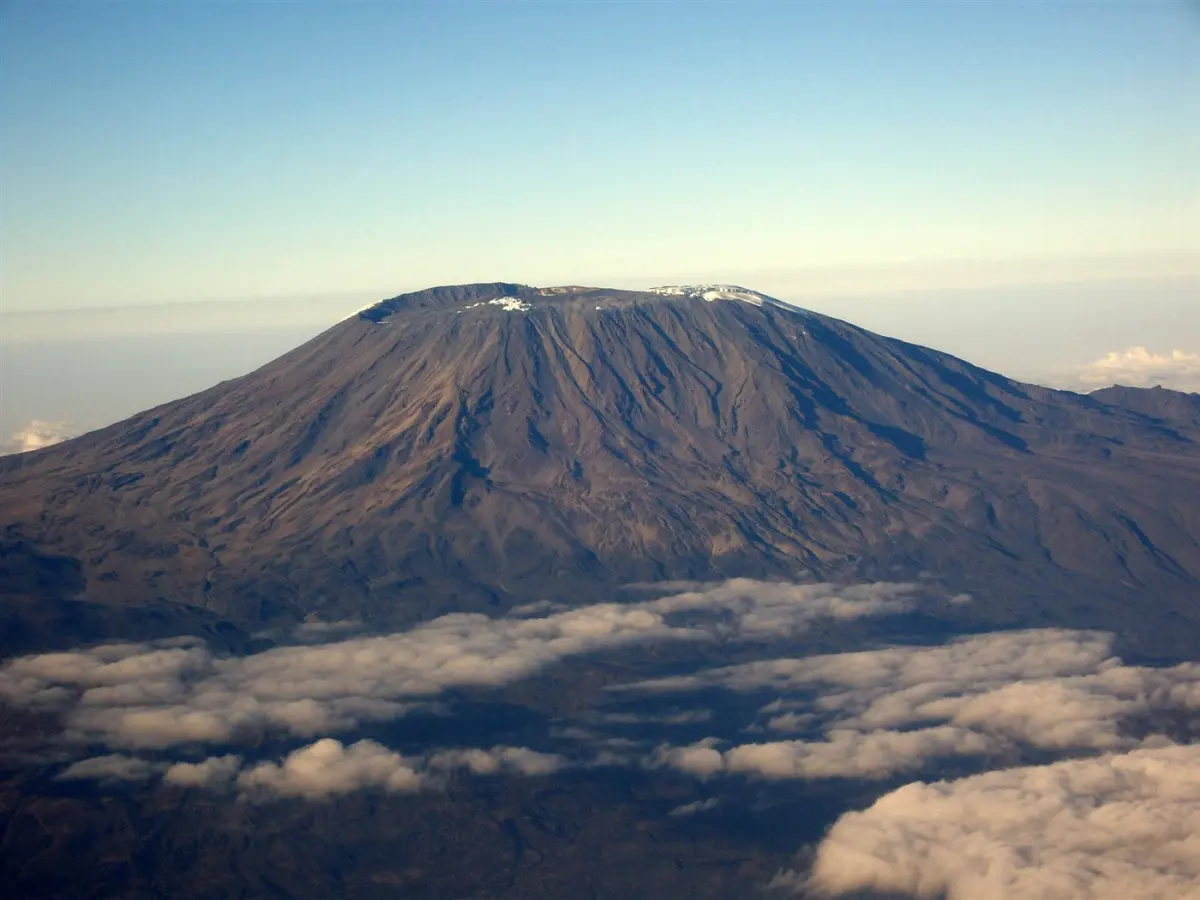
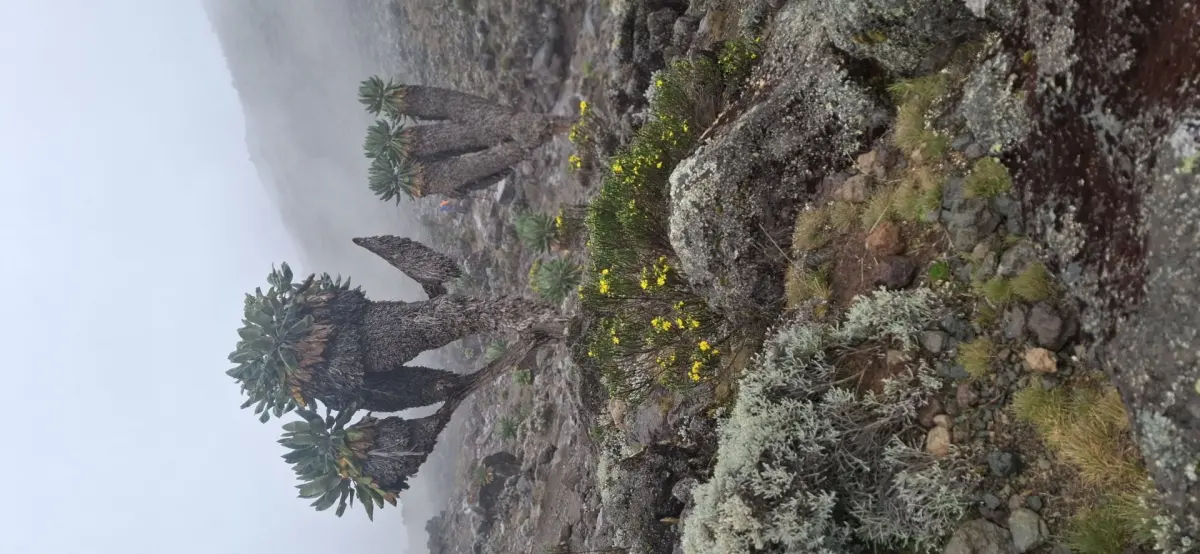
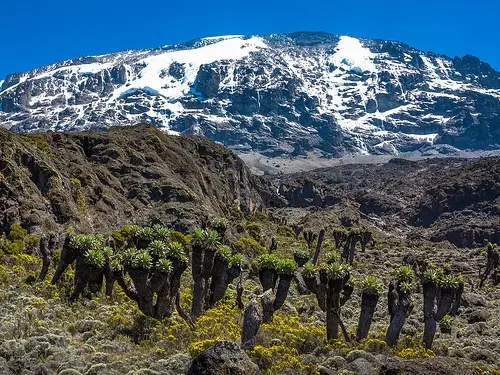
Lemosho is a classic trail that has gained much popularity in recent years. And deservingly so: it offers amazing views, a great acclimatization profile, and some of the highest summit success rates for climbing Kilimanjaro. Starting on the western slope of Kilimanjaro, the Lemosho route is available in 3 itineraries: 6, 7, and 8 days on the mountain. One of Lemosho’s highlights is the Cathedral Peak - one of the highest points of the Shira Volcano 3,872 m (12,703 ft). You’ll have a chance to go on an acclimatization hike to Cathedral Peak and enjoy the best views Kilimanjaro has to offer. Another iconic feature of Lemosho are huge alien-looking plants, Dendrosenecio kilimanjari, that are only found on this mountain.
Safety first: To maintain our strict safety standards, mountain expeditions are available only to participants aged 12–70 years.


Expert recommendation
Lemosho is our favorite route. Its stunning scenery and smooth acclimatization profile make it the top choice for those planning their first Kilimanjaro trip.
How long should you walk it?
Take the 8-day version if your dates allow. The extra day is spent on the Shira Plateau with an acclimatization hike to Cathedral Peak, and that day is what pushes the summit odds toward the top of the range. The 7-day itinerary is the one most climbers choose; the 6-day is only sensible for experienced altitude trekkers.
Lemosho route on the Kilimanjaro map
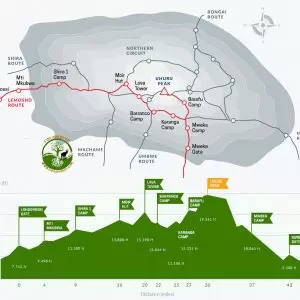
The Lemosho route begins at the Londorossi Gate on the quiet western slope of Kilimanjaro. It climbs through rainforest to the Shira Plateau, crosses the plateau to Lava Tower, and there joins the Machame route. From that point the two trails share the same line – over the Barranco Wall and up through Karanga and Barafu camps to the summit, before the descent is made by the Mweka route.
Join our Kilimanjaro Group Climbs
You do not need a private climb to walk Lemosho. We run fixed group departures throughout the year on which six to ten climbers start together, sharing the guide, the crew and the camp – at the published per-person price shown on each departure below. Most of our solo travellers join one.
Group Lemosho departures typically run monthly and are scheduled around the dry windows – June to October and mid-December to March. Female-only departures run in selected months. Pick a year and a month below to see what is running; a $100 deposit holds a place, and if no departure suits your dates we will build the same itinerary as a private climb instead.
Arrival 02 Mar 2028
Departure 10 Mar 2028
From $2,220 per person
Join group tourArrival 09 Mar 2028
Departure 17 Mar 2028
From $2,220 per person
Join group tourArrival 16 Mar 2028
Departure 24 Mar 2028
From $2,220 per person
Join group tourArrival 23 Mar 2028
Departure 31 Mar 2028
From $2,220 per person
Join group tourArrival 28 Mar 2028
Departure 05 Apr 2028
From $2,220 per person
Join group tourLemosho Route - Summit Success Rate
Lemosho is one of the two or three routes on Kilimanjaro that consistently publish summit rates in the 85–90% range, against a mountain-wide average closer to 65%. The reason is not the terrain – it is the calendar. The western approach starts low and gentle, and the seven- and eight-day itineraries spread the same height gain over more nights above 3,000 m, which is the single biggest lever your body has for acclimatising.
The itinerary matters more than fitness here. Walkers who choose the 8-day version and keep the “pole pole” pace sit at the top of that range; those who compress Lemosho into 6 days pull their odds back toward the shorter routes. Our guides carry oxygen and a pulse oximeter on every climb and check every climber’s oxygen saturation twice a day, which is why our own threshold for turning a group around is deliberately conservative.
What the number really means
A success rate counts climbers who reach Uhuru Peak. It never counts the wisdom of a guide who turns a group around at 4,700 m – and that decision is still a good climb. See how we measure summit success for the full picture.
Lemosho Route Detailed Itinerary
Below is the Lemosho route walked both ways – the 7-day itinerary most climbers choose and the 8-day version we recommend when your dates allow. Switch between them with the tabs. From Lava Tower onward both itineraries walk exactly the same camps, one day apart, and every day is taken slowly, with a hot lunch at camp and a well-earned dinner in the mess tent.
One day shorter: the crossing of the Shira Plateau becomes a single long day and there is no separate Cathedral Peak acclimatization hike.
-
Moshi to Mti Mkubwa Camp via Lemosho Gate
An hour in a vehicle from Moshi takes you around the mountain to Lemosho Gate on the quiet western slope, where permits are checked and the porters load their kits. From the gate the path climbs through coffee shambas and into rainforest – the wettest, greenest and liveliest zone on the mountain, home to colobus monkeys and hornbills – to Mti Mkubwa Camp, the Forest Camp, at 2,820 m. The first day is deliberately short: three to four hours, ending with tea in the mess tent.
Lunch offered: Hot lunch at Lemosho Gate after the transfer

-
Mti Mkubwa Camp to Shira Camp 2
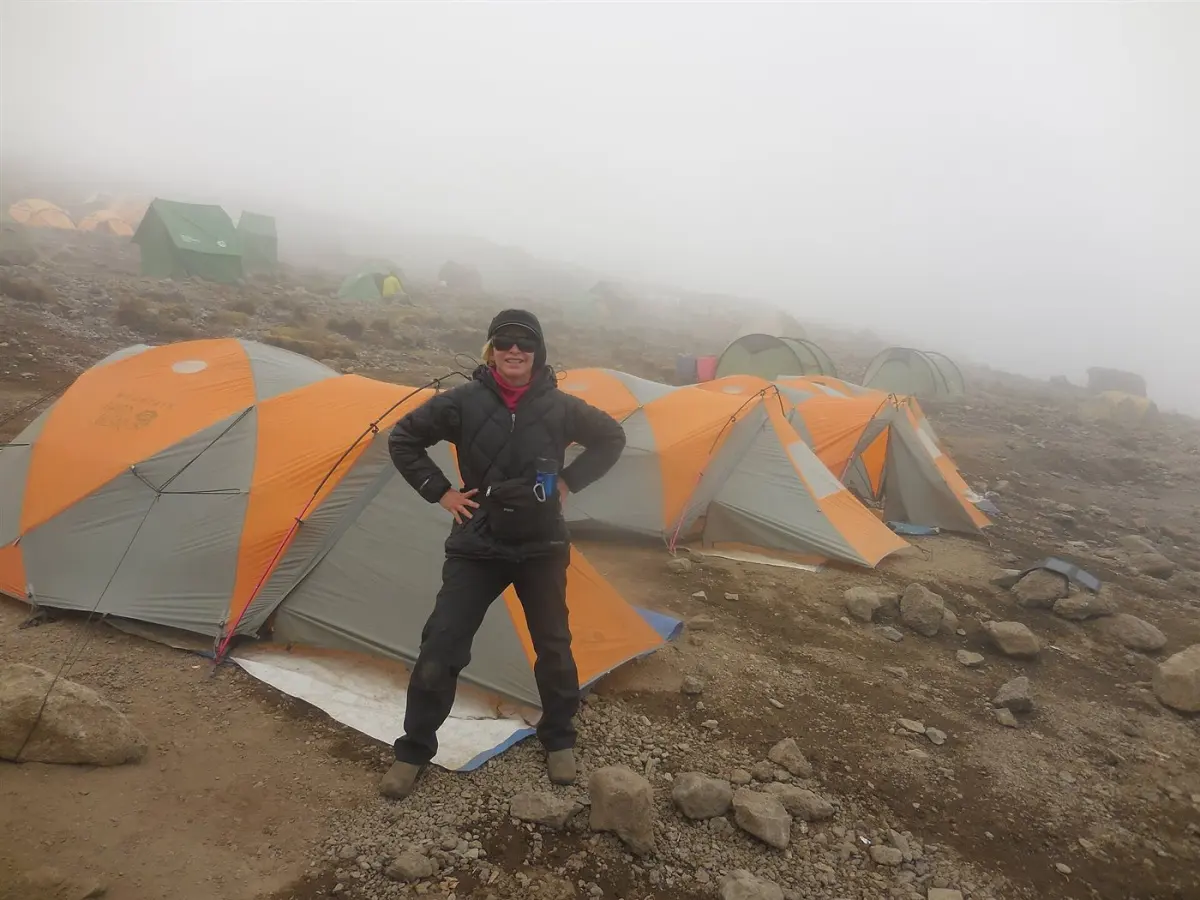
The longest day of the 7-day version: the trail leaves the forest behind, crosses the heath and moorland onto the Shira Plateau and keeps climbing past the site of Shira Camp 1 to Shira Camp 2 at 3,900 m. Kibo’s glaciers come into view on the right and stay there for the rest of the trek. Seven hours on your feet, but a kind gradient once you are out of the trees.
Lunch offered: Picnic lunch at Shira Camp 1
-
Shira Camp 2 to Barranco Camp via Lava Tower
The character day of the route. The trail climbs from Shira Camp 2 to Lava Tower at 4,640 m – the highest point you will reach before summit night – and lunch is eaten at altitude, then the path drops around 700 m into Barranco Camp at 3,960 m. Up high for the afternoon, sleeping low for the night: that swing is the acclimatization move the whole itinerary is built around, and Kibo’s glaciers now hang directly above the wall ahead.
Lunch offered: Hot lunch at Lava Tower, 4,640 m
-
Barranco Wall to Karanga Camp
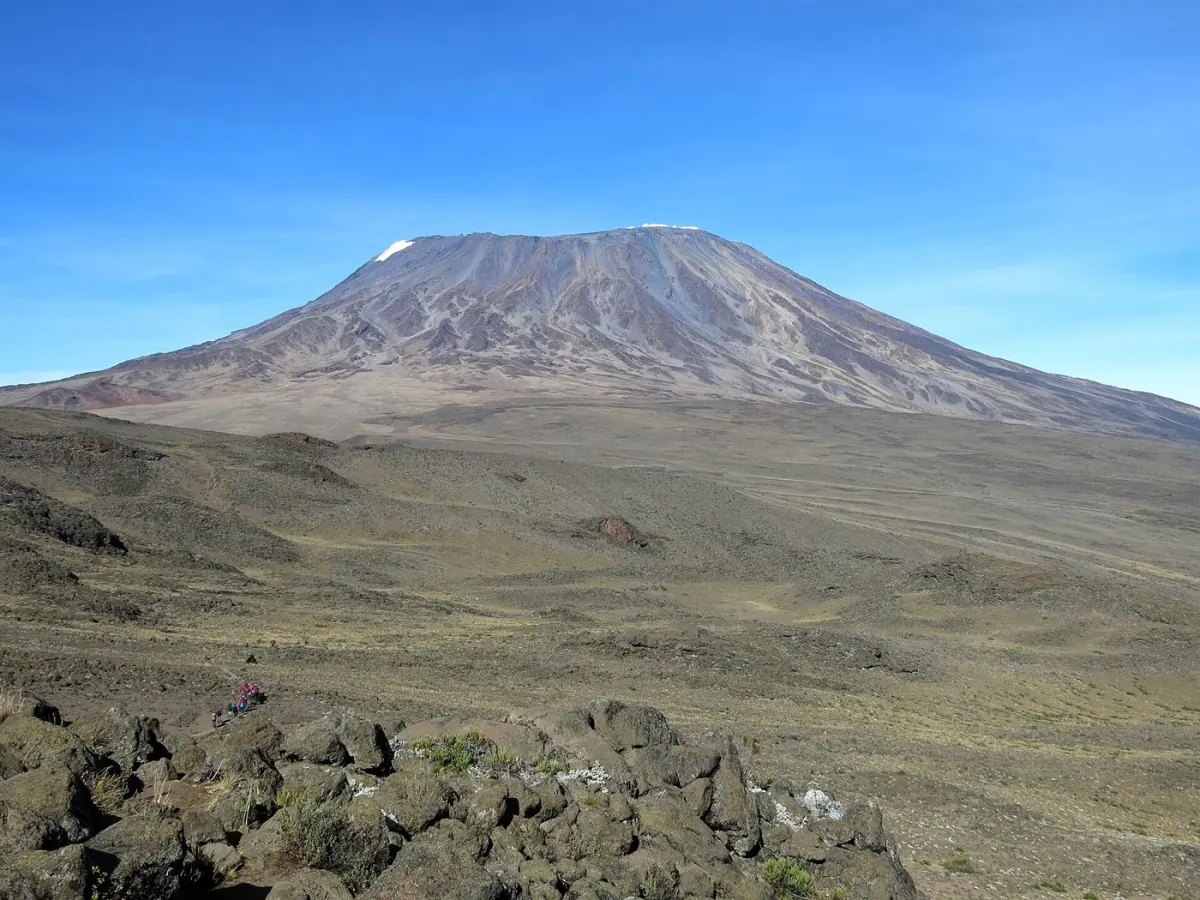
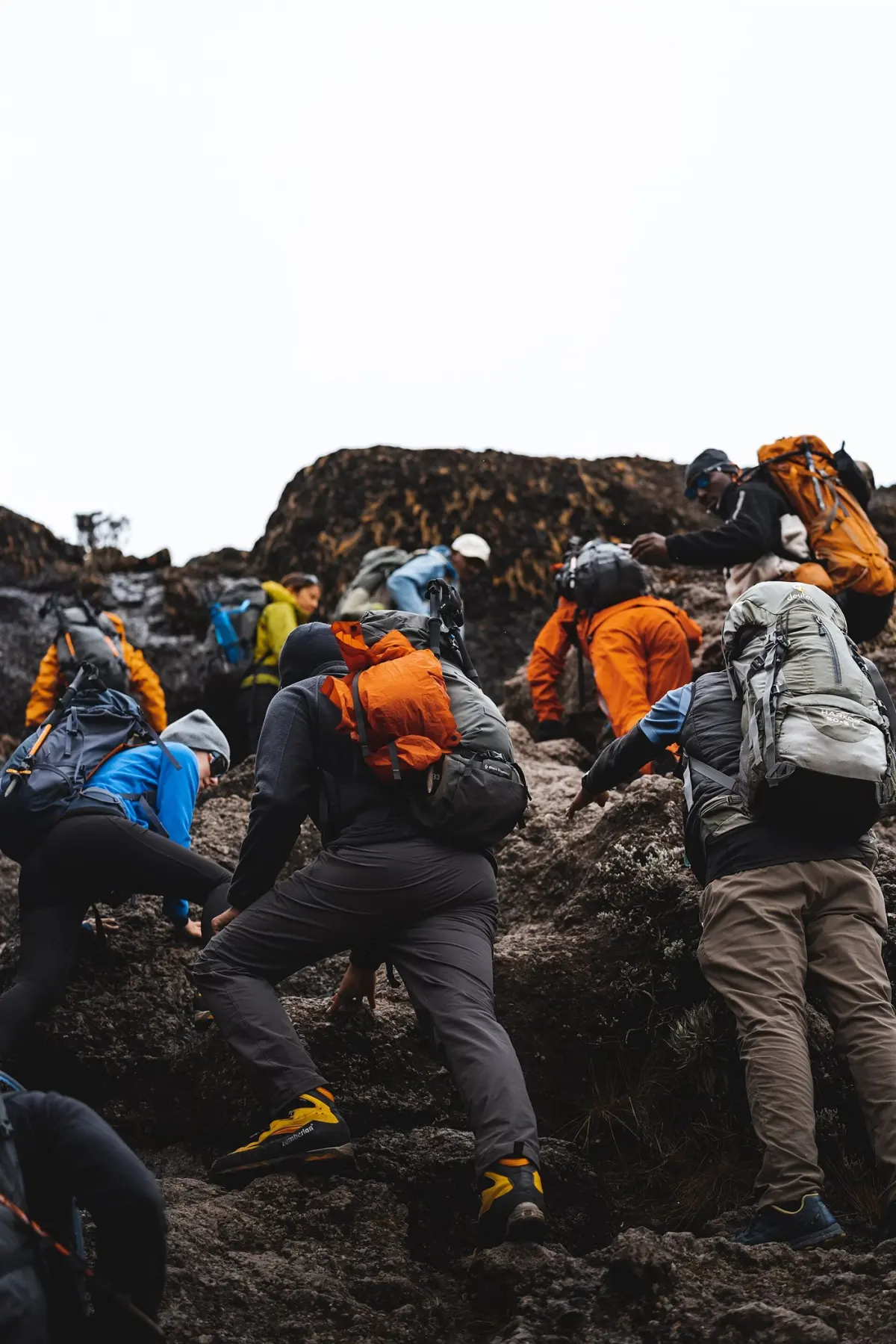
An early start on the Barranco Wall: a short, hands-on scramble of about an hour – more fun than frightening, and the most talked-about hour of the whole trek. From the top the trail traverses contour paths with the Reusch Glacier on your shoulder into Karanga Camp at 4,035 m, the smallest and quietest camp on the southern circuit. Four hours walking in all.
Lunch offered: Hot lunch at Karanga Camp
-
Karanga Camp to Barafu Camp
A short, sharp day up to Barafu Camp at 4,640 m, the launch pad for the summit. Barafu means “ice” in Swahili and the camp sits on bare rock with almost nothing growing; the afternoon is deliberately idle – lunch, a little reading, an early dinner and bed by six, because the guide will wake the camp shortly after midnight. From here on, drink more water than you feel like drinking.
Lunch offered: Hot lunch at Barafu Camp
-
Summit day: Barafu to Uhuru Peak to Mweka Camp
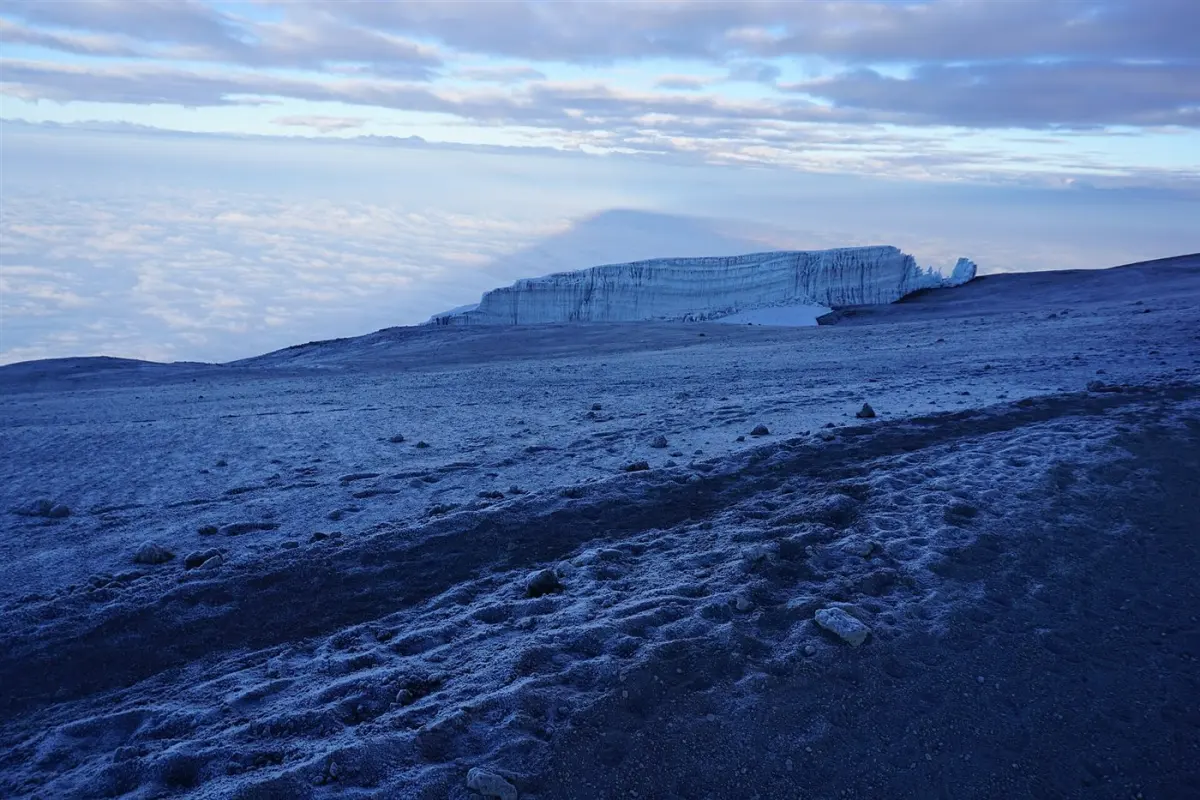
Shortly after midnight the camp stirs, and by one o’clock the line of headtorches is moving up the scree. Six to seven hours of slow climbing in the cold brings you to Stella Point on the crater rim as the sky lightens, then an hour on to Uhuru Peak at 5,895 m as the sun comes up over the plains. Photographs, a short rest and a drink at the sign, then the long descent to Mweka Camp at 3,100 m – around fifteen hours on your feet in total.
Lunch offered: Hot lunch at Mweka Camp after the descent
-
Mweka Camp to Mweka Gate
A relaxed three-hour walk down through the rainforest to Mweka Gate, where the mountain authority signs off your summit certificate and the crew sings. From here it is back to the hotel in Moshi for showers, a cold drink and the celebration dinner. The end of the trek – the start of the stories.
Lunch offered: Farewell lunch at Mweka Gate
The version we recommend: an extra night on the Shira Plateau, with the acclimatization hike to Cathedral Peak built into day three.
-
Moshi to Mti Mkubwa Camp via Lemosho Gate
An hour in a vehicle from Moshi takes you around the mountain to Lemosho Gate on the quiet western slope, where permits are checked and the porters load their kits. From the gate the path climbs through coffee shambas and into rainforest – the wettest, greenest and liveliest zone on the mountain, home to colobus monkeys and hornbills – to Mti Mkubwa Camp, the Forest Camp, at 2,820 m. The first day is deliberately short: three to four hours, ending with tea in the mess tent.
Lunch offered: Hot lunch at Lemosho Gate after the transfer
-
Mti Mkubwa Camp to Shira Camp 1
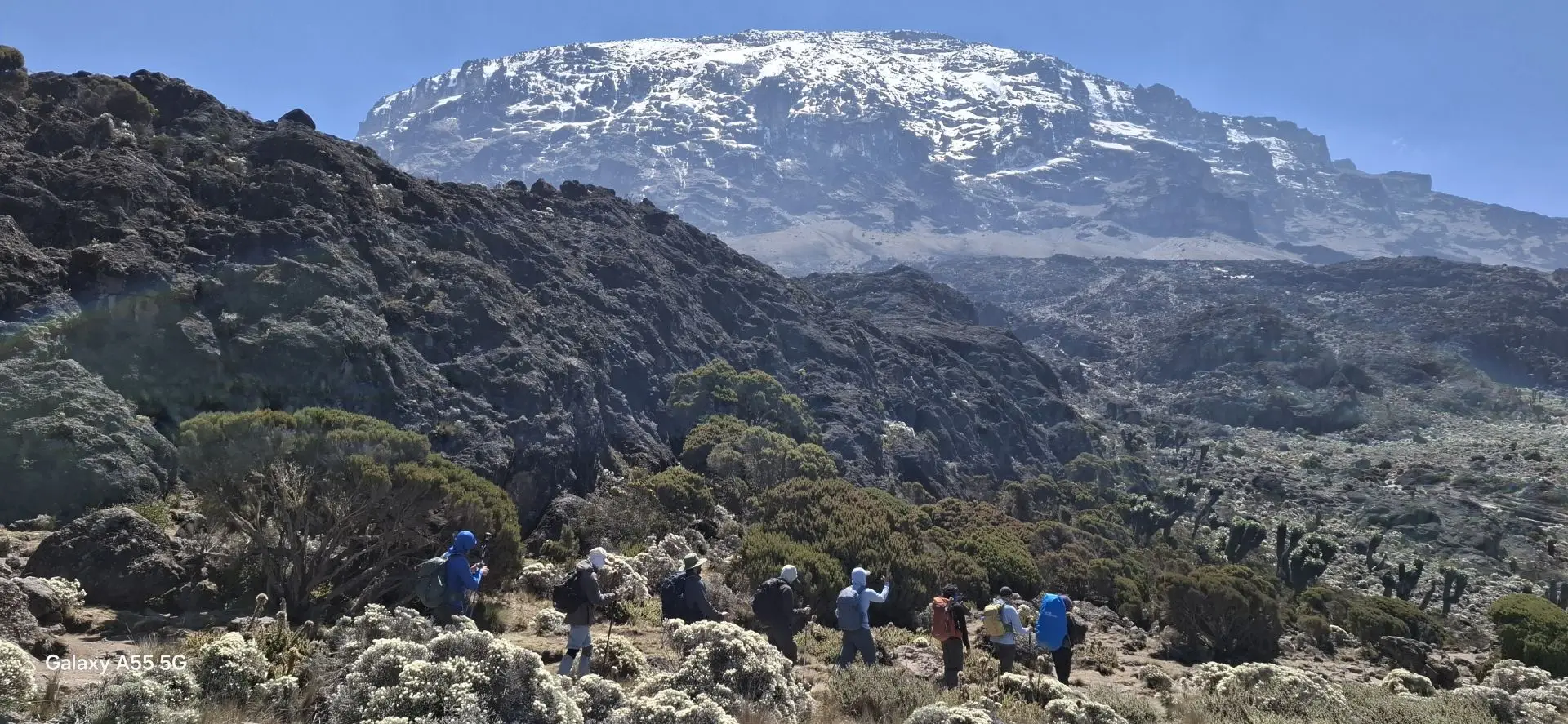
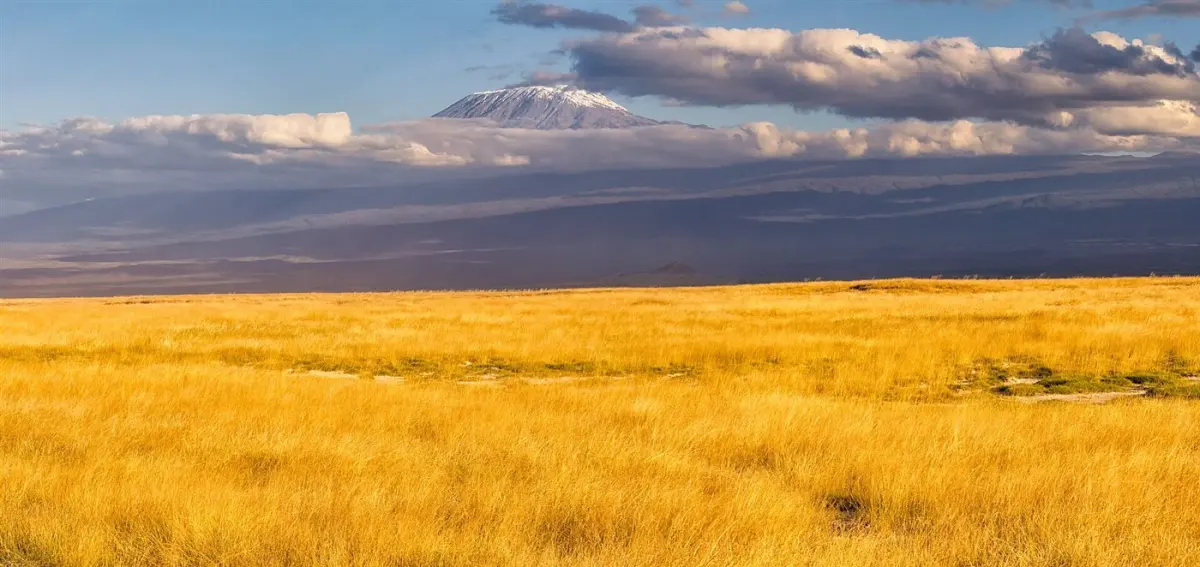
The rainforest thins into heath and the odd giant groundsell as the trail opens onto the Shira Plateau, one of the highest plateaus on earth. The walking is steady and unhurried across the moorland, with the glaciers of Kibo appearing above the ridge to the east. Camp is at Shira Camp 1 at 3,500 m, and it is rare to see another group up here.
Lunch offered: Hot lunch at Shira Camp 1
-
Shira Camp 1 to Shira Camp 2 & Cathedral Peak hike
A short morning across the plateau to Shira Camp 2 at 3,900 m leaves the whole afternoon free. After lunch the guide walks the group up to Cathedral Peak at 3,872 m – the best viewpoint on the plateau, with the Western Breach and its hanging glaciers close enough to count the seracs – and back down to camp. Climb high, sleep low: this is the purpose-built acclimatization day of the 8-day itinerary.
Lunch offered: Hot lunch at Shira Camp 2
-
Shira Camp 2 to Barranco Camp via Lava Tower
The character day of the route. The trail climbs from Shira Camp 2 to Lava Tower at 4,640 m – the highest point you will reach before summit night – and lunch is eaten at altitude, then the path drops around 700 m into Barranco Camp at 3,960 m. Up high for the afternoon, sleeping low for the night: that swing is the acclimatization move the whole itinerary is built around, and Kibo’s glaciers now hang directly above the wall ahead.
Lunch offered: Hot lunch at Lava Tower, 4,640 m
-
Barranco Wall to Karanga Camp
An early start on the Barranco Wall: a short, hands-on scramble of about an hour – more fun than frightening, and the most talked-about hour of the whole trek. From the top the trail traverses contour paths with the Reusch Glacier on your shoulder into Karanga Camp at 4,035 m, the smallest and quietest camp on the southern circuit. Four hours walking in all.
Lunch offered: Hot lunch at Karanga Camp
-
Karanga Camp to Barafu Camp
A short, sharp day up to Barafu Camp at 4,640 m, the launch pad for the summit. Barafu means “ice” in Swahili and the camp sits on bare rock with almost nothing growing; the afternoon is deliberately idle – lunch, a little reading, an early dinner and bed by six, because the guide will wake the camp shortly after midnight. From here on, drink more water than you feel like drinking.
Lunch offered: Hot lunch at Barafu Camp
-
Summit day: Barafu to Uhuru Peak to Mweka Camp
Shortly after midnight the camp stirs, and by one o’clock the line of headtorches is moving up the scree. Six to seven hours of slow climbing in the cold brings you to Stella Point on the crater rim as the sky lightens, then an hour on to Uhuru Peak at 5,895 m as the sun comes up over the plains. Photographs, a short rest and a drink at the sign, then the long descent to Mweka Camp at 3,100 m – around fifteen hours on your feet in total.
Lunch offered: Hot lunch at Mweka Camp after the descent
-
Mweka Camp to Mweka Gate
A relaxed three-hour walk down through the rainforest to Mweka Gate, where the mountain authority signs off your summit certificate and the crew sings. From here it is back to the hotel in Moshi for showers, a cold drink and the celebration dinner. The end of the trek – the start of the stories.
Lunch offered: Farewell lunch at Mweka Gate
Summit night is the real test
Expect -10°C to -15°C, six to seven hours in the dark and very little sleep beforehand. With correct layers, steady pacing and your guide watching your oxygen levels, it is well within reach of any prepared hill walker. See our Kilimanjaro packing list before you fly.
Prices for Lemosho route
Lemosho prices are set by two things: how many days you spend on the mountain, and how many of you share the crew and the camp. Park fees – entry, camping and rescue – are charged per climber per day, so the 8-day itinerary genuinely costs more than the 7-day. Everything below is per person in US dollars and includes the two hotel nights in Moshi, all transfers, all meals on the mountain and the full crew.
Prices per person by itinerary length and group size:
| Itinerary | 1 PAX | 2-4 PAX | 5-9 PAX | 10+ PAX |
|---|---|---|---|---|
| 7-day climb | $2,015 | $1,875 | $1,800 | $1,750 |
| 8-day climb | $2,370 | $2,220 | $1,920 | $1,890 |
What is included in a Lemosho climb
- All Kilimanjaro National Park entry, camping and rescue fees
- Licensed English-speaking guide, assistant guides, cook and porters
- All meals, drinking water, tea and coffee on the mountain
- Sleeping tents, dining tent, mattress and camp furniture
- Two hotel nights in Moshi before and after the climb
- Airport and trailhead transfers from Moshi or Arusha
- Emergency oxygen, pulse oximeter and a comprehensive first-aid kit
- Daily health and altitude monitoring by your guide
- Summit certificate and applicable government taxes
What is not included
- International and domestic flights
- Tanzania visa fees
- Travel and high-altitude trekking insurance
- Personal gear rental (sleeping bag, poles, boots, jackets)
- Tips and gratuities for guides, porters and cook
- Alcoholic and soft drinks, and snacks
- Additional hotel nights and personal expenses
Every Lemosho Route itinerary and group size in one table – or save the full Kilimanjaro price sheet as a PDF.
What to Expect on Lemosho
Quiet start through rainforest and the Shira Plateau
Lemosho walks you through all five climate zones. Starting on the quiet western side, the first two days are often spent without seeing another climbing party. Day 1 takes you from Moshi to Mti Mkubwa Camp through lush rainforest, home to colobus monkeys and hornbills. Day 2 climbs onto the open heath of the Shira Plateau – a vast, rolling landscape with long horizons and Kibo’s glaciers coming into view for the first time.
Cathedral Peak – the best view
Day 3 is the route’s standout acclimatisation day. The hike to Cathedral Peak (3,872 m) is the best viewpoint on Lemosho – giving a full sweep over the Shira Plateau, Kibo and its ice fields. Taking this extra day on the 8-day itinerary is our strongest recommendation for comfort and summit success. The pace stays deliberately slow – this is pole-pole at its best.
Lava Tower, Barranco Wall and company
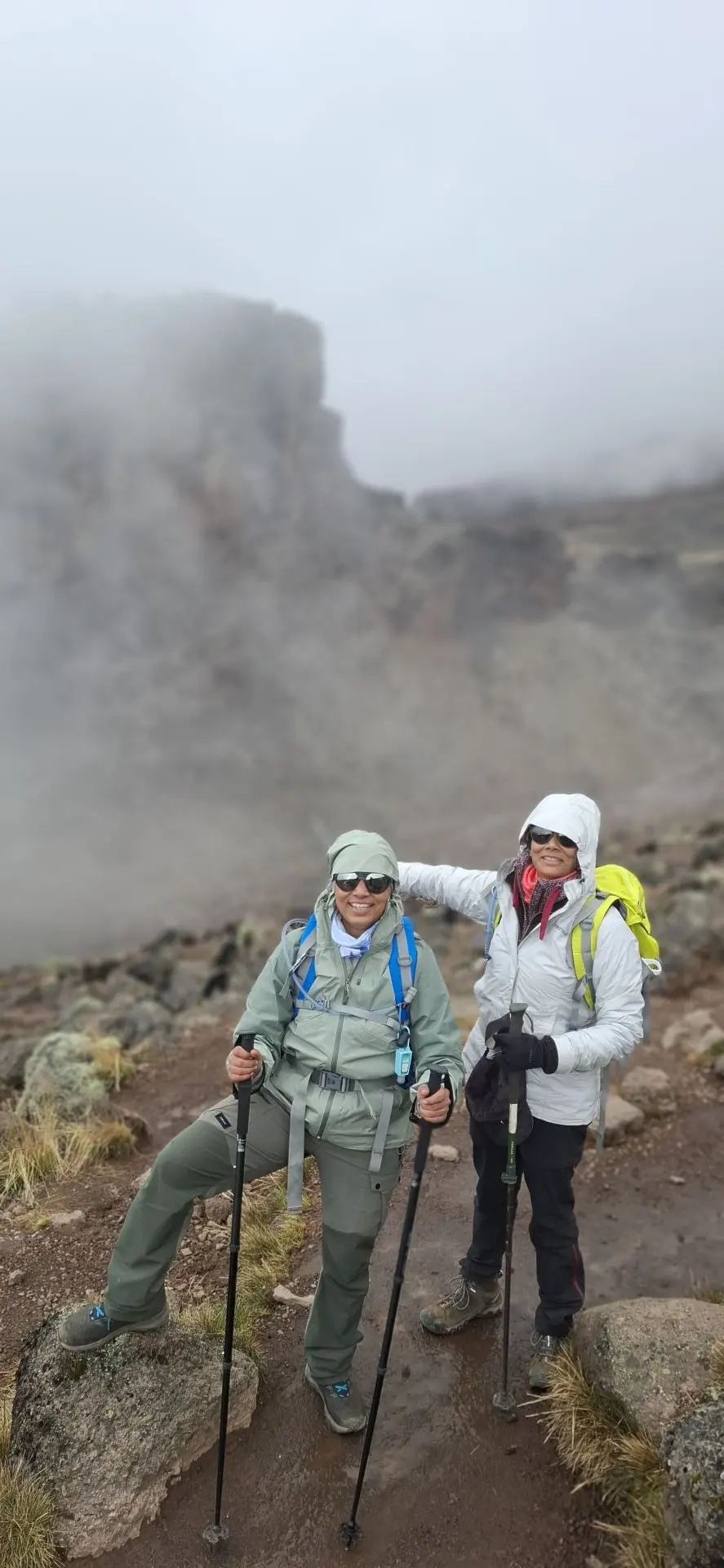
From Lava Tower (4,640 m) onward, the trail joins the Machame line. Camps become busier, but the scenery is just as spectacular – high moorland giving way to alpine desert. The Barranco Wall is a hands-on scramble, not a climb – about an hour at 3,960 m that most climbers end up loving. From here, it’s a steady push up to Karanga and Barafu, with Kibo never far out of sight.
Summit night and descent
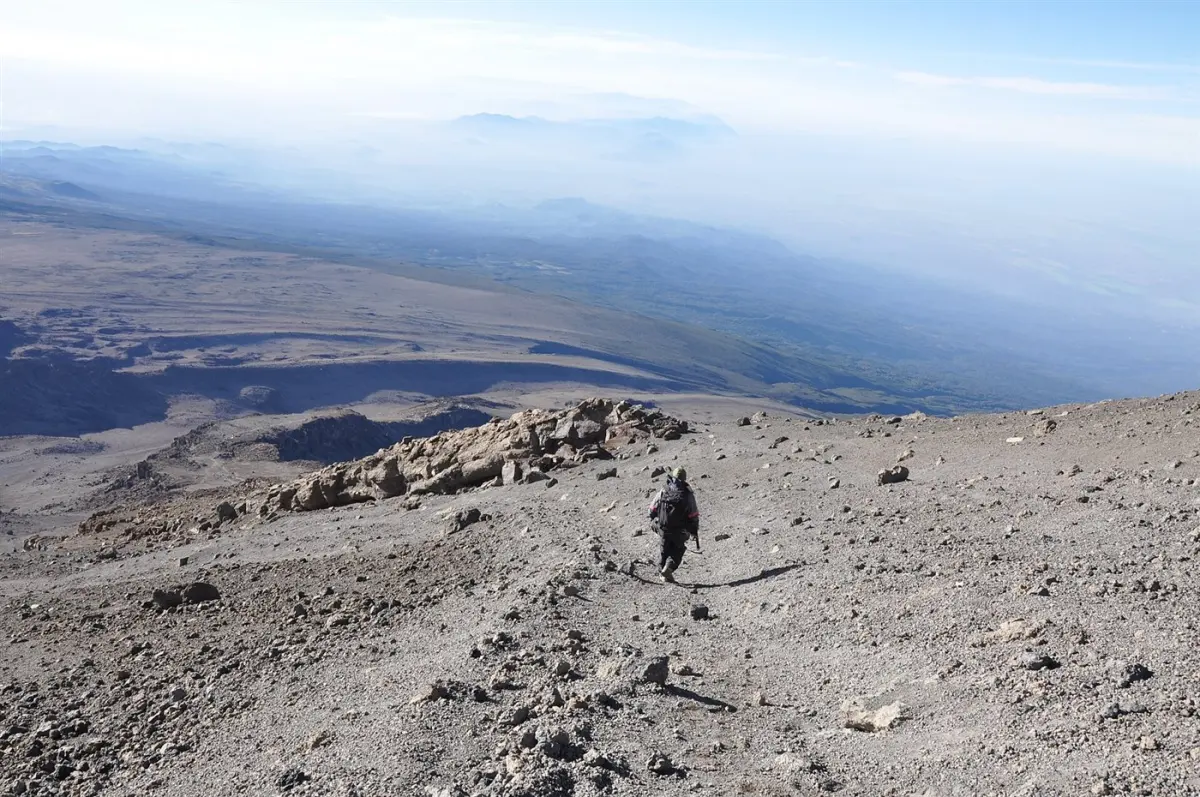
Summit night is exactly as hard as people say. You’ll set off from Barafu around midnight, crossing the scree in the coldest part of the day. After 5–7 hours you reach Stella Point for sunrise, and Uhuru Peak (5,895 m) a short while later. After photos and celebrations, you descend back to Barafu for a breather, then down the Mweka route through moorland and rainforest to Mweka Camp, finishing at Mweka Gate with your summit certificate – knees will know about it, but it’s one of Kilimanjaro’s finest routes.
Preparation Tips
Nothing on Lemosho is technical – there are no ropes and no climbing skills involved. What the route asks for is leg endurance, several days in a row, and honest preparation in the months before you fly.
- Train for endurance, not speed. Hill walks, stairs and back-to-back weekend hikes with a loaded pack, eight to twelve weeks out – see our Kilimanjaro training guide for a week-by-week plan.
- Break in your boots properly and train in the exact socks and daypack you will climb in.
- Pack from the Kilimanjaro packing list, and hire anything you are missing in Moshi rather than buying it at home.
- Arrive a day early. The briefing, the equipment check and one night of altitude-free sleep in Moshi are worth more than an extra day at home.
- Book three to six months ahead for the dry seasons – June to October and mid-December to March – because park permits and crews are limited.
- Take out insurance that explicitly covers trekking to 6,000 m and emergency helicopter evacuation.
Why Choose Topi Adventure
Based at the mountain
We are a Moshi operator. Your guides live at the foot of Kilimanjaro, walk these trails every month and know exactly when to push and when to hold.
Safety without shortcuts
Emergency oxygen, a pulse oximeter and a full first-aid kit on every climb, twice-daily health checks, and guides trained to turn around when the data says so.
Small groups, real pace
We cap our groups and keep the pole-pole pace even when it feels slow – the pace is what summits people.
Honest, all-in pricing
Park fees, crew, meals, tents, hotel nights and transfers in the first line of the quote, not buried in the last. Two hotel nights in Moshi included.
Other routes on Mt. Kilimanjaro
Lemosho is our default recommendation, but it is not the only way up. These are the other six official routes, each with its own full guide.

Machame Route
The classic “Whiskey” route: rainforest, moorland and the dramatic Barranco Wall.
Marangu Route
The only route with huts all the way up: the shortest schedule, but the time it saves on the mountain costs success.
Rongai Route
The dry northern approach with gentle gradients – the strongest pick for the rainy season.
Umbwe Route
The steepest, most direct line up the mountain. Reserve it for experienced altitude trekkers.
Shira Route
Shares Lemosho’s western approach but starts higher and shorter. Quiet, scenic and usually merged with Lemosho.
Northern Circuit
The remote arc around the north face with an extra day of quiet, high walking. The mountain’s highest success rate.
Frequently asked questions
How many days is the Lemosho route?
Lemosho is walked in 6, 7 or 8 days on the mountain. We run the 7-day and 8-day itineraries, and the 8-day is the one we recommend: it adds an acclimatization day on the Shira Plateau with a hike to Cathedral Peak, which is the biggest single improvement you can make to your summit odds.
The 6-day version compresses the same line into a schedule the body finds hard, and we only suggest it for climbers with real high-altitude experience.
Is Lemosho the best route on Kilimanjaro?
For most first-time climbers, yes – it is the best all-round combination of scenery, quiet trail and summit rate on the mountain. If you have nine days, the Northern Circuit edges it on acclimatization. If your dates fall in the rainy season, Rongai on the dry northern side is the smarter pick.
How hard is the Lemosho route?
Lemosho is a demanding trek, not a technical climb – no ropes or climbing skills needed. Days one to six are long but manageable walks for anyone comfortable on hills; the Barranco Wall is a short scramble; and summit night is the genuinely hard part, around fifteen hours on your feet at altitude. Hill fitness, a slow pace and the eight-day itinerary put it within reach of most healthy walkers.
What is the success rate on the Lemosho route?
Published summit rates for 7- and 8-day Lemosho climbs run at 85–90%, against a mountain-wide average near 65%. The margin comes from time at altitude rather than fitness, which is exactly what the longer itinerary buys.
When is the best time to climb Lemosho?
The two dry windows – June to October and mid-December to March – give the best conditions underfoot and the clearest summit views. Because Lemosho starts on the western slope it holds moisture a little longer than the eastern routes, so in the short rains of November and the long rains of March to May expect mud and cloud on the plateau. It is climbable year round with the right kit.
How much does the Lemosho route cost?
From $1,875 per person for the 7-day itinerary and $2,220 for the 8-day. The price per person falls as the group grows, and solo climbers pay the 1 PAX rate. Park fees, crew, meals, tents, two hotel nights in Moshi and all transfers are included; international flights, visa, insurance, gear hire and crew tips are not.
Ready to talk it through with a local guide?
Tell us your dates, experience level and budget. We will recommend a route, build the day-by-day plan and send it back free, with no obligation.